

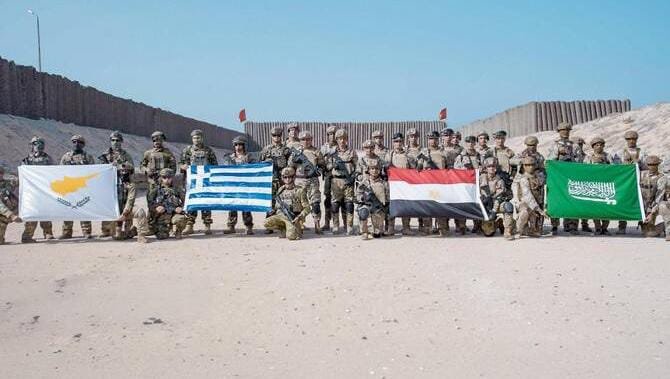
In the Mediterranean region this week, a large-scale naval activity came to a close as the Royal Saudi Navy wrapped up its participation in an extensive multinational exercise held on Egyptian shores. Although the drill lasted only three days, its scope and intensity reflected months of prior coordination among the participating nations. Military units from Greece, France, Cyprus, and Egypt joined the Saudi contingent, while representatives from over a dozen other countries observed the proceedings to evaluate interoperability standards and modern maritime tactics.
The exercise — known internationally as Medusa-14 — is part of a long-running series of joint maneuvers frequently conducted in the Mediterranean Sea. Over the years, Medusa exercises have evolved from limited training sessions into comprehensive operational rehearsals, allowing allied and friendly naval forces to test their combined readiness across diverse security scenarios. This year’s iteration followed the same trajectory, bringing together air, sea, and amphibious components in a simulated high-threat environment.
Unlike previous editions where the focus might have been confined to a specific operational theme, Medusa-14 aimed to broaden the skill set of participating forces. The program moved from defensive protocols to offensive maritime responses, simulating real-world developments such as growing instability in coastal zones, rising piracy concerns, and increasingly complex naval threats posed by non-state actors. Such challenges have become prominent issues for countries bordering the Mediterranean and the Red Sea, making cooperative training essential for maintaining regional security.
Throughout the final day of the drill, an extensive range of coordinated maneuvers played out across multiple sectors. Naval vessels carried out precision movements intended to secure maritime installations and energy-related infrastructure — a top priority for nations whose economies rely on sea-based trade routes and offshore production sites. Anti-submarine warfare featured prominently as well, signaling the importance of underwater domain awareness at a time when submarine activity in global waters has risen significantly.
One of the more dynamic elements of the exercise involved asymmetric warfare, a style of conflict in which smaller, fast-moving threats — such as weaponized speedboats — attempt to overwhelm larger naval platforms. The forces rehearsed how to respond to sudden attacks, how to intercept hostile vessels, and how to neutralize unconventional tactics without escalating the situation unnecessarily. These rehearsals are particularly relevant given the increasing use of small unmanned systems and low-cost maritime weapons by rogue groups in various regions.
Amphibious landings, airborne insertions, and helicopter-based assaults also unfolded during the exercise. Naval infantry units and special operations teams from the participating nations practiced synchronized operations, moving from sea to land in controlled phases. These drills required coordination between surface ships, transport helicopters, and tactical support units, replicating real-life scenarios where troops may need to secure beaches, rescue hostages, or seize enemy-controlled coastal zones.
Search-and-rescue operations, an essential component of any maritime mission, were performed under simulated adverse conditions. Air and sea platforms collaborated closely to locate missing personnel, evacuate injured crew members, and manage emergency maritime evacuations. In an era where naval forces are often among the first responders to natural disasters or maritime accidents, practicing such missions has taken on increased relevance.
Electronic warfare segments pushed the exercise further into modern territory, as forces tested the ability to operate under conditions where communications are jammed or electronic interference disrupts navigation systems. Modern conflict increasingly involves the disruption of digital networks, and so naval crews trained to keep their vessels operational even when radar and communication systems face interference.
Other components included combat diving, tactical marksmanship, and coordinated small-unit operations aimed at clearing hostile areas. These specialized sessions reflected the versatility required of naval personnel who must be capable of responding to threats both at sea and on land.
The Saudi contingent emphasized professionalism throughout the exercise. Brigadier General Saad bin Safar Al-Ahmari, representing the Royal Saudi Navy, noted that the Saudi forces approached each scenario with discipline and readiness, demonstrating their ability to integrate seamlessly with foreign naval units. He highlighted that these joint operations help enhance Saudi Arabia’s capacity to protect strategic sea routes, particularly as the kingdom plays a major role in maintaining security in the Red Sea and the Arabian Gulf.
Saudi naval personnel from the Western Fleet, headquartered at King Faisal Naval Base in Jeddah, were prominently represented at the closing ceremony. Major General Mansour bin Saud Al-Jaeed, commander of the Western Fleet, also attended alongside senior officers from the partner nations. Their presence reflected the value Saudi Arabia places on international defense cooperation, especially within regions critical to global shipping and maritime stability.
While Medusa-14 officially spanned only three days, the broader significance of the drill lies in the network of ties it strengthens. As maritime threats evolve, nations have increasingly relied on joint exercises to expand their operational understanding of one another’s tactics, communications systems, and rapid-response capabilities. Exercises like Medusa-14 allow forces to practice standard operating procedures, develop coordinated strategies, and ensure that, in times of crisis, multinational naval coalitions can operate with unity and precision.
The Mediterranean has always been a strategic crossroads, and recent geopolitical shifts — including competition over natural gas deposits, heightened tensions near shipping lanes, and the rise of armed non-state groups along key coastlines — have underscored the importance of naval preparedness. For Gulf countries like Saudi Arabia, participation in Mediterranean exercises also represents a strategic decision to diversify partnerships and strengthen military-to-military relations with European and North African nations.
In addition to strengthening alliances, such exercises help refine doctrines related to disaster response. The Mediterranean region regularly faces humanitarian challenges, including refugee movements and maritime accidents. Naval forces increasingly play a frontline role in rescuing stranded vessels or responding to crises triggered by severe weather or regional instability. Medusa-14 included modules designed to simulate these humanitarian operations, reinforcing the idea that modern navies must be prepared not only for war but also for lifesaving missions.
Furthermore, exercises like Medusa-14 serve as platforms for exchanging technological insights. Many participating nations brought with them advanced systems — from surveillance drones to modern sonar technologies — enabling crews to observe new tools in action. Such exposure contributes to the modernization of fleets and helps countries identify gaps in their existing capabilities.
This edition also highlighted the interoperability between air and sea forces. Multi-domain coordination has become essential in contemporary maritime operations, where threats may come not just from the surface or underwater but from aerial platforms, remote systems, and cyber-originating attacks. Through Medusa-14, participating forces honed the communication and timing necessary to integrate helicopters, fighter aircraft, amphibious vehicles, and naval ships into one cohesive operational framework.
By the time the concluding ceremony began, commanders from each nation expressed satisfaction with the outcomes, citing improved coordination, stronger relationships, and heightened readiness. Observing countries praised the professional execution and took notes for potential future collaborations.
In the end, Medusa-14 was not merely a training drill; it was a strategic message demonstrating that cooperation among friendly navies remains vital for safeguarding maritime corridors. For Saudi Arabia, its participation reinforced its growing role in international security initiatives beyond its immediate region, positioning the kingdom as an increasingly active contributor to wider maritime stability.