

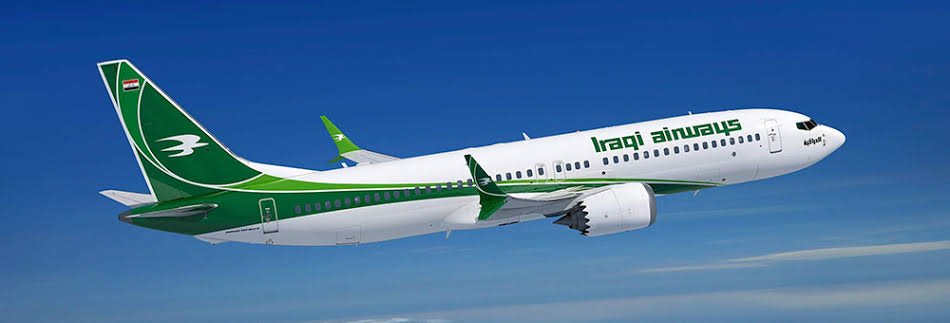
After decades of disruption, Iraq has witnessed a significant development in its aviation sector, signaling a gradual return to stability across the country. On Tuesday, an international passenger flight from Greece landed at Baghdad International Airport, marking a historic moment in Iraq’s civil aviation after nearly 35 years. Officials and observers alike see this as a strong indicator that Iraq’s civil aviation sector is entering a phase of recovery after years of turmoil.
According to statements issued by the Iraqi Ministry of Transport, the arrival of this Greek flight carries symbolic and practical significance. It is the first time in more than three decades that a European passenger aircraft has flown directly into Baghdad with travelers on board. Authorities note that this event reflects not only the restoration of air links but also growing international confidence in Iraq’s ability to provide a secure and regulated environment for commercial aviation.
The ministry emphasized that the successful arrival of the flight demonstrates improvements in Iraq’s civil aviation infrastructure and adherence to international safety and operational standards. Officials indicated that this development is the outcome of sustained efforts by the Iraqi government to restore order, strengthen regulatory institutions, and upgrade aviation facilities after years of instability.
To understand the significance of this step, it is important to recall that European airlines had suspended flights to Iraq in 1990. This suspension was triggered by the invasion of Kuwait by Iraq, which led to international sanctions and isolation, particularly from Western nations. The resulting political and security conditions created long-term disruptions in the country’s civil aviation sector, leaving Baghdad effectively disconnected from direct European air travel for decades.
The situation worsened in 2003 when the United States, along with its European allies, launched a military intervention in Iraq that led to the overthrow of President Saddam Hussein. Following this intervention, Iraq faced prolonged periods of political instability, internal conflict, and the rise of extremist groups. Security challenges and weakened governmental institutions made the country a high-risk destination for international airlines, further isolating it from the global aviation network.
Over time, however, the situation in Iraq began to improve gradually. Through sustained efforts to enhance security, strengthen governance, and rebuild infrastructure, the country has started to establish a more stable environment. Against this backdrop, the recent Greek flight to Baghdad can be seen as a tangible reflection of the country’s progress toward regaining stability and normalcy.
Officials from the Iraqi Ministry of Transport explained that the new air link between Iraq and Greece will initially operate on a limited scale, with two flights per week in both directions. Depending on passenger demand and operational considerations, the frequency of these flights may be increased or adjusted in the future. The ministry emphasized that these flights are designed not only to facilitate passenger travel but also to support business activity, investment, and tourism.
The restoration of direct European flights is also part of Iraq’s broader strategy to attract foreign investment and stimulate economic growth. Government officials have repeatedly stated that connecting Iraq with international markets through secure air travel is a key element of rebuilding the country’s economy. The return of European flights to Baghdad, particularly from Greece, is expected to boost investor confidence and create new opportunities in trade, tourism, construction, and service sectors.
Earlier this year, Greece had already begun flights to the autonomous Kurdish region in northern Iraq. That step was widely seen as an initial move toward restoring European air links. The extension of flights to Baghdad now signifies that Iraq’s capital is gradually reintegrating into international aviation networks and is once again open to direct European connections.
Experts note that civil aviation serves as a major indicator of a country’s overall stability and global integration. When international airlines resume flights to a country, it signals that security, operational, and technical standards have reached an acceptable level. From this perspective, the arrival of the Greek flight in Baghdad represents not just a routine airline operation, but a symbolic step in Iraq’s return to international engagement.
Iraqi officials have also expressed their intention to encourage other European countries to resume flights to Baghdad in the near future. To support this effort, the Civil Aviation Authority is working closely with international aviation bodies to further enhance security protocols, airport facilities, and air traffic management systems.
The arrival of the Greek flight in Baghdad is more than a logistical milestone—it is a symbolic indicator of Iraq’s gradual emergence from a long period of crisis. If this momentum continues, Iraq could, in the coming years, establish stronger air, trade, and economic links with Europe and the wider region. Such developments would not only bolster the country’s economy but also improve its international standing, creating a new era of connectivity and opportunity for Iraq.