

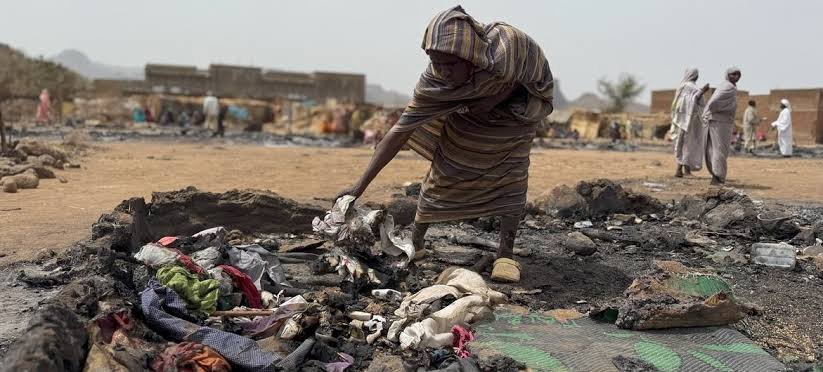
Sudan is witnessing one of the most devastating conflicts in recent history, as ongoing clashes between the military and a powerful paramilitary organization have plunged the country into chaos. Since April 2023, violent confrontations between the Sudanese Armed Forces and the Rapid Support Forces (RSF) have escalated into full-blown warfare, marked by mass killings, sexual violence, and ethnically motivated attacks. International organizations, including the United Nations, have classified many of these acts as war crimes and crimes against humanity, underscoring the severity of the humanitarian catastrophe unfolding across the nation.
The conflict has caused immense human suffering. UN reports indicate that more than 40,000 people have died as a result of the fighting, though humanitarian groups suggest that the actual death toll may be significantly higher. Millions of Sudanese civilians have been uprooted from their homes, creating the largest displacement crisis in the world.
Over fourteen million people are estimated to have fled their homes, seeking refuge in safer regions or neighboring countries, while outbreaks of disease, food shortages, and famine compound the emergency. Hospitals, schools, and basic infrastructure have been destroyed or severely damaged, leaving communities without essential services and further straining already limited humanitarian resources.
In the midst of this crisis, Pakistan’s United Nations envoy has emphasized the urgent need for a political solution. Speaking on the international stage, Usman Jadoon, Pakistan’s deputy ambassador to the UN, called for immediate steps to halt hostilities and establish a ceasefire. He stressed that no military action alone can resolve the conflict and that sustainable peace can only be achieved through dialogue, negotiation, and reconciliation between all parties involved. Jadoon highlighted Pakistan’s support for genuine political efforts and international mediation aimed at restoring peace and protecting civilians.
Sudan’s transitional civilian leadership has also proposed a path forward. Prime Minister Kamal Idris, head of the transitional government, unveiled a peace plan intended to stabilize the country. His proposals include a ceasefire monitored by international bodies, specifically the United Nations, African Union, and Arab League.
Additionally, the plan calls for the withdrawal of paramilitary forces from occupied regions, their placement in supervised camps, and a complete disarmament program. The proposed measures aim not only to reduce immediate violence but also to create a framework for rebuilding state institutions and reestablishing normal governance structures.
The Pakistani envoy reiterated the importance of international support for Sudan’s sovereignty and territorial integrity. He urged the UN Security Council to reject parallel or illegitimate authorities that undermine the state and could further fragment the country. Jadoon emphasized that all efforts must ensure the protection of civilians, allow unhindered humanitarian access, and maintain accountability for war crimes. He stressed zero tolerance for attacks on UN peacekeepers and aid workers, calling for thorough investigations and the prosecution of those responsible for such acts.
Humanitarian organizations on the ground continue to warn about the catastrophic impact of the conflict. Hospitals and clinics are overwhelmed or nonfunctional, leaving medical personnel unable to treat the sick and injured. Food insecurity has reached alarming levels, and with millions displaced, communities are struggling to access clean water and essential supplies. Disease outbreaks, including cholera and malaria, have intensified in displaced populations, compounding the suffering of an already vulnerable population. Children, women, and the elderly are particularly at risk, facing the brunt of both violence and scarcity of resources.
The social and economic fabric of Sudan has been severely disrupted. With key infrastructure destroyed, trade and commerce have slowed or stopped entirely in many regions, causing economic collapse in affected areas. Markets remain empty, schools are closed, and families struggle to secure basic necessities. The psychological impact of prolonged violence is equally profound, with trauma affecting millions of people who have witnessed killings, abductions, and attacks on their communities. These long-term effects threaten not only the immediate stability of Sudan but also its future recovery and development.
Jadoon’s statements underline a central principle: lasting peace in Sudan requires the active engagement of both domestic leaders and the international community. Military dominance cannot resolve the deep-rooted political and social divides that fuel the conflict.
Dialogue, reconciliation, and international oversight are critical to preventing further atrocities, mitigating the humanitarian crisis, and creating conditions in which governance and civil society can function effectively. Pakistan, along with other nations and international bodies, continues to advocate for diplomatic solutions and coordinated humanitarian interventions to address both the immediate and long-term needs of the Sudanese people.
The path forward, according to experts and international observers, involves multi-layered approaches. Immediate measures include securing a ceasefire, facilitating the delivery of food, water, and medical supplies, and protecting civilians from further attacks. In parallel, longer-term strategies focus on demobilizing armed groups, strengthening governmental institutions, promoting political inclusivity, and rebuilding essential infrastructure. These combined efforts are aimed at stabilizing the country and preventing the recurrence of large-scale violence.
The scale of human suffering in Sudan has drawn widespread global attention. International rights organizations and UN agencies are continuously urging all parties to honor humanitarian law and protect civilians. Calls for accountability are growing louder, as observers emphasize that impunity for war crimes will only perpetuate cycles of violence. The Pakistani envoy’s appeal reflects this broader international concern, advocating that the guns must be silenced and that political mechanisms should guide the country back toward peace and normalcy.
With no military solution in sight, Pakistan’s approach stresses patience, diplomacy, and coordination with international actors. The envoy’s message emphasizes solidarity with the Sudanese people, whose lives have been upended by relentless conflict, and underscores the international responsibility to prevent further devastation. Political dialogue, transparent monitoring, and inclusive reconciliation are seen as the only viable paths to restoring stability.
The tragic situation in Sudan also highlights the urgent need for humanitarian relief. Millions of internally displaced persons require shelter, food, and medical care, while the displaced populations face continued exposure to violence and disease. Relief organizations face logistical and security challenges in delivering aid, making coordinated international intervention vital. Without effective humanitarian assistance and diplomatic pressure, the conflict risks further escalation, deepening the crisis and prolonging the suffering of civilians.
Pakistan’s UN envoy concluded by stressing hope and resilience. While the scale of violence and destruction is unprecedented, there remains a critical window for diplomacy and intervention. The immediate priority is ceasing hostilities, ensuring protection for civilians, and creating conditions for sustainable peace. Only through political negotiation, international support, and genuine reconciliation can Sudan begin the arduous process of recovery and rebuilding, ultimately offering its citizens a chance for safety, stability, and a future free from violence.
Sudan’s crisis represents a complex interplay of military conflict, paramilitary involvement, political instability, and humanitarian disaster. The international community, led by bodies like the UN, African Union, and Arab League, alongside supportive nations including Pakistan, is advocating for a political resolution that prioritizes civilian safety, accountability for crimes, and restoration of national governance.
Immediate ceasefires, monitored troop withdrawals, and coordinated humanitarian aid are critical to halting further destruction. Long-term peace will depend on the commitment of all parties to reconciliation, transparent governance, and rebuilding the country’s social and economic structures. Pakistan’s stance, articulated by its UN envoy, underscores the principle that political dialogue, rather than military force, remains the only sustainable path forward for Sudan’s recovery and stability.