

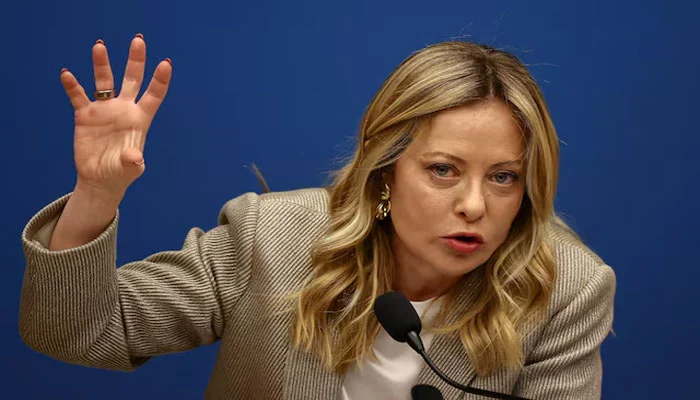
Rome: Italian Prime Minister Giorgia Meloni has expressed skepticism over the likelihood of the United States taking military action in Greenland, but warned that any unilateral moves could have serious implications for NATO and European security.
Speaking at a press briefing on Friday, Meloni said, I do not believe the United States will undertake military action in Greenland. However, any intervention in the region would carry serious consequences for NATO and its member states. She stressed that all NATO allies need to understand the potential repercussions of military activity in the Arctic, a region that is increasingly drawing international attention.
Meloni highlighted the strategic importance of Greenland, both geographically and politically. Located near key Arctic sea routes and rich in natural resources, Greenland has become a focal point for global powers seeking to strengthen their presence in the Arctic, including the United States, Russia, and China.
A serious and effective NATO presence is essential in the Arctic, including Greenland, Meloni added. The alliance must be united, coordinated, and proactive rather than allowing individual countries to take actions that could destabilize the region.
The remarks come amid heightened US interest in the Arctic, particularly following discussions about Greenland’s strategic military bases and emerging shipping routes opened by melting polar ice. Analysts say that while the US has long considered Greenland strategically important, unilateral action in the region could strain relationships within NATO and with European allies.
European security experts note that Meloni’s statement reflects a growing concern in Brussels and Rome over maintaining alliance cohesion in the face of intensified competition among global powers. The Arctic is no longer only an environmental or scientific concern; it has become a critical zone for defense, trade, and energy resources.
Meloni’s comments underscore Italy’s position that NATO must ensure a collective strategy in the Arctic to maintain stability, rather than leaving security decisions to individual members or external powers. Analysts also suggest that her caution signals a broader European wariness over escalating US-Russia tensions in the high north.
With climate change opening new shipping lanes and access to untapped mineral and energy reserves, the Arctic including Greenland has emerged as a potential flashpoint for global power rivalry. Meloni’s statements call attention to the need for NATO to act decisively yet collaboratively to safeguard collective security in the increasingly contested region.