

Kyiv: Russia launched a powerful hypersonic missile at Ukraine near the European Union border overnight, in what Ukrainian officials described as a “grave threat to European security” demanding a coordinated global response.
Moscow said it fired the Oreshnik missile in retaliation for what it claimed was an attempted drone attack on one of President Vladimir Putin’s residences in late December, an allegation Kyiv has denied. The United States also said no such attack took place.
The strike marked only the second use of the Oreshnik against Ukraine, a weapon designed to project power across Europe at speeds exceeding 13,000 kilometres per hour and capable of carrying nuclear warheads, although there was no indication it did so in this incident.
The missile struck the Lviv region in western Ukraine, approximately 60 kilometres from the Polish border. Moscow claimed the target included a drone factory and energy infrastructure, while Ukrainian officials reported damage to unspecified infrastructure. Local media cited a large underground gas storage facility as being affected.
Ukraine’s Foreign Minister Andriy Sybiha condemned the strike on social media, calling it a test for the transatlantic community. “It is absurd that Russia attempts to justify this strike with the fake ‘Putin residence attack’ that never happened,” he wrote. “Putin uses an IRBM near the EU and NATO border in response to his own hallucinations. This is truly a global threat. And it demands global responses.”
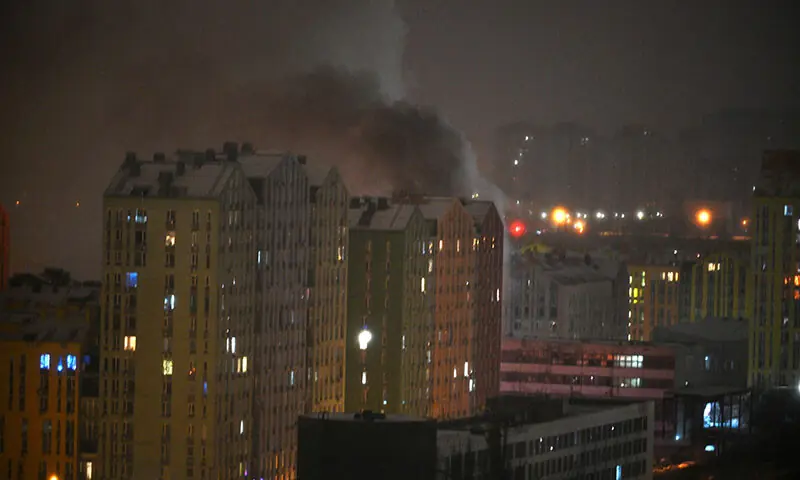
The missile strike was part of a wider assault in which Russia launched 242 drones and 36 missiles targeting Kyiv and western Ukraine. The attacks killed at least four civilians, injured more than 20, and disrupted power, water, and heating supplies to over half a million households in the capital, where temperatures hovered around -10º Celsius amid heavy snowfall.
An apartment building in Kyiv was hit, causing further casualties and destruction. The Russian Defence Ministry stated that the Oreshnik successfully destroyed a factory producing drones allegedly used in the December 29 attack on Putin’s residence, alongside energy infrastructure. Russian media released video footage purportedly showing the missile strike, although the authenticity of the footage could not be independently verified.
Germany condemned the attack, accusing Moscow of attempting to “instil fear” through symbolic gestures of intimidation. Russia has escalated the situation once again, government spokesman Steffen Meyer said. These are symbolic gestures intended to instil fear, but they are not effective.
The Oreshnik named after the hazel tree was first used against Ukraine in November 2024, reportedly targeting a military facility. Ukrainian sources said the earlier missile carried dummy warheads and caused limited damage.
The missile strike comes amid ongoing negotiations in Paris, where Ukraine, the United States, and a coalition of allies are seeking to finalise a peace framework. The talks aim to address remaining disagreements before presenting a proposed deal to Russia. Analysts warn that the use of hypersonic missiles near NATO borders raises the stakes for European security and complicates diplomatic efforts.
This is not just a regional conflict, a Kyiv official said. It is a global security challenge. The use of hypersonic weapons near the EU border underscores the need for coordinated international action.