

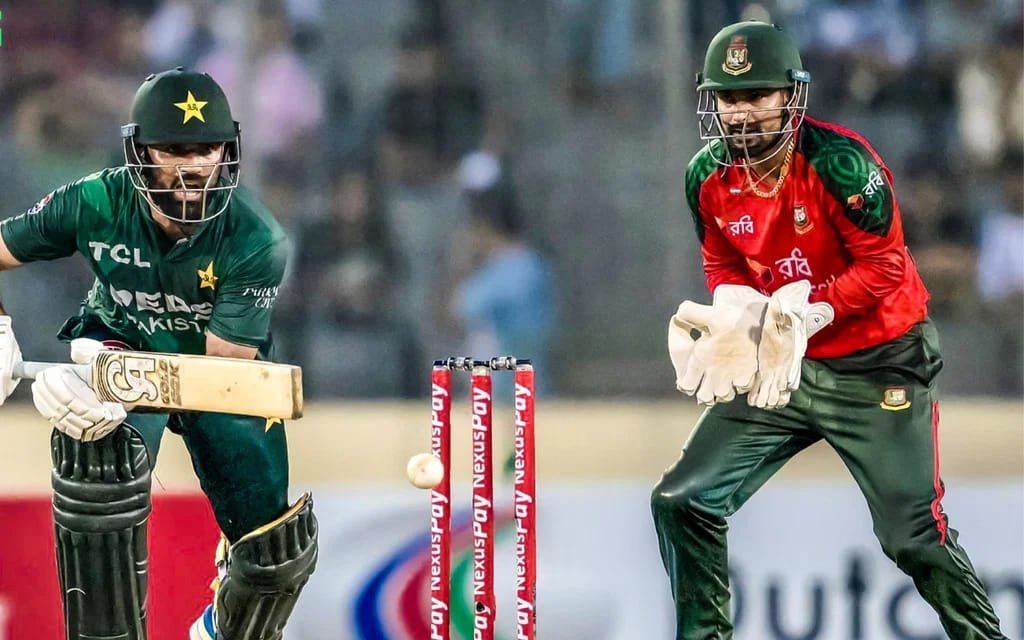
The Pakistan Cricket Board (PCB) has indicated a keen willingness to host Bangladesh’s fixtures in the upcoming ICC T20 World Cup 2026, following the Bangladesh Cricket Board’s (BCB) announcement that their national team, led by captain Liton Das, would refrain from traveling to India over security concerns.
The development comes amid growing tensions between the Bangladesh cricket authorities and their Indian counterparts, compounded by recent controversies in the Indian Premier League (IPL).
According to sources within the PCB, Pakistan possesses a range of venues that are fully equipped and match-ready, capable of accommodating high-profile international matches. The officials highlighted that, should the designated venues in Sri Lanka be unavailable, Pakistan could seamlessly serve as an alternative host, providing world-class facilities for all of Bangladesh’s group-stage fixtures.
The country’s successful hosting of major tournaments in recent years, including the ICC Champions Trophy 2025 and the ICC Women’s Qualifiers 2025, reinforces PCB’s confidence in its ability to manage such a high-profile event.
The backdrop to PCB’s offer is a series of strained interactions between the BCB and the Board of Control for Cricket in India (BCCI). The tensions escalated following the removal of Bangladesh’s fast bowler Mustafizur Rahman from the Kolkata Knight Riders (KKR) squad in the IPL. While the IPL franchise and the BCCI did not publicly disclose an official reason for Rahman’s exclusion, the decision coincided with worsening diplomatic relations between Bangladesh and India. This sequence of events led to a heightened sense of caution within the BCB regarding the safety and logistical arrangements of playing matches on Indian soil during the T20 World Cup.
Under the ICC’s current schedule, Bangladesh is slated to play their initial three group-stage matches in Kolkata, with the final group-stage match scheduled in Mumbai. However, following Rahman’s exclusion and the resulting tensions, both the venues and the broader issue of Bangladesh’s participation in India have become contentious points. In response to the situation, the Bangladesh government took the significant step of banning the broadcast of the IPL in the country. Additionally, the BCB formally communicated its position to the International Cricket Council (ICC), stating that the national team would not play its T20 World Cup matches in India due to security considerations.
Within PCB circles, officials are optimistic about Pakistan’s ability to host Bangladesh’s matches. The country’s cricketing infrastructure, which includes multiple stadiums with international-standard pitches, modern facilities, and comprehensive security arrangements, positions it as a viable alternative host. The PCB has also emphasized that hosting Bangladesh’s fixtures would not only provide a solution to the logistical and security challenges facing the BCB but also further strengthen cricketing ties between Pakistan and Bangladesh.
The potential shift of Bangladesh’s T20 World Cup matches to Pakistan carries multiple advantages. For one, it ensures that the Bangladeshi team can compete in a familiar regional environment with robust support systems in place. Pakistan has a rich history of successfully organizing large-scale international cricket tournaments, showcasing its operational capabilities and hospitality standards.
The venues in Karachi, Lahore, Rawalpindi, and other cities have consistently met ICC requirements, including stadium lighting, media facilities, player accommodations, practice grounds, and advanced security arrangements. This level of preparedness ensures that no disruption would occur in the flow of the tournament, even if the fixtures are moved on relatively short notice.
Beyond logistical readiness, hosting Bangladesh’s matches in Pakistan could also offer commercial and viewership benefits. Pakistan’s cricket fanbase is fervent and widespread, ensuring packed stadiums and heightened interest in matches featuring a regional rival like Bangladesh. Sponsorship, ticket sales, and broadcasting arrangements could potentially see a boost, benefiting both the ICC and the national boards involved. Moreover, the move would underscore the PCB’s proactive approach in addressing international cricketing challenges and demonstrate its commitment to supporting fellow cricketing nations during unforeseen circumstances.
PCB sources further noted that all stadiums earmarked for hosting T20 World Cup matches are equipped to handle multiple high-profile games simultaneously. The security apparatus, including coordination with local authorities, specialized policing, and emergency preparedness, has been successfully tested during previous events such as the ICC Champions Trophy 2025.
Similarly, Pakistan’s experience in organizing the ICC Women’s Qualifiers 2025, which involved multiple international teams and extensive media coverage, highlights the country’s capability to efficiently manage tournaments with complex schedules and international standards.
The ICC, as the governing body of international cricket, will ultimately determine whether Bangladesh’s fixtures are shifted to an alternative host nation. Officials in Pakistan remain in close communication with both the ICC and the BCB, ensuring that any potential transition of venues would be seamless and minimally disruptive to the tournament schedule.
If approved, Pakistan would offer full logistical and operational support, ranging from practice facilities to player accommodation, transportation, broadcasting arrangements, and media management. The emphasis would be on providing an environment that mirrors the professionalism and organization expected at a global ICC event.
The political and diplomatic dimensions of this situation are also significant. The strained relations between Bangladesh and India, amplified by the IPL controversy, have brought the issue of venue security and player safety into sharp focus. By offering to host Bangladesh’s matches, the PCB provides a neutral and secure regional venue that addresses these concerns. In addition, such a move would symbolize regional cooperation within South Asian cricket, highlighting Pakistan’s willingness to support a neighboring cricketing nation during a period of tension.
For Bangladesh, shifting their T20 World Cup fixtures to Pakistan would ensure that the team participates fully in the tournament without compromising on safety or logistical arrangements. It would also prevent any disruption to the competitive integrity of the event, allowing the team to play in a familiar subcontinental environment. Pakistan’s commitment to hosting international cricket and its ability to manage crowd control, stadium facilities, and media operations ensures that the event could proceed smoothly without affecting other participating nations or tournament schedules.
Furthermore, PCB’s proactive approach highlights the board’s broader strategic vision. By positioning Pakistan as an alternative host for high-profile matches, the PCB strengthens its reputation within international cricket circles. It demonstrates organizational competence, the ability to respond to unexpected developments, and a willingness to contribute positively to the global cricketing calendar.
Hosting Bangladesh’s fixtures would not only reinforce Pakistan’s credentials as a safe and capable venue for international cricket but also contribute to the country’s sports diplomacy initiatives, fostering goodwill among neighboring cricketing nations.
With Bangladesh opting not to play their T20 World Cup 2026 matches in India due to security concerns and recent diplomatic tensions, Pakistan has emerged as a ready and viable alternative. The PCB’s fully equipped stadiums, experience in hosting major ICC tournaments, and commitment to delivering world-class cricketing infrastructure make the country an ideal candidate to accommodate Bangladesh’s fixtures.
The ICC’s final decision will determine the outcome, but Pakistan has signaled its preparedness, ensuring that the tournament’s competitive and operational standards remain uncompromised while simultaneously promoting regional cooperation and cricketing camaraderie.