

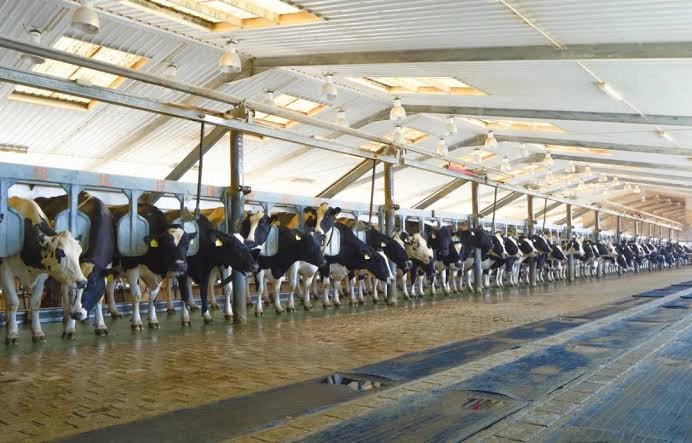
Saudi Arabia continues to advance its agricultural sector through a focused commitment to quality, safety, and sustainability, with the dairy industry emerging as a key example of this progress. The Ministry of Environment, Water, and Agriculture recently highlighted that the vast majority of the Kingdom’s milk production—an impressive 95 percent—is now certified under the Saudi Good Agricultural Practices (Saudi GAP) quality mark.
This certification reflects not only the producers’ dedication to maintaining the highest levels of quality and food safety but also their adherence to both national and international standards. By embracing Saudi GAP, the Kingdom is ensuring that its dairy products meet stringent benchmarks for consumer safety and market competitiveness.
The scale of milk production in Saudi Arabia has reached remarkable levels. According to ministry data, raw milk production from specialized dairy farms surpassed 2.7 billion liters in 2024 alone. A regional breakdown of this output shows that the Riyadh Region continues to lead, producing 1.6 billion liters, followed by the Eastern Region with 1.1 billion liters.
These regions are home to approximately 233,000 dairy cows, reflecting the extensive infrastructure and investment devoted to modernizing the Kingdom’s dairy sector. Such figures demonstrate not only the magnitude of production but also the Kingdom’s ongoing efforts to establish a robust and self-sufficient food supply chain.
Central to this transformation is the Saudi GAP program, which emphasizes the importance of adopting internationally recognized best practices throughout every stage of production. From farm management to milk handling and distribution, the program ensures that every process is carried out with the highest level of hygiene, safety, and efficiency. By promoting these practices, the Kingdom is not only guaranteeing superior quality for domestic consumers but is also strengthening the export potential of its dairy products in regional and international markets.
The Ministry of Environment, Water, and Agriculture explains that Saudi GAP is more than a certification; it represents a holistic approach to modern agriculture. The program supports the professional development of farmers, technicians, and other stakeholders by providing training on advanced agricultural techniques and encouraging the adoption of innovative technologies.
This combination of technical skill development and technological adoption ensures that Saudi farmers can maintain consistent production quality, improve efficiency, and reduce waste—all of which are crucial for long-term sustainability. By equipping farmers with modern knowledge and tools, the program simultaneously fosters economic growth, enhances food security, and creates a skilled workforce capable of sustaining the Kingdom’s agricultural ambitions.
Moreover, the Saudi GAP initiative contributes significantly to the sustainability of Saudi Arabia’s food security framework. By standardizing production methods and ensuring compliance with rigorous safety and quality protocols, the program helps reduce potential health risks, prevent contamination, and safeguard consumer confidence in locally produced goods. This approach aligns directly with Saudi Vision 2030, which emphasizes the development of a sustainable agricultural sector capable of supporting both domestic needs and global competitiveness. By certifying nearly all milk production in the Kingdom, Saudi Arabia is signaling its dedication to building a food production system that is resilient, innovative, and internationally respected.
Consumer trust is another vital element of this program. Through the Saudi GAP quality mark, buyers can identify products that have undergone rigorous quality checks and adhere to stringent safety measures. This visual assurance strengthens confidence in the local food supply, encouraging greater consumption of domestic products while promoting awareness about food safety.
Additionally, it helps local producers differentiate their goods in increasingly competitive markets, both at home and abroad. By enhancing trust and transparency, Saudi GAP contributes to a sustainable cycle where quality assurance drives consumer loyalty, which in turn incentivizes producers to maintain and elevate standards.
The impact of Saudi GAP extends beyond milk alone. Its principles are applied across a range of agricultural sectors, ensuring that both plant and animal production adhere to high standards. The program emphasizes efficient management of agricultural inputs, whether feed, fertilizers, or other resources, while promoting sustainable practices that protect the environment and preserve natural resources. By combining productivity with sustainability, Saudi Arabia is fostering an agricultural model that balances economic growth with ecological responsibility—a key component of Vision 2030.
Furthermore, the program encourages innovation in farming practices and the adoption of modern technologies. From advanced irrigation systems to mechanized milking processes, these innovations help increase production efficiency, improve product quality, and reduce operational costs. This technological integration not only benefits producers but also strengthens the overall competitiveness of Saudi products in regional and international markets. By embedding innovation into agricultural practices, the Kingdom is ensuring that its food industry is future-ready and capable of meeting growing domestic and global demand.
The results of these efforts are tangible. With the Kingdom producing over 2.7 billion liters of milk annually under Saudi GAP standards, it is clear that the nation is making significant strides toward achieving self-sufficiency in key food sectors. The Riyadh and Eastern regions, in particular, serve as model hubs for dairy production, combining high-quality animal husbandry with cutting-edge farm management practices. The coordinated approach adopted by the Ministry of Environment, Water, and Agriculture demonstrates how strategic oversight, coupled with technical support for farmers, can transform an entire sector into a benchmark of quality and safety.
Saudi GAP’s long-term benefits extend beyond quality assurance and productivity. By supporting farmers’ professional growth, promoting modern technology, and standardizing best practices, the program contributes to job creation, skill development, and rural economic growth.
It also reinforces public health and safety by minimizing the risk of contaminated or substandard products entering the market. These achievements are vital as the Kingdom pursues its broader goals under Vision 2030, including food security, economic diversification, and global competitiveness.
The Saudi GAP initiative and its application in the Kingdom’s dairy sector reflect a holistic, strategic, and forward-looking approach to agriculture. By certifying 95% of milk production, Saudi Arabia is sending a clear message about its commitment to quality, safety, and sustainability.
Through professional training, technological adoption, and rigorous standards, the program is enhancing consumer confidence, supporting farmers, and building a resilient and competitive agricultural sector. As the Kingdom continues to expand and innovate in agriculture, Saudi GAP remains a cornerstone of its vision to ensure high-quality, safe, and sustainable food production for both domestic and international markets.