

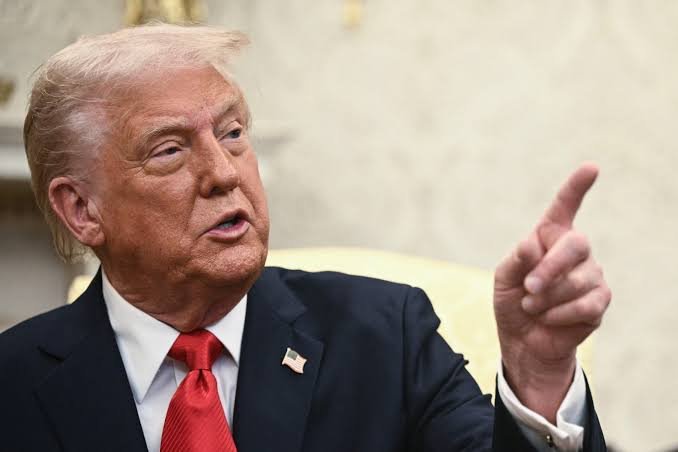
Tensions between the United States and Iran are once again moving toward a dangerous phase, as signs increasingly point to a revival of military thinking in Washington after diplomatic efforts failed to deliver concrete results. Recent developments suggest that U.S. President Donald Trump is actively reassessing a wide range of military scenarios aimed at Iran, reflecting growing frustration within the American administration over the lack of progress on key security concerns. These concerns are primarily centered on Iran’s nuclear program and its continued development of ballistic missile capabilities, both of which have remained major sticking points in interactions between the two countries.
According to information circulating among diplomatic and security circles, the initial talks meant to ease tensions and establish limits on Iran’s strategic programs did not yield outcomes satisfactory to Washington. As a result, internal discussions within the White House and among national security advisers have intensified, with a renewed focus on whether diplomacy alone can achieve U.S. objectives.
There is a growing belief among some senior officials that Tehran has used negotiations mainly as a tool to buy time, while continuing activities that Washington views as destabilizing for the region and beyond. This perception has contributed to a noticeable hardening of tone in the president’s approach.
Attempts to establish direct communication between senior representatives of the two sides were reportedly explored but ultimately failed to materialize. There was discussion of a possible direct meeting between Iranian Foreign Minister Abbas Araghchi and U.S. envoy Steve Witkoff, which many observers believed could have opened the door to de-escalation.
However, for a combination of political, logistical, and strategic reasons, such a meeting never took place. In the absence of face-to-face dialogue, Washington and Tehran instead relied on indirect channels, exchanging messages through Omani mediators. These communications were intended to test whether common ground could still be found and whether a potential military confrontation could be avoided before the situation spiraled further.
At the same time, American intelligence assessments have reportedly raised alarms about Iran’s ongoing activities related to its nuclear infrastructure. U.S. officials believe that Iran is attempting to rebuild, reinforce, or expand underground nuclear facilities that were previously damaged or rendered inoperable. Such developments are seen in Washington as a direct challenge to U.S. policy goals and as a threat to regional stability. The possibility that Iran could restore or even enhance its nuclear capabilities has added urgency to deliberations within the Trump administration, strengthening arguments in favor of applying much heavier pressure.
President Trump has also taken his message directly to the public, using his social media platform, “Truth Social,” to call on Iran to return to negotiations. In his statements, he has emphasized that the United States remains open to a deal, but only one that he describes as fair, balanced, and firmly closed to any path toward nuclear weapons. While presenting diplomacy as an option, he has simultaneously issued stark warnings, making it clear that failure to engage seriously could result in severe consequences. His remarks suggest that patience within the administration is wearing thin.
According to people familiar with the president’s thinking, Trump frequently refers to previous military actions as proof of U.S. resolve. In particular, he views last summer’s strikes on Iranian nuclear facilities as a demonstration of what Washington is prepared to do when it believes its red lines have been crossed. However, he has reportedly conveyed to advisers that any future operation would not merely repeat past actions but would be far more expansive and forceful.
This belief has driven a comprehensive review of military options, ranging from limited strikes to broader campaigns designed to significantly weaken Iran’s strategic capabilities.
These discussions reportedly go beyond Iran’s nuclear program alone. Among the options being examined are potential strikes on key government institutions, military command centers, and security infrastructure. Some U.S. officials are also said to be considering targeted actions against Iranian political leaders and senior security figures. These individuals are viewed by Washington as responsible for violent crackdowns on recent protests inside Iran, which resulted in civilian deaths and widespread unrest. Targeting such figures is seen by some strategists as a way to directly pressure Iran’s leadership while avoiding a full-scale war.
Despite the seriousness of these considerations, it is also emphasized that no final decision has yet been made. President Trump is said to be weighing the benefits and risks of each option carefully, aware that any military action could have far-reaching consequences not only for Iran but for the entire Middle East. Advisers have reportedly presented him with multiple scenarios, outlining possible Iranian responses, regional reactions, and the potential impact on global markets and international alliances. This process reflects an understanding that even limited military action could trigger a chain of events difficult to control.
One factor that appears to be influencing the president’s calculations is the expanded U.S. military presence in the region. The deployment of aircraft carriers and additional naval and air assets has, in the president’s view, significantly increased America’s leverage. He reportedly believes that this enhanced posture provides him with a broader range of choices and strengthens the credibility of U.S. threats. From his perspective, the visible presence of American forces serves both as a deterrent and as a signal that Washington is prepared to act if necessary.
Defense analysts note that the growing concentration of U.S. military power in the Arabian Sea and surrounding areas gives Washington greater operational flexibility than in previous periods of tension. This, they argue, explains why military options are now being discussed more openly and seriously at the highest levels of government. At the same time, many experts caution that increased military readiness can also raise the risk of miscalculation, particularly in a region already marked by rivalries, proxy conflicts, and fragile political balances.
Critics of a hardline approach warn that any major escalation could push the Middle East into a new cycle of instability. They argue that even a carefully planned strike could provoke retaliation by Iran or its allies, potentially drawing neighboring countries into a wider conflict. Such an outcome, they say, would not only threaten regional security but could also have global economic repercussions, particularly in energy markets. These concerns have fueled debate within policy circles about whether intensified diplomacy, however difficult, remains the safer path.
For now, the situation remains unresolved and highly fluid. Diplomatic channels, though strained, have not been completely shut down, and indirect communication continues through intermediaries. Nevertheless, there is a growing sense in Washington that time is running out and that prolonged stalemate may no longer be acceptable.
Whether President Trump ultimately chooses to double down on diplomatic efforts or move toward a more confrontational military strategy remains uncertain. What is clear is that the coming period will be critical in determining the future direction of U.S.-Iran relations, as the international community watches closely, aware that the decisions made now could shape regional and global security for years to come.