

Uncertainty continues to surround Pakistan’s participation in its high-profile clash against India at the ICC T20 World Cup 2026, as the final call now rests with Prime Minister Shehbaz Sharif. According to informed sources, the prime minister will personally decide whether Pakistan proceeds with the match or upholds its decision to boycott the encounter, a move that has already triggered intense debate across the cricketing world.
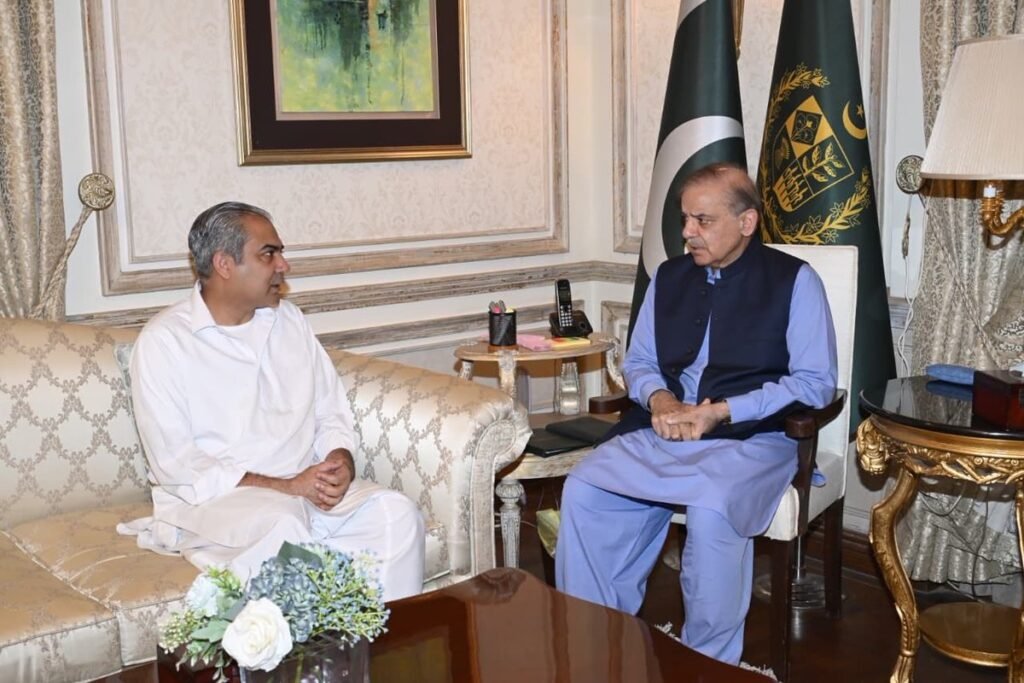
The issue has gained urgency as Pakistan Cricket Board (PCB) Chairman Mohsin Naqvi is expected to brief the prime minister following extensive discussions with senior officials from the International Cricket Council (ICC) and the Bangladesh Cricket Board (BCB). Sources say Naqvi is scheduled to meet PM Shehbaz to provide a detailed account of recent negotiations and outline the possible consequences of both playing and withdrawing from the marquee fixture.
Pakistan’s stance stems from its decision to express solidarity with Bangladesh, which was excluded from the tournament after refusing to send its national team to New Delhi over security concerns. Dhaka remained firm in its position, arguing that player safety could not be compromised, even as the ICC insisted that the tournament schedule could not be altered at such a late stage.
Following Bangladesh’s removal from the competition, the PCB took a strong position, viewing the ICC’s decision as unfair and biased. In response, Pakistan announced it would not play its scheduled match against India, framing the move as a principled stand rather than a purely political or sporting protest.
Behind the scenes, however, efforts to defuse the crisis have intensified. Just days ago, senior representatives from the PCB, ICC, and BCB engaged in marathon talks lasting more than five hours. The meeting brought together PCB Chairman Mohsin Naqvi, BCB President Aminul Islam, and ICC Deputy Chairman Imran Khwaja, among others.
According to sources familiar with the discussions, the atmosphere of the meeting was serious but constructive. The ICC reportedly showed flexibility during the talks and acknowledged several concerns raised by Bangladesh. As a result, a potential framework — described by insiders as a “formula” — has been drafted to address the grievances that led to Bangladesh’s withdrawal.
During the negotiations, both the ICC and the BCB presented proposals, while the PCB played a central mediating role, attempting to bridge gaps between the international body and the Bangladeshi board. Officials involved in the talks indicated that the ICC’s response was more accommodating than expected, raising hopes that Bangladesh could be brought back into the tournament under mutually acceptable terms.
With ICC Deputy Chairman Imran Khwaja returning to the council’s headquarters to seek final approvals and BCB President Aminul Islam heading back to Dhaka to brief his board and government, the process has now entered a critical phase. Once internal consultations are completed, ICC and BCB officials are expected to reconnect to finalize the next steps.
Sources say that if consensus is reached and Bangladesh’s concerns are formally addressed, the broader situation — including Pakistan’s boycott decision — could be revisited. This is where Prime Minister Shehbaz Sharif’s role becomes decisive, as any reversal or continuation of Pakistan’s stance will require political approval at the highest level.
The current dispute has its roots in a separate controversy that escalated tensions between Bangladesh and India. The situation deteriorated after Bangladesh’s leading fast bowler, Mustafizur Rahman, was dropped from the Indian Premier League (IPL) following directions from the Board of Control for Cricket in India (BCCI). The decision sparked anger in Bangladesh, where it was widely perceived as discriminatory and politically motivated.
In the aftermath, the BCB formally approached the ICC, requesting that its World Cup matches be moved outside India. However, the ICC rejected the appeal, citing logistical constraints and the proximity of the tournament’s February 7 start date. With talks failing to yield a compromise, Bangladesh chose not to participate, prompting the ICC to replace it with Scotland.
The decision to sideline Bangladesh further inflamed criticism, particularly from Pakistan. The PCB openly questioned the ICC’s handling of the situation and accused the governing body of applying double standards. Pakistan’s subsequent boycott threat against India was widely interpreted as both a show of solidarity with Bangladesh and a challenge to what it sees as uneven governance in international cricket.
Beyond the political and sporting dimensions, the situation carries enormous financial implications. Matches between India and Pakistan are widely regarded as the most commercially valuable fixtures in global cricket. Broadcasters, sponsors, advertisers, and tournament organizers all stand to gain — or lose — staggering sums depending on whether such matches take place.
Industry analysts estimate that a single India–Pakistan T20 match can generate economic activity worth approximately $500 million. This figure includes broadcast rights, advertising premiums, sponsorship deals, ticket sales, and indirect commercial benefits. In Indian currency terms, the total valuation is estimated at around INR45,000 crore.
Advertising revenue alone represents a massive stake. Media reports suggest that a 10-second advertising slot during an India–Pakistan T20 match can cost between INR25 lakh and INR40 lakh, significantly higher than rates for even high-stakes knockout matches involving other top teams. The intense viewership, which spans continents, drives unparalleled demand from advertisers.
The official broadcast rights holder is expected to feel the most immediate financial impact if the match does not take place. Projections cited by industry sources estimate that advertising revenue from this single fixture could reach around INR300 crore. A cancellation or boycott would therefore disrupt carefully planned commercial strategies and potentially strain relationships between broadcasters, sponsors, and the ICC.
Despite these financial pressures, Pakistan’s leadership has so far emphasized principle over profit. Officials have privately indicated that while economic considerations are important, fairness, transparency, and regional solidarity cannot be ignored. This balancing act now places significant responsibility on Prime Minister Shehbaz Sharif, whose decision will shape not only Pakistan’s World Cup campaign but also its broader stance within international cricket politics.
Cricket observers believe that whatever decision is taken will have long-term consequences. Proceeding with the match could ease tensions with the ICC and safeguard commercial interests, but it may also draw criticism from those who view the boycott as a moral stand. Maintaining the boycott, on the other hand, would reinforce Pakistan’s support for Bangladesh but could isolate the PCB within global cricketing circles.
As the clock ticks toward the tournament, all eyes are on Islamabad. With diplomatic negotiations ongoing and financial stakes at unprecedented levels, the final verdict is expected to be both closely watched and heavily scrutinized — not just by cricket fans, but by administrators, broadcasters, and governments across the cricketing world.