

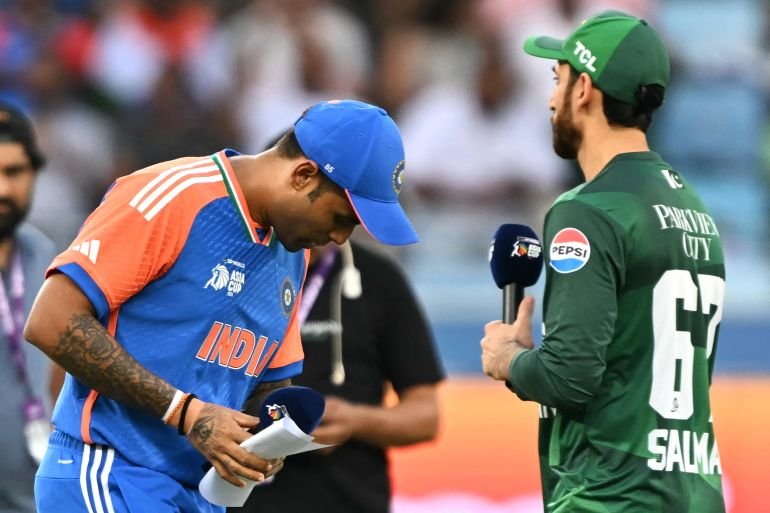
As the much-anticipated ICC Men’s T20 World Cup 2026 fixture between Pakistan and India draws near, Colombo is experiencing an unprecedented frenzy, with ticket demand reaching fever pitch. The historic encounter, scheduled for Sunday at the R. Premadasa Stadium, has ignited excitement not only among local cricket enthusiasts but also among fans traveling from overseas, eager to witness the high-voltage clash between the subcontinent’s most storied rivals.
A stroll past the stadium’s ticket counters on Thursday revealed a curious scene: long, restless queues of eager supporters still forming despite the official word that the match was sold out. Officials confirmed that all 37,000 seats had been purchased, yet fans continued to line up in hopes of last-minute access, creating an atmosphere of anticipation tinged with confusion. “We do not have any tickets left for Sunday’s match,” said one of the ticket attendants. “I don’t know why people are still waiting in line. Almost all tickets were purchased online yesterday.”
The absence of a clearly displayed “Sold Out” sign only added to the uncertainty. Supporters arriving from across Sri Lanka and neighboring countries hoped to acquire entry at the gate, unaware that the stadium had reached its full capacity. Another booth official explained, “We have not received instructions from the organisers to put up any public notice indicating the match is sold out. Fans are unfortunately unaware.”
This chaotic ticket demand reflects the enduring intensity of the India-Pakistan cricket rivalry, often referred to as the “mother of all battles.” Matches between these two nations have historically shattered attendance and ticketing records wherever they are staged. From Melbourne to Manchester, Dubai to New York, any contest involving Pakistan and India generates not only immense sporting interest but also enormous commercial activity, drawing spectators, sponsors, and media attention in record numbers. Colombo, hosting its first-ever World Cup T20 clash between these giants, is now part of this storied history. The occasion carries immense emotional and cultural weight, with fans perceiving this as more than just a cricket match—it is a celebration of passion, pride, and national rivalry on a global stage.
Hotels across the city are reportedly near full capacity, reflecting the influx of domestic and international visitors. Airline bookings from major cities such as Karachi, Lahore, Delhi, and Mumbai surged in recent days, while local transportation systems brace for heavy demand. Food vendors, souvenir sellers, and other stadium-adjacent businesses are preparing for the spike in footfall, anticipating significant economic activity as tens of thousands of cricket enthusiasts converge.
Where ticket demand rises, opportunistic practices often follow. In Colombo, reports indicate that the black market has already begun operating discreetly, both around the stadium and on online platforms. Tickets originally priced at Rs 500 are expected to fetch exorbitant sums, ranging from Rs 8,000 to Rs 10,000—or possibly more—on the day of the match. A local organiser, speaking on condition of anonymity, warned, “You will see a ticket worth Rs 500 being sold for Rs 10,000 on Sunday. Some individuals purchased tickets in bulk via online portals and now intend to resell them at huge profits.”
Authorities have promised enhanced security measures to prevent illegal reselling, yet history suggests that policing the underground ticket trade during an India-Pakistan match is particularly challenging. In previous encounters, even extensive security arrangements have struggled to fully curb black-market activity, given the high stakes and immense demand. Officials face the difficult task of balancing crowd safety, revenue protection, and fair access for fans eager to experience the match live.
For most fans, price is secondary to the thrill of witnessing this historic sporting spectacle. The chance to see Pakistani stars like Babar Azam, Saim Ayub, and Sahibzada Farhan face off against India’s formidable batting and bowling units, under the floodlights at Premadasa, represents a once-in-a-lifetime experience. Cricket enthusiasts eagerly anticipate the tension, drama, and high-quality sport that this rivalry guarantees, with every boundary, wicket, and tactical maneuver intensifying the excitement.
Preparations for the match extend beyond ticket sales. The stadium itself has undergone meticulous planning to accommodate the record crowd. Crowd management teams are coordinating entry and exit points, emergency response protocols have been reinforced, and security personnel are being deployed across the venue to ensure spectator safety. The authorities are particularly conscious of managing the diverse audience, which includes families, traveling fans, and international visitors, while maintaining an atmosphere of celebration rather than chaos.
The stakes for both teams are equally high. While the match is part of the T20 World Cup schedule, the psychological significance of a Pakistan-India encounter cannot be overstated. Players are acutely aware of the passionate fan base, and every run and wicket carries symbolic weight that transcends the sport. For the teams, performing in front of a stadium brimming with fervent supporters is both an opportunity and a challenge, adding layers of intensity to an already high-pressure tournament environment.
The local economy around Colombo is poised to benefit significantly from the event. Hotels, restaurants, and transport providers are reporting unprecedented bookings, while souvenir shops and stadium vendors are stocking up on merchandise. The tourism impact is expected to ripple across the region, with many visitors planning to explore cultural sites in addition to attending the match. The inflow of international fans contributes not only to immediate revenue but also to the long-term positioning of Sri Lanka as a key destination for global cricket events.
Meanwhile, cricket boards and tournament organizers continue to manage logistics. Match-day operations, including ticket verification, crowd control, and emergency medical services, are being coordinated with precision. The importance of efficient operations is magnified by the sheer scale of interest: tens of thousands of spectators from different countries, with varying entry requirements and expectations, require smooth and well-managed procedures to ensure a positive experience.
Despite challenges like overcrowding, black-market activity, and last-minute rushes, the overarching sentiment among fans remains one of unbridled enthusiasm. The love for cricket, the historical rivalry, and the collective passion of the spectators make this encounter a culturally and emotionally significant event. It is a testament to cricket’s power to unite, excite, and inspire, particularly when played on a stage as prominent as the ICC Men’s T20 World Cup.
As Sunday approaches, all eyes in Colombo—and indeed across the cricketing world—will be on the R Premadasa Stadium. Fans eagerly anticipate witnessing every moment of high drama, every strategic play, and every heroic performance. While the logistical and economic dimensions of the event are significant, the emotional and sporting impact is what truly defines this match. For many, attending an India-Pakistan World Cup T20 clash is a lifelong dream, and the overwhelming ticket demand is proof of cricket’s enduring ability to captivate and enthrall audiences worldwide.
Ultimately, the Colombo event exemplifies how sport, culture, and commerce intersect, creating moments that resonate far beyond the stadium. Whether in the form of ticket sales, black-market dynamics, local business activity, or sheer fan enthusiasm, the India-Pakistan T20 match in Colombo will leave a lasting imprint as one of the most memorable fixtures in cricket history.