

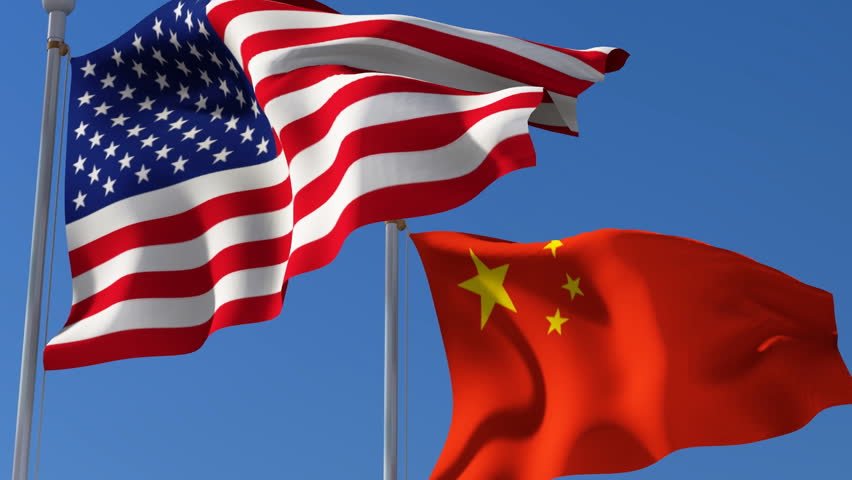
Global debate over nuclear weapons control has once again intensified as tensions between major powers resurface at a critical moment for international security. With the expiration of the last remaining arms control framework between the United States and Russia, concerns about a renewed nuclear competition have grown sharper. Against this fragile backdrop, fresh allegations from Washington regarding a previously undisclosed Chinese underground test have added a new layer of complexity to an already volatile strategic environment.
American officials recently disclosed that what had been recorded in June 2020 as a seismic event in western China may, in fact, have been an underground nuclear-related explosion. According to the U.S. assessment, the event occurred at the Lop Nur test site and registered a magnitude of approximately 2.75 on the Richter scale.
Analysts cited data comparisons between historical earthquakes and known explosive signatures, suggesting that the seismic characteristics differed from typical mining blasts. The information, officials said, was derived in part from monitoring systems connected to an international detection station in Kazakhstan, which forms part of the global verification network tracking nuclear-related activity.
The disclosure was presented before a United Nations subsidiary body focused on arms control, verification, and compliance. A senior U.S. State Department official argued that the findings raised serious questions about transparency in China’s nuclear program.
He emphasized that the issue was not merely about a single seismic event, but part of a broader pattern of rapid and deliberate expansion of China’s nuclear arsenal in recent years. According to the U.S. position, Beijing has significantly accelerated the development of its strategic capabilities while offering reassurances that appear inconsistent with observable trends.
American representatives further contended that China’s buildup has been unusually swift and lacks the degree of openness expected under international norms. They suggested that if current trajectories continue, China could approach a new level of nuclear parity within the next four to five years—an outcome that would fundamentally reshape the global balance of power. This projection has intensified debate within diplomatic and security circles about how to integrate China more formally into future arms control frameworks.
At the same time, U.S. officials called upon other nations to encourage both China and Russia to commit to deeper reductions and greater accountability regarding nuclear stockpiles. They noted that previous agreements, while significant, had structural limitations.
In particular, they argued that the New START treaty did not sufficiently address Russia’s large inventory of non-strategic nuclear weapons—estimated at around 2,000 warheads—nor did it account for China’s expanding capabilities. With the treaty’s expiration, formal constraints on the world’s two largest nuclear arsenals have lapsed, heightening anxieties about the possibility of a renewed arms race.
Beijing, however, firmly rejected the American allegations. China’s ambassador to the United Nations dismissed the claims as unfounded and accused Washington of misrepresenting China’s nuclear doctrine. He stated that China adheres to a defensive nuclear policy and has not conducted any covert nuclear tests. According to the Chinese position, accusations of secret testing serve as a pretext for the United States to justify its own potential resumption of nuclear experimentation.
The Chinese envoy further argued that persistent public allegations risk undermining international trust and destabilizing existing non-proliferation norms. He criticized what he described as attempts to damage China’s reputation in order to divert attention from broader geopolitical tensions. From Beijing’s perspective, its modernization efforts are consistent with maintaining credible deterrence rather than pursuing numerical superiority.
Despite the sharp exchange of accusations, diplomatic engagement has not entirely stalled. Reports indicate that American and Chinese officials are exploring the possibility of discussions aimed at a broader multilateral framework for nuclear arms reduction.
The objective would be to design an agreement that reflects contemporary strategic realities rather than the bipolar structure that defined Cold War-era treaties. Meanwhile, Washington has also engaged Moscow in dialogue, emphasizing the necessity of a new arrangement that could eventually encompass all three major nuclear powers.
Security analysts note that rebuilding trust will be the central challenge in any such negotiations. Unlike earlier decades, today’s strategic landscape includes emerging technologies such as hypersonic delivery systems, advanced missile defenses, cyber capabilities, and space-based assets.
These developments complicate traditional verification mechanisms and make it more difficult to define clear limits. Any future agreement would therefore require more sophisticated monitoring tools and broader consensus among participating states.
The controversy over the alleged 2020 seismic event illustrates how sensitive and politically charged nuclear transparency remains. Even minor ambiguities in data interpretation can escalate into diplomatic disputes with global implications. In a world where nuclear deterrence still shapes strategic calculations, uncertainty itself can be destabilizing. That is why verification regimes and open communication channels are widely regarded as indispensable pillars of stability.
The lapse of formal constraints between Washington and Moscow has already altered the strategic equation. Without legally binding ceilings, both sides technically possess greater flexibility in adjusting their arsenals. While neither has announced immediate expansion plans, the absence of enforceable limits increases the risk of miscalculation. Observers warn that if major powers begin responding to each other’s modernization programs without coordinated oversight, a competitive cycle could emerge.
At the heart of the debate lies a broader question about the future of global arms governance. For decades, bilateral agreements between the United States and Russia formed the backbone of nuclear restraint. However, the rise of additional nuclear actors and the diversification of weapons technologies have rendered that structure increasingly outdated. Many experts argue that a sustainable solution must involve inclusive frameworks that reflect multipolar realities.
Ultimately, the recent disclosures and denials highlight the fragile state of contemporary nuclear diplomacy. Whether the current tensions evolve into deeper confrontation or serve as a catalyst for renewed negotiations remains uncertain. What is clear, however, is that the stakes extend far beyond a single disputed seismic reading. The trajectory chosen by major powers in the coming years will significantly influence international security, deterrence stability, and the credibility of non-proliferation efforts worldwide.
In this delicate environment, leadership, transparency, and strategic restraint will determine whether the world moves toward renewed arms competition or a reimagined system of cooperative security. The coming months may prove decisive in shaping that direction.