

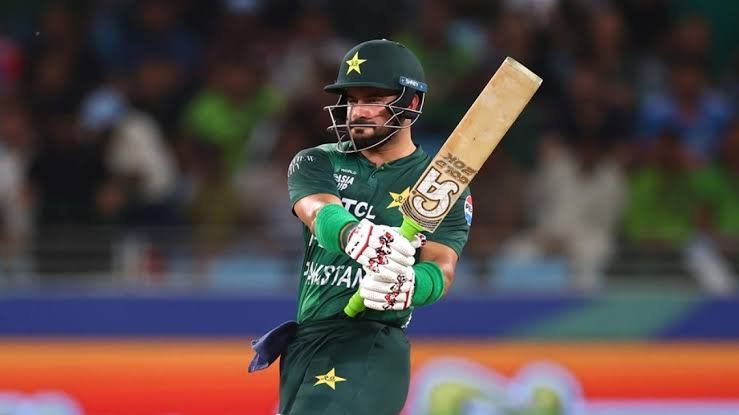
The International Cricket Council (ICC) has unveiled its official Team of the Tournament for the 2026 ICC Men’s T20 World Cup, highlighting the players who delivered the most influential performances throughout the competition. The lineup, chosen by a panel of seasoned cricket experts, features standout names from across the cricketing world, including Pakistan opener Sahibzada Farhan, whose remarkable batting displays made him one of the most talked-about performers of the tournament.
The selection committee responsible for finalizing the team consisted of several respected figures in the cricket community. Among them were former West Indies fast bowler and commentator Ian Bishop, ex-England captain Eoin Morgan, experienced broadcaster and former coach Natalie Germanos, ICC representative Gaurav Saxena, and senior Sri Lankan sports journalist Rex Clementine. Their combined expertise helped shape a squad that reflects both individual brilliance and overall impact during the tournament.
Although Pakistan’s campaign concluded in the Super Eight stage and lacked consistent results, Sahibzada Farhan emerged as a shining light for his team. The 29-year-old right-hander demonstrated exceptional consistency with the bat, amassing an impressive total of 383 runs in just seven matches. This remarkable tally established a new record for the highest number of runs scored by a batter in a single edition of the T20 World Cup.
Farhan’s tournament was also historic in another major way. He became the first cricketer in T20 World Cup history to register two centuries in the same edition. One of his most memorable innings came in the final Super Eight fixture against Sri Lanka, where he produced a magnificent century that guided Pakistan to a dramatic five-run victory. His ability to anchor the innings while also accelerating when required made him one of the most valuable performers of the tournament.
India, which went on to win the tournament, had several players included in the elite XI. Among them was Sanju Samson, who was also awarded the Player of the Tournament for his exceptional contributions with the bat. Samson’s journey in the competition was particularly noteworthy because he initially struggled to secure a place in India’s star-studded playing eleven. However, once he got his chance, he seized it in spectacular fashion.
Samson’s breakthrough moment came during a crucial Super Eight encounter against the West Indies. In what was effectively a knockout match, he delivered an explosive unbeaten 97 that set the tone for India’s progression in the tournament. He maintained his superb form in the knockout stages, scoring 89 against England in the semi-final and repeating the same score of 89 in the final against New Zealand.
With those performances, Samson entered the record books. He became only the third player to score half-centuries in both the semi-final and final of a T20 World Cup. Additionally, he joined a very small group of batters who have recorded three consecutive scores of 80 or more in the history of the tournament.
Another Indian batter who made a significant impact was Ishan Kishan. Known for his aggressive approach at the top of the order, Kishan consistently put opposing bowlers under pressure. He struck three half-centuries during the competition and also contributed important quick-fire innings when his team needed momentum.
One of Kishan’s most memorable performances came during the highly anticipated clash against Pakistan. After India lost an early wicket while batting first, Kishan took control of the innings and produced a breathtaking 77 from just 40 deliveries. His attacking knock featured ten boundaries and three sixes, turning the tide firmly in India’s favour.
Kishan’s campaign also carried a strong narrative of redemption. After spending nearly two years outside the international spotlight, he returned to the big stage and proved his value. In the tournament final, he contributed a vital half-century and also took two crucial catches in the field, helping India secure the championship.
South Africa’s presence in the Team of the Tournament is represented by their captain Aiden Markram. The Proteas enjoyed an outstanding start to the competition, winning their first seven matches, and Markram played a central role in that success. Opening the batting, he consistently led from the front and produced several crucial innings.
Markram registered three half-centuries during the tournament, two of which came in Ahmedabad. In one group-stage match against New Zealand, he scored an unbeaten 86 that proved decisive. Later, in the Super Eight round against the West Indies, he delivered another match-winning knock of 82 not out.
His influence was not limited to batting alone. In South Africa’s encounter against India, Markram also made an impact with the ball by dismissing Ishan Kishan in the very first over he bowled. Although South Africa’s campaign ended in the semi-finals, Markram’s leadership and tactical management of the bowling attack drew widespread praise.
India’s versatile all-rounder Hardik Pandya was another key figure recognized in the tournament team. Pandya once again demonstrated his ability to contribute in multiple departments of the game. Over the course of the competition, he scored 217 runs while also taking nine wickets with the ball.
One of Pandya’s most explosive performances came against Zimbabwe, where he smashed a rapid half-century off just 23 deliveries. That innings helped India post a massive total of 256 for 4, which turned out to be the highest team score recorded during the 2026 edition and just four runs short of the all-time T20 World Cup record.
Pandya’s bowling contributions were equally significant. In the match against Pakistan, he produced figures of 2 for 16, dismissing Sahibzada Farhan for a duck and later removing Usman Tariq to finish the innings.
England’s Will Jacks also earned a place in the Team of the Tournament thanks to his impressive all-round displays. Having been moved down the batting order, Jacks adapted perfectly to the role of a finisher. His highest score was an unbeaten 53 against Italy, but he also played several important cameos that influenced match outcomes.
Jacks also made valuable contributions with the ball. In a Super Eight match against Sri Lanka, he claimed three wickets, helping England secure a convincing 51-run victory. Over the course of the tournament, Jacks won four Player of the Match awards, equalling the record previously set by Australian all-rounder Shane Watson.
West Indies all-rounder Jason Holder was another player whose performances stood out. The tall fast bowler used his height and bounce to great effect, troubling batters even on relatively flat pitches. Holder produced an excellent all-round effort in the Super Eight clash against India, taking two wickets and scoring an unbeaten 37 from 22 balls.
His best bowling display came against Nepal at the Wankhede Stadium, where he claimed four wickets for 27 runs. That spell dismantled Nepal’s batting lineup and paved the way for a comfortable nine-wicket victory.
India’s bowling attack was spearheaded by Jasprit Bumrah, who once again proved why he is considered one of the most dangerous fast bowlers in world cricket. Bumrah finished the tournament as the joint highest wicket-taker alongside teammate Varun Chakaravarthy.
His most memorable performance came in the final against New Zealand, where he produced devastating figures of 4 for 15 and was named Player of the Match. Beyond his wicket-taking ability, Bumrah’s accuracy and control—especially in the death overs—regularly created pressure on opposition batters.
South African pacer Lungi Ngidi also enjoyed an excellent tournament. He began the campaign with figures of 4 for 31 against Canada and followed that with two additional three-wicket hauls. Even in matches where he did not take wickets, Ngidi’s disciplined bowling helped restrict opposition scoring.
England leg-spinner Adil Rashid was the only specialist spinner included in the XI. His ability to read conditions and adjust his variations proved crucial for England throughout the competition. One of his standout spells came against Sri Lanka, where he triggered a batting collapse with figures of 2 for 13 in just 3.4 overs.
Zimbabwe’s Blessing Muzarabani also made the cut after playing a major role in his team’s impressive run to the Super Eights. In Zimbabwe’s opening match against Australia, he delivered a stunning spell of 4 for 17 that helped secure a memorable 23-run victory.
Meanwhile, USA pacer Saurabh Netravalkar was acknowledged as the 12th player for his exceptional performances during the group stage. He began the tournament with a four-wicket haul against India and followed it with identical figures of 4 for 25 against Pakistan.
The final Team of the Tournament selected by the ICC included Sahibzada Farhan, Ishan Kishan, Sanju Samson as wicketkeeper, Aiden Markram as captain, Hardik Pandya, Will Jacks, Jason Holder, Adil Rashid, Jasprit Bumrah, Lungi Ngidi and Blessing Muzarabani, with Saurabh Netravalkar recognized for his standout contributions earlier in the competition.