

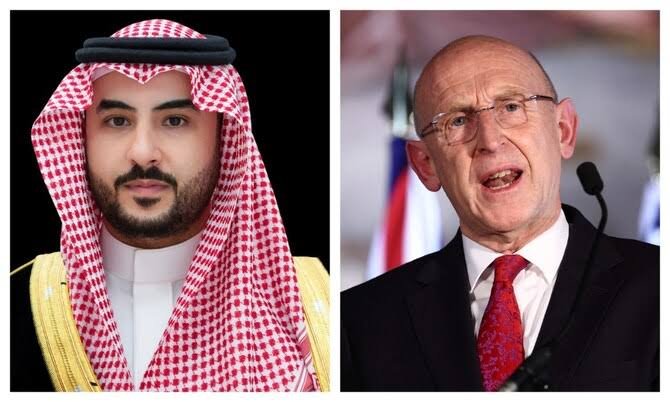
A significant development in defense diplomacy emerged as Saudi Arabia’s Minister of Defense, Prince Khalid bin Salman, held an in-depth meeting with his British counterpart, John Healey. The discussion went beyond a routine diplomatic exchange, reflecting a broader effort by both nations to reassess and strengthen their strategic alignment in an increasingly complex global security environment.
Rather than focusing solely on existing ties, the meeting emphasized the future trajectory of defense cooperation between Saudi Arabia and the United Kingdom. Both sides explored how their long-standing partnership could evolve to meet modern security demands. They reviewed ongoing collaborations and examined ways to enhance them through innovation, advanced defense technologies, and more integrated coordination. The tone of the discussions suggested a shared understanding that traditional frameworks alone are no longer sufficient in addressing contemporary threats.
A central theme of the dialogue was the rapidly shifting security landscape in the Middle East. The two leaders engaged in a detailed exchange on recent regional developments, analyzing how emerging tensions and conflicts might influence not just neighboring countries but also broader global stability. They acknowledged that instability in one part of the region can have far-reaching consequences, affecting international trade routes, energy security, and geopolitical alliances.
In this context, both ministers underscored the importance of maintaining close communication and strategic coordination. They highlighted that proactive engagement—rather than reactive measures—is essential in preventing escalation and ensuring long-term peace. The conversation reflected a mutual commitment to addressing risks collaboratively, rather than in isolation.
Another key aspect of the meeting involved examining the global implications of regional conflicts. The leaders discussed how ongoing crises could reshape international security priorities and require nations to adapt their defense policies accordingly. They stressed the need for flexible strategies that can respond to both conventional and unconventional threats, including cyber warfare, terrorism, and hybrid conflicts.
Following the meeting, Prince Khalid bin Salman shared insights from the discussion through his official account on the social media platform X. In his statement, he drew attention to the ongoing attacks targeting Saudi Arabia, strongly condemning what he described as continued aggression. He made it clear that such actions are unacceptable and pose a direct threat not only to Saudi sovereignty but also to the stability of the wider region.
He specifically pointed to Iran’s involvement in these attacks, framing them as a serious concern for regional peace. According to his remarks, these actions risk escalating tensions further and undermining efforts aimed at de-escalation. He called on the international community to take a firm stance against such activities, emphasizing that a unified global response is crucial in deterring further aggression.
Prince Khalid also reiterated Saudi Arabia’s commitment to safeguarding its national security. He noted that the Kingdom continues to invest in strengthening its defense capabilities while simultaneously working with its allies to promote peace and stability. His comments suggested a dual approach—enhancing military preparedness while also supporting diplomatic efforts to resolve conflicts.
The meeting also touched on practical areas of cooperation, including intelligence sharing, joint training programs, and advancements in defense technology. Both sides expressed interest in deepening collaboration in these fields, recognizing that shared expertise and resources can significantly enhance their collective security posture. This reflects a broader trend in international relations, where partnerships are increasingly based on interoperability and mutual capacity-building.
In addition to military cooperation, the leaders discussed the importance of diplomatic engagement in resolving ongoing conflicts. They agreed that sustainable peace cannot be achieved through force alone and that dialogue remains a critical tool in addressing complex geopolitical issues. This perspective aligns with a growing international consensus that long-term stability requires inclusive and negotiated solutions.
The conversation also highlighted the role of global actors in supporting regional peace efforts. Both ministers encouraged greater involvement from the international community, urging countries to contribute constructively toward conflict resolution and stability initiatives. They emphasized that collective responsibility is essential in tackling challenges that transcend national borders.
By the conclusion of the meeting, it was evident that both Saudi Arabia and the United Kingdom view their relationship as a strategic asset in navigating current and future security challenges. The leaders reaffirmed their commitment to maintaining strong bilateral ties, grounded in mutual trust and shared interests. They also expressed confidence that continued engagement at the highest levels would further strengthen their partnership.
The meeting served as a platform not only for reinforcing the existing but also for redefining it in light of evolving global dynamics. It underscored the importance of adaptability, cooperation, and forward-thinking strategies in addressing the complexities of modern security environments. Through this dialogue, both nations signaled their intention to remain closely aligned in promoting stability, countering threats, and contributing to a more secure international order.