

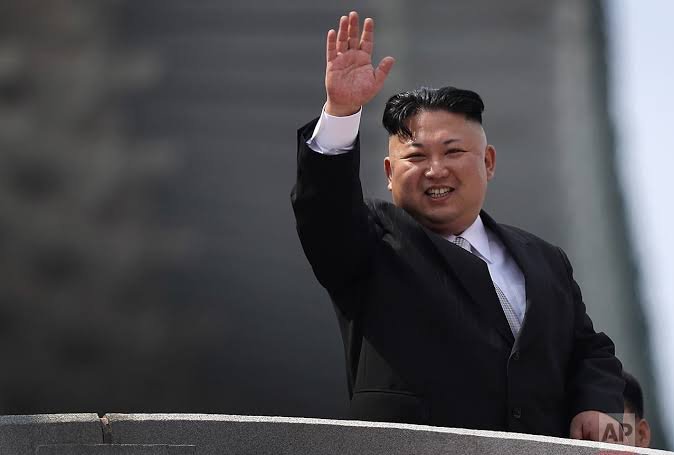
North Korean leader Kim Jong Un recently carried out an extensive of the country’s military capabilities, combining high-level weapons testing with dramatic displays of soldiers’ physical endurance and combat training. The visit appeared to be part of a broader effort by Pyongyang to showcase both technological advancement and the preparedness of its armed forces.
A major focus of the visit was the inspection of a special operations forces training facility, where Kim closely observed troops undergoing exercises designed to simulate real battlefield conditions. These drills emphasized readiness for direct combat scenarios, highlighting the regime’s continued investment in maintaining a highly disciplined and battle-ready military. Alongside these demonstrations, Kim was briefed on the deployment and testing of advanced weapon systems intended for use in modern warfare.
Among the notable developments was the testing of a new main battle tank, which Kim personally supervised. According to official sources, the tank has been engineered to withstand a wide range of anti-tank weapons, suggesting a significant upgrade in North Korea’s ground combat capabilities. This advancement reflects an ongoing effort to modernize the country’s military hardware and improve survivability in potential conflict situations.
Equally significant were the trials involving solid-fuel rocket technology. Kim attended the ground testing of a newly developed high-thrust rocket engine constructed using carbon fiber materials. Reports indicate that the engine is capable of producing thrust of up to 2,500 kilonewtons, a level of power that would enhance the range and effectiveness of missile systems. These developments are said to be part of a broader five-year plan aimed at strengthening North Korea’s strategic offensive capabilities.
While the technological demonstrations were substantial, it was the unconventional and intense physical displays by soldiers that drew the most attention. These performances appeared carefully staged to highlight the extraordinary endurance and strength of North Korean troops. In one striking sequence, soldiers broke heavy concrete slabs placed on each other’s heads, followed by martial arts routines that concluded with acrobatic maneuvers.
Another dramatic moment involved a soldier striking a fellow serviceman with a long wooden pole, which snapped into two pieces upon impact. The display was clearly intended to demonstrate resilience and physical toughness under extreme conditions. In a similar act, a participant lay still while concrete blocks were stacked on his abdomen, only to be smashed apart with a large hammer by another soldier, astonishing observers.
Additional exercises included throwing shovels and striking comrades’ bodies with hammers—acts that underscored the कठोर nature of their training regimen. These demonstrations suggested a focus not only on combat skills but also on मानसिक toughness and pain tolerance, elements often emphasized in elite military units.
Throughout the event, Kim Jong Un was seen seated behind a large wooden desk on a white chair, observing the proceedings with visible enthusiasm. Cameras repeatedly captured his reactions as he smiled broadly, applauded, and engaged with officials around him. The atmosphere among attending officers appeared relaxed and approving, with some seen reacting positively to Kim’s remarks.
According to the Korean Central News Agency, these activities form part of a comprehensive defense strategy aimed at reinforcing both the perception and reality of North Korea’s military strength. The combination of advanced weapons testing and extreme physical demonstrations serves a dual purpose: enhancing operational capability while also sending a strong message of deterrence.
The visit was less a routine inspection and more a carefully orchestrated of power. It illustrated how North Korea is pursuing a multi-dimensional approach to defense—integrating technological innovation, strategic planning, and intense human conditioning. The event highlighted the regime’s continued focus on ensuring that its armed forces remain both technologically equipped and physically prepared to any potential threats.