

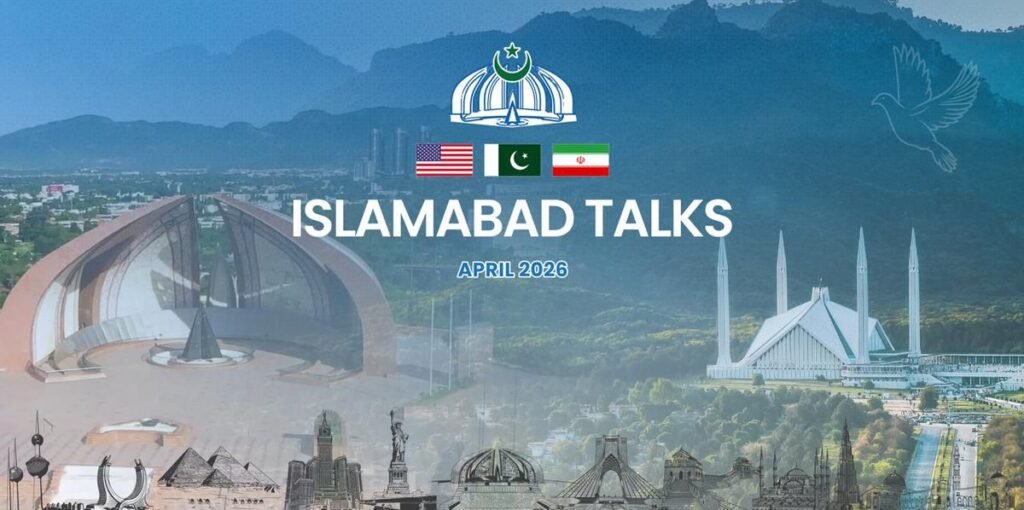
The latest round of US-Iran talks in Islamabad, which concluded without reaching a final agreement, should not be interpreted as the end of diplomacy. Rather, it underscores the complexity of engagement in an environment shaped by prolonged tensions, mutual mistrust, and evolving regional dynamics. According to international reporting, the discussions followed weeks of heightened regional tensions, with key differences remaining on issues such as uranium enrichment, the status of Iran’s nuclear stockpile, regional security concerns, and the future of the Strait of Hormuz. Importantly, both sides signalled openness to continued dialogue — a development that should not be overlooked.
For Saudi Arabia, and for the wider Gulf region, the central concern is not the outcome of a single round of talks, but the preservation of regional stability, respect for sovereignty, and the uninterrupted flow of energy and trade. These priorities are consistent with the Kingdom’s long-standing strategic approach, which emphasises de-escalation, dialogue, and the safeguarding of international maritime routes. Saudi diplomacy has consistently underlined the importance of maintaining security in critical waterways, including the Strait of Hormuz and Bab Al-Mandab, given their vital role in global energy supply and economic stability.
In this context, the Strait of Hormuz remains a focal point of international concern. Reports indicate that a substantial portion of global energy shipments transit through this strategic corridor, making any uncertainty in its status a matter of global consequence. Recent developments have highlighted the sensitivity of the situation, with differing positions expressed regarding maritime security and access. Even as some movement of commercial shipping continues, the broader message to international markets reflects caution, with stability in navigation remaining a key priority for the global economy.
The nuclear file remains a central element of the discussions. Recent assessments by the International Atomic Energy Agency have referred to Iran’s previously verified stockpile of uranium enriched to higher levels, while also noting limitations in current verification due to restricted access to certain facilities. This underlines the importance of transparency and international oversight. Any future diplomatic framework will require credible, verifiable and internationally supervised mechanisms to strengthen confidence and support long-term regional stability. In this context, diplomacy remains a structured path toward clarity, transparency and mutual assurance.
Beyond the immediate issues, the broader lesson remains clear. The region stands to benefit from measured engagement rather than escalatory rhetoric. Several international actors, including regional partners, have called for maintaining calm, preserving ceasefire understandings, and continuing diplomatic efforts. These calls reflect a growing recognition that sustained dialogue, even when gradual and complex, remains preferable to renewed instability, the consequences of which would extend beyond the region to the global economy.
From a Saudi perspective, the appropriate response to the current situation is grounded in strategic balance. It requires neither alarmism nor disengagement, but a steady commitment to stability. Maintaining the ceasefire remains essential, while safeguarding maritime security without politicisation is equally critical. Any resolution related to the nuclear issue must align with international law and include robust verification mechanisms.
Looking ahead, the next phase is likely to be defined by cautious re-engagement and incremental confidence-building measures. This may include continued diplomatic communication, renewed initiatives, and a sustained focus on stabilising maritime security and energy flows. For the region, preventing miscalculation remains essential, while preserving space for dialogue. In this context, Saudi Arabia’s steady approach, centred on de-escalation and regional stability, remains highly relevant.
Ultimately, the Islamabad talks should be viewed not as a conclusion, but as part of an ongoing diplomatic process. They highlight both the challenges and the necessity of continued engagement. The path forward lies in dialogue, restraint, and a shared commitment to regional and global stability.
About the Author:
Dr. Sameera Aziz is a senior Saudi journalist, businesswoman, author, poet, and cross-cultural commentator based in Jeddah. Holding a PhD in Mass Media, she is one of the pioneers of female journalism in Saudi Arabia and a strong advocate for Vision 2030. She can be reached at: Consultant.sameera.aziz@gmail.com