

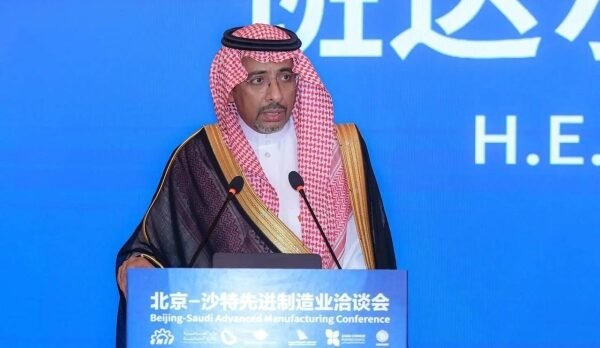
BEIJING:Saudi Arabia and China have taken a significant step toward deepening their economic cooperation with the signing of 42 investment agreements valued at over $1.74 billion during the Saudi-Chinese Business Forum in Beijing. The signing ceremony was witnessed by Saudi Minister of Industry and Mineral Resources Bandar Alkhorayef, who is leading a high-level delegation to China to enhance bilateral ties.
The agreements span multiple sectors including advanced industries, smart vehicles, energy solutions, medical devices, and mineral resources, reflecting the diversification goals of both nations. The forum, organized by the Federation of Saudi Chambers, brought together around 200 companies and private sector representatives from both countries, highlighting the growing business engagement between the two economies.
In his keynote address, Alkhorayef highlighted the remarkable growth in bilateral trade, which reached approximately SR403 billion in 2024 more than double the volume recorded less than a decade ago. Saudi Arabia remains China’s leading supplier of fuel, petrochemicals, and advanced materials, while China continues to be the Kingdom’s largest source of imports, including machinery, electronics, and consumer goods.
Investment flows have also seen substantial growth.
Chinese investment in Saudi Arabia increased by 30% in 2024, exceeding SR31 billion, with more than 750 Chinese companies now operating in the Kingdom. These firms are actively contributing to major projects such as NEOM and the industrial cities of Jubail and Jazan. On the other side, Saudi investment in China has surpassed SR8 billion, supported by a $50 billion memorandum of understanding between the Public Investment Fund and Chinese financial institutions.
A significant part of the discussions centered on the mining sector, where Saudi Arabia is seeking to leverage its estimated $2.5 trillion in mineral wealth. Alkhorayef held a dedicated session with over 20 Chinese mining companies, outlining investment opportunities across the mining value chain. He emphasized the Kingdom’s reforms in the mining regulatory framework, which have improved its global ranking in the Mining Investment Environment Attractiveness Index from 104th to 23rd.
The minister also acknowledged the role of the China Geological Survey in supporting exploration activities in the Arabian Shield, which has contributed to the increase in Saudi Arabia’s estimated mineral wealth.
Alkhorayef underscored the alignment between Saudi Arabia’s Vision 2030 and China’s Belt and Road Initiative, noting shared objectives in enhancing connectivity, expanding trade, and building resilient industrial systems. He highlighted 12 priority sub-sectors under the National Industrial Strategy, including food security, pharmaceuticals, military industries, and Fourth Industrial Revolution technologies such as artificial intelligence and additive manufacturing.
The minister invited Chinese companies to participate in the fifth Future Minerals Forum, scheduled for January 2026 in Riyadh, as part of efforts to position Saudi Arabia as a global hub for mineral resources and sustainable mining.
The agreements signed during the forum mark a milestone in Saudi-Chinese economic relations, reflecting a shared commitment to long-term partnership and mutual growth. As both countries continue to diversify their economies, the collaboration between Saudi Arabia and China is expected to play a pivotal role in shaping the future of industrial and mining sectors in the region.