

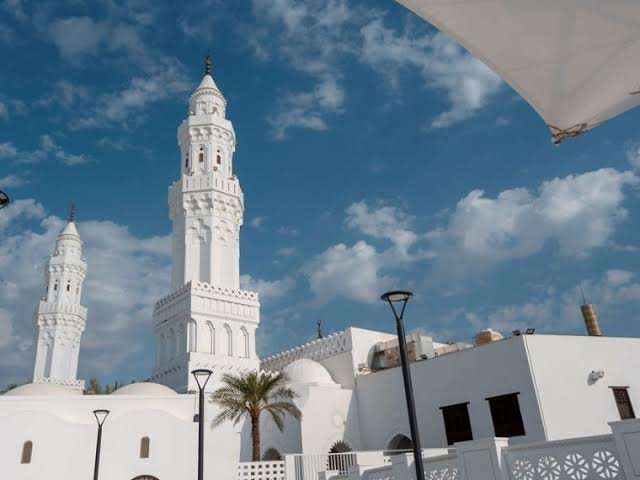
In the holy city of Madinah, a significant royal directive has been issued by the Custodian of the Two Holy Mosques, King Salman bin Abdulaziz, concerning the revered Mosque of the Two Qiblas, known as Masjid al-Qiblatayn. According to this decree, the mosque will now remain open twenty-four hours a day, allowing worshippers to perform prayers and engage in acts of devotion at any time they wish.
The royal order has been widely praised as a reflection of Saudi Arabia’s ongoing commitment to serving Islam and Muslims, with special acknowledgment given to Crown Prince Mohammed bin Salman and other members of the leadership for their dedication and continued support of spiritual and social welfare across the Kingdom.
Rearranging the sequence of developments, it is important to note that the Governor of the Madinah Region, Prince Salman bin Sultan, expressed his profound gratitude to King Salman and Crown Prince Mohammed bin Salman for their tireless efforts and unwavering devotion to the service of the faithful. He announced that administrative preparations for implementing the royal directive have already begun.
Prince Salman emphasized that, given the unique religious and historical importance of Masjid al-Qiblatayn, all concerned departments have started working promptly to ensure that the mosque remains open and fully equipped for worshippers at all hours. According to him, this initiative stands as a reminder of the Kingdom’s spiritual vision—one that harmonizes faith, service, and efficiency in the management of sacred sites.
Minister of Islamic Affairs, Dawah, and Guidance, Sheikh Abdul Latif Al-Sheikh, also commented on the royal order, describing it as a manifestation of the leadership’s resolute commitment to enhancing the quality of services at mosques across the nation. He stated that this decision would not only improve the operational standards of Masjid al-Qiblatayn but would also reinforce the grandeur and reverence of historic mosques throughout Saudi Arabia. The minister added that the mosque already possesses the technical capability and necessary infrastructure to operate around the clock.
Moreover, it has been furnished with all the required facilities to ensure the comfort and convenience of worshippers. Sheikh Al-Sheikh elaborated that his ministry continues to implement large-scale projects dedicated to the renovation, beautification, and modernization of mosques, reflecting the Kingdom’s ongoing pledge to be at the forefront of serving Islam and the global Muslim community.
This royal decision carries profound spiritual symbolism, deeply rooted in the historical and religious significance of Masjid al-Qiblatayn. The mosque occupies a unique place in Islamic history, as it was here that the Prophet Muhammad (peace be upon him) received the divine revelation instructing the change of the qibla — the direction of prayer — from Jerusalem (Bait al-Maqdis) to the Holy Kaaba in Makkah.
This pivotal event marked a defining moment in Islamic identity, and thus, the mosque stands as a powerful emblem of unity, transformation, and divine command. Its very name, “Masjid al-Qiblatayn,” meaning “The Mosque of the Two Qiblas,” serves as a reminder of that sacred moment of transition.
The mosque’s spiritual importance extends far beyond its physical structure. For centuries, pilgrims and residents of Madinah have considered it a place of deep reflection and reverence.
To ensure that believers can visit at any hour of the day or night reflects a renewed dedication by the Saudi leadership to make spiritual spaces more accessible and to strengthen the connection between worshippers and their faith. The continuous accessibility of the mosque will not only facilitate daily prayers but also allow pilgrims and visitors from around the world to experience tranquility and spiritual closeness to Allah in an environment that is calm, welcoming, and filled with reverence.
The directive also aligns with the Kingdom’s broader Vision 2030 strategy, which places great emphasis on holistic development—combining economic progress with the enhancement of religious, cultural, and social institutions.
Within this vision, the care and improvement of mosques hold a central place, highlighting the balance between modernization and devotion that Saudi Arabia seeks to maintain. The leadership’s consistent efforts to upgrade the infrastructure of places of worship are aimed at ensuring that these sacred locations are not only preserved as historical monuments but continue to serve as living centers of faith and community.
Crown Prince Mohammed bin Salman’s broader vision of national transformation also finds reflection in this initiative. It embodies the Kingdom’s dedication to improving the quality of life for all citizens and residents by blending tradition with innovation.
Under his guidance, projects focusing on heritage, hospitality, and religious tourism have received significant momentum. Keeping Masjid al-Qiblatayn open 24 hours a day further supports this direction, offering both locals and visitors a unique spiritual experience that connects the present with the historical and divine past of Islam.
Furthermore, the initiative demonstrates Saudi Arabia’s leadership in Islamic stewardship. By ensuring constant access to such an iconic site, the Kingdom reinforces its position as the guardian not only of the Two Holy Mosques but also of other sites of immense historical and spiritual significance.
The Ministry of Islamic Affairs’ commitment to maintaining excellence in mosque management echoes the Kingdom’s larger objective of representing Islam through service, compassion, and modern efficiency.
In essence, this decision ensures that Masjid al-Qiblatayn will not merely function as a place of prayer, but as a continuous spiritual sanctuary—alive with faith at all hours of the day and night. The mosque will stand as a symbol of Saudi Arabia’s enduring devotion to preserving Islamic heritage while adapting to the needs of the modern era. For the faithful, it represents a sacred refuge where they can seek solace, reflection, and connection with the divine at any moment they desire.
The Kingdom’s leadership envisions that this step will inspire similar initiatives across other historic mosques in the country, ensuring that Saudi Arabia continues to uphold its responsibility as the heartland of Islam. Through such actions, the country reaffirms its commitment to being a beacon of faith and service, guiding the Muslim world not only through words but through meaningful and compassionate deeds that elevate the spiritual experience of millions.
In this way, the royal decree concerning Masjid al-Qiblatayn stands as both a gesture of devotion and a strategic embodiment of Vision 2030’s core values—a balance between reverence for history and a forward-looking spirit of progress that defines the Kingdom’s path toward a more spiritually and socially enriched future.