

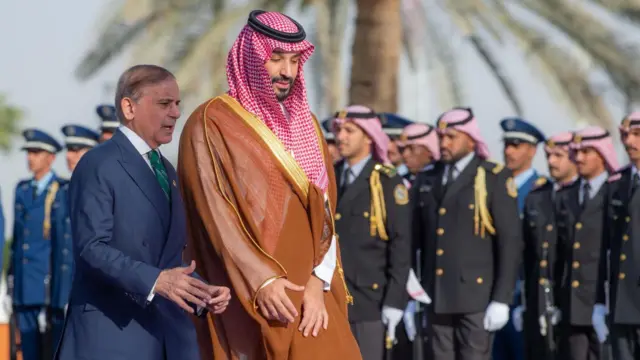
Islamabad: Building on its historic defense pact with Saudi Arabia, Pakistan is set to double its workforce exports to the Kingdom a strategic initiative aimed at boosting employment for its citizens while significantly increasing remittance inflows that are critical to stabilizing the national economy. This decision not only promises to create abundant employment opportunities for Pakistani workers but also anticipates a significant rise in remittances, a vital pillar supporting Pakistan’s struggling economy.
According to the Bureau of Emigration & Overseas Employment (BEOE), between 2020 and 2024, Pakistan dispatched 1.88 million workers to Saudi Arabia, marking a 21% increase compared to 1.56 million workers during the 2015-2019 period. Correspondingly, remittances from Saudi Arabia witnessed an impressive growth, rising from $7.39 billion in 2020 to $8.59 billion in 2024. In contrast, remittances from the United Arab Emirates fluctuated between $5.8 billion and $6.8 billion, while those from Qatar remained below $1 billion annually, according to the State Bank of Pakistan.
The defense pact, signed in September 2024, aims to bolster decades-long military and security cooperation between the two nations. Senior Pakistani officials, including Federal Minister for National Food Security Rana Tanveer, have hinted at the imminent signing of a comprehensive economic agreement to complement the defense accord.
Gul Akbar, Senior Director at BEOE, stated that this defense agreement will have a transformative impact on manpower exports. We aim to increase the annual deployment of Pakistani workers to Saudi Arabia from 500,000 to 1 million starting next year. This historic opportunity will greatly benefit the hardworking Pakistani workforce.”
To implement this ambitious plan, the Special Investment Facilitation Council (SIFC) a civil-military body dedicated to boosting investments, especially from the Middle East is actively collaborating with BEOE. Together, they are preparing a detailed roadmap to be presented in upcoming high-level meetings with Saudi counterparts.
Pakistan has also proposed establishing joint technical training institutes in both countries to enhance skill certification and improve employability standards. Additionally, the introduction of an e-visa system for Pakistani workers is under consideration to facilitate smoother workforce mobility.
Experts highlight that Saudi Arabia’s Vision 2030, mega infrastructure projects, and preparations for hosting the 2034 FIFA World Cup are driving unprecedented demand for skilled and semi-skilled foreign labor. Pakistan is poised to capitalize on these developments, ensuring a robust presence in the Kingdom’s evolving labor market.