

Venezuela’s sudden decision to close its embassy in Norway has sparked surprise in European diplomatic circles and raised numerous questions about the motives behind the move. The embassy in Oslo, which had served for decades as a vital link between the two nations, has now shut its doors without any official explanation, leaving observers speculating about the reasons behind this unexpected withdrawal.
Norway’s Foreign Ministry spokesperson, Cecilie Rørvang, confirmed that the Venezuelan embassy had formally notified them of its closure. She expressed regret that no reasons were provided and emphasized that despite political differences, Norway remains committed to keeping communication channels open with Venezuela and intends to maintain dialogue in the future.
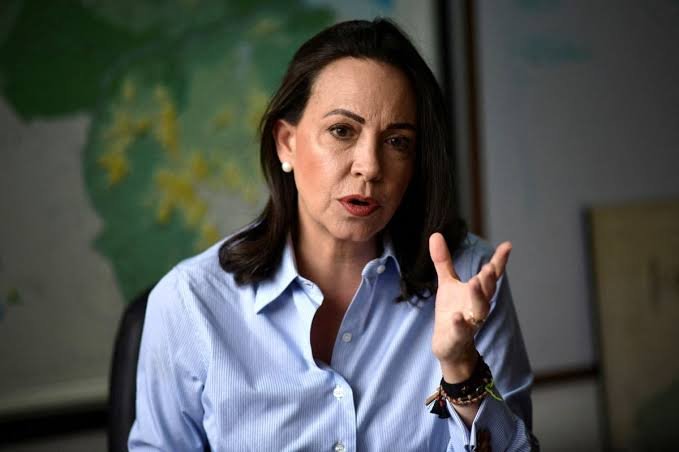
The timing of the closure is particularly noteworthy — it comes only three days after Venezuelan opposition leader María Corina Machado was awarded the Nobel Peace Prize in Oslo. Machado, a fierce critic of President Nicolás Maduro, has been a leading voice in the struggle for democracy in Venezuela and has faced years of political persecution and restrictions imposed by the government.
In Caracas, Venezuela’s Foreign Ministry issued a statement asserting that the embassy’s closure in Oslo was part of a “restructuring of diplomatic missions abroad” rather than a political reaction. The ministry further stated that as part of this plan, Venezuela had also closed its embassy in Australia while opening new diplomatic missions in Zimbabwe and Burkina Faso — two African nations it described as “strategic partners in the struggle against imperial dominance.”
Political analysts, however, consider the timing of the move highly symbolic. They believe that the Nobel recognition of Machado — a prominent opposition figure — dealt a symbolic blow to Maduro’s administration by amplifying her democratic cause on the world stage.
The Norwegian Nobel Committee, for its part, clarified that the Peace Prize is entirely independent of the Norwegian government. It awarded Machado the honor “in recognition of her persistent struggle for the democratic rights of the Venezuelan people and her efforts toward a peaceful transition from dictatorship to democracy.” Rørvang reiterated that all Nobel-related decisions fall solely under the jurisdiction of the independent Nobel Committee, not the government.
Following the announcement, President Nicolás Maduro, without naming Machado directly, referred to her in a televised speech as a “diabolical witch” — a term his administration often uses to label opponents. Machado had been barred from running in the 2024 presidential elections, which the government declared Maduro had won, though the opposition denounced the results as fraudulent.
After receiving the Nobel Prize, Machado issued a statement dedicating the award to the “suffering people of Venezuela” and thanked former U.S. President Donald Trump for his “decisive support” of her democratic struggle. She emphasized that her mission was not merely political change but the restoration of freedom and dignity for her nation.
Hours later, a violent incident unfolded in Colombia, where two Venezuelan activists — Yendry Velásquez and Luis Alejandro Becci — were shot while preparing to board a bus. Colombian police confirmed the attack, while Machado accused Maduro’s government of being behind it and urged Colombian authorities to launch an immediate investigation.
International observers have noted that Venezuela’s embassy closure in Oslo may carry a deeper political message. It could signify Caracas’s attempt to distance itself from the Western spotlight following Machado’s Nobel victory or to signal diplomatic defiance toward European countries.
Experts point out that Venezuela has long faced diplomatic isolation. The United States and several European governments have imposed sanctions and accused Maduro’s regime of electoral manipulation, human rights abuses, and repression of political opposition. In this context, the embassy closure may serve as a symbolic act of resistance — a gesture of defiance amid mounting Western criticism.
Analysts further note that Venezuela’s new diplomatic focus on Africa aligns with its broader “non-Western foreign policy” approach. By expanding ties with countries like Zimbabwe and Burkina Faso, which share an anti-imperialist narrative, Caracas seems to be seeking alliances outside the Western sphere of influence.
Thus, while the closure of the embassy in Oslo appears administrative on the surface, it reflects a deeper political narrative — one shaped by symbolism, strategic signaling, and an ongoing struggle over Venezuela’s global image. The move also underscores that the world’s attention remains fixed on Venezuela’s democratic future, where every diplomatic action sends ripples far beyond its borders.