

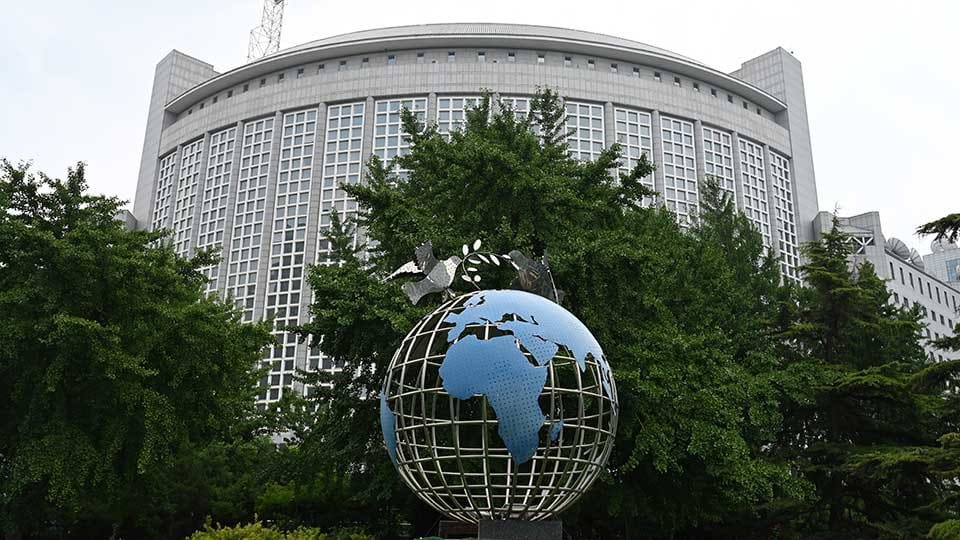
China has called on both Pakistan and Afghanistan to exercise restraint and act with patience amid the recent border tensions, expressing concern over the escalating situation. Beijing has reaffirmed that it supports a comprehensive and lasting ceasefire between the two neighboring countries and is ready to play a constructive role in helping them rebuild trust and stability through dialogue.
During a regular press briefing on Thursday, Chinese Foreign Ministry spokesperson Lin Jian addressed a question regarding the recently announced 48-hour ceasefire between Islamabad and Kabul. He emphasized that China believes genuine peace in the region can only be achieved through mutual respect, diplomatic engagement, and cooperation rather than confrontation. Lin added that both sides should seize this opportunity to prevent further bloodshed and work collectively toward a sustainable political solution.
China’s statement came shortly after Pakistan’s Ministry of Foreign Affairs confirmed that, following intense cross-border clashes, the two sides had agreed to a temporary two-day truce. According to Islamabad, the ceasefire came at the request of the Taliban government, aimed at creating space for diplomatic dialogue and the peaceful resolution of complex border disputes. The truce, which began at 6 p.m., included a mutual commitment by both countries to refrain from any form of aggression or provocation during this period.
The Pakistani Foreign Office described the ceasefire as a “window of opportunity” for both nations to engage in meaningful dialogue and prevent future escalation. Officials reiterated that Pakistan continues to believe in peaceful coexistence and expects Afghanistan to honor its pledges—particularly the commitment to curb militant groups that operate from its soil and target Pakistan.
In Kabul, Taliban spokesperson Zabihullah Mujahid confirmed through the social media platform X (formerly Twitter) that Afghan forces had been instructed to strictly observe the truce “as long as there is no act of aggression.” Pakistani officials also told AFP that the situation along the northern and southern stretches of the border remained calm overnight, with no exchange of fire reported since the ceasefire took effect.
The development has been widely welcomed at the international level. The United Nations High Commissioner for Human Rights, Volker Türk, praised the truce, urging both nations to “protect civilians from further harm” and to remain committed to building a durable peace. He emphasized that the recent skirmishes had already taken a heavy toll on local populations and warned that the region could face greater instability if both sides failed to uphold restraint.
The ceasefire announcement came on the heels of reports aired by Pakistan’s state broadcaster, PTV, claiming that Pakistani armed forces had conducted “targeted strikes” against specific militant positions in Afghanistan’s Kandahar province and areas surrounding Kabul. Although these claims could not be independently verified, defense officials suggested that the operations were aimed at militant elements involved in recent attacks within Pakistan’s border regions.
Earlier, Pakistan’s military media wing, the Inter-Services Public Relations (ISPR), had stated that Afghan Taliban fighters launched coordinated assaults on four positions near the Spin Boldak border area, which were successfully repelled by Pakistani troops. According to ISPR, between fifteen and twenty Taliban militants were killed in retaliatory fire.
The incident marked the third major confrontation between Pakistan and Afghanistan within a week, following earlier clashes in the Kurram region and other border districts. ISPR reported that 23 Pakistani soldiers had lost their lives and 29 were injured in these encounters, while Afghan Taliban forces carried out heavy cross-border attacks targeting Pakistani checkpoints.
Afghanistan, however, claimed that its forces had acted in “self-defense” in response to alleged Pakistani airstrikes conducted days earlier—a claim Islamabad has neither confirmed nor denied. Pakistani officials maintained that any military response was purely defensive and targeted only terrorist groups such as Tehreek-e-Taliban Pakistan (TTP), which operate from Afghan territory and have been responsible for numerous deadly attacks inside Pakistan.
Islamabad has repeatedly urged Kabul to take decisive action against such groups and ensure that Afghan soil is not used for terrorism against any neighbor. Kabul, in turn, continues to deny the allegations, asserting that Afghanistan’s territory is not being used to harm Pakistan or any other country.
The issue of cross-border militancy has long strained relations between the two nations. Smuggling routes, militant hideouts, and disputed boundary points have contributed to a cycle of mistrust and sporadic violence for decades. The recent escalation has once again exposed the fragility of their bilateral ties, prompting renewed calls from regional powers—most notably China—for restraint and dialogue.
In its official statement, Beijing reaffirmed its commitment to promoting peace and stability in South Asia, offering to facilitate communication channels and confidence-building measures between Islamabad and Kabul. Chinese officials noted that sustainable peace in the region is possible only if all parties choose diplomacy over confrontation and cooperation over hostility.