

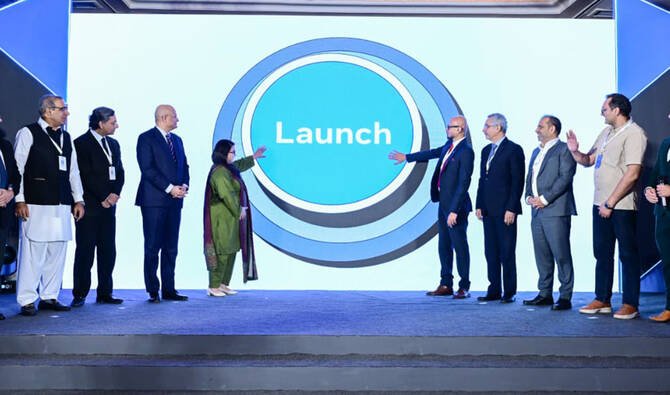
Islamabad: In a landmark step to advance digital transformation, the Ministry of Information Technology and Telecommunication (MoITT), in collaboration with Meta, has launched ALIF, an Urdu-language version of Meta AI. This innovative AI assistant allows users in Pakistan to interact with cutting-edge technology in their native language, making artificial intelligence more accessible and inclusive.
The launch was unveiled at the “Future in Focus: AI and Innovation” event, which brought together government leaders, industry experts, and academic representatives to accelerate the adoption of AI and digital innovation nationwide.
ALIF aims to empower Pakistanis by enabling them to discover information, express themselves, and maintain connections in Urdu, their first language. By localizing AI tools, the initiative seeks to reduce barriers to technology access and make AI an everyday tool for education, business, and public service.
Federal Minister for IT and Telecommunication, Shaza Fatima Khawaja, inaugurated the event, highlighting the government’s commitment to digital transformation:
Pakistan is accelerating toward a future where technology empowers every citizen. Our National AI Policy and partnership with Meta reflect this commitment; advancing AI literacy, digital transformation, and innovation across government and academia.
During the event, Meta introduced a localized version of the guide Transforming Public Sector Innovation in Asia Pacific with Llama, developed in partnership with Deloitte. The guide demonstrates how Meta’s open-source AI model, Llama, can help streamline government operations, enhance public service delivery, and reinforce data sovereignty ensuring that AI adoption supports national priorities while empowering local institutions.
Earlier this year, MoITT, in collaboration with Meta, the Higher Education Commission (HEC), the National Computing and Emerging Sciences Accreditation Council (NCEAC), and Atomcamp, launched an AI Literacy Program. The initiative targets 350 non-computer science faculty members across Pakistani universities, equipping them with core AI skills and knowledge to prepare students for the evolving landscape of work and innovation.
By combining AI accessibility, public sector innovation, and education, ALIF represents a significant stride toward a digitally empowered Pakistan, ensuring technology benefits reach every citizen, regardless of language or technical background.