

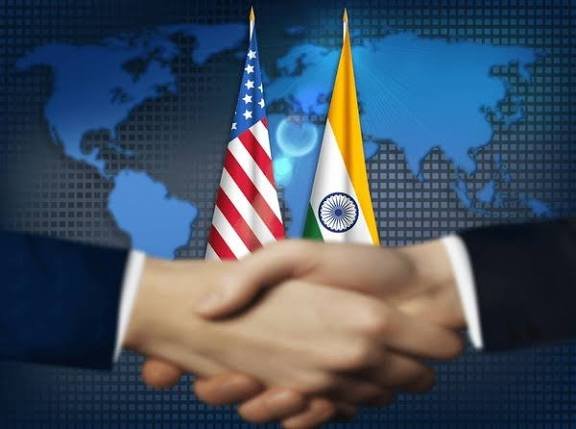
In a development viewed as one of the most significant strategic milestones of the decade, the United States and India have officially signed a 10-year defense cooperation framework, a move that analysts say will reshape the security architecture of the Indo-Pacific region. The agreement was confirmed by U.S. Defense Secretary Pete Hegseth during a joint appearance with Indian Defense Minister Rajnath Singh in Kuala Lumpur, where both leaders were attending the ASEAN Defense Ministers’ Meeting-Plus (ADMM-Plus).
Hegseth, while announcing the accord, emphasized that the framework represents a long-term commitment to shared peace, deterrence, and technological collaboration. He remarked that the partnership between Washington and New Delhi has now reached an unprecedented level of strength, symbolizing not only mutual military trust but also a convergence of geopolitical interests. His statement underscored that this new phase of cooperation would promote stability in the Indo-Pacific—a region that has become the epicenter of global strategic competition.
According to officials, the agreement outlines a comprehensive plan to expand military interoperability, intelligence exchange, and defense innovation between the two nations. It will include an increased number of joint military drills, the co-development of defense technologies, and smoother access to logistics and operational support. Experts believe this framework will serve as the foundation for a deeper defense alliance aimed at counterbalancing China’s growing military assertiveness in the region.
The timing of the pact holds particular significance. Just months earlier, diplomatic relations between the U.S. and India had experienced friction over trade disputes and energy imports. Washington had raised concerns about India’s purchase of discounted Russian crude oil, arguing that such transactions indirectly support Moscow’s wartime economy. Despite these tensions, both countries have demonstrated a willingness to strengthen their strategic and military coordination. Observers suggest that the new framework is designed to separate long-term defense priorities from short-term political disagreements.
Indian Defense Minister Rajnath Singh, speaking after the signing ceremony, described the agreement as a “turning point” in the evolution of India-U.S. relations. He expressed gratitude to Secretary Hegseth and affirmed that the two countries were entering a new era of partnership built on mutual trust, transparency, and shared responsibility. Singh highlighted that the framework’s primary objective is to create a secure, open, and rules-based Indo-Pacific—a vision that aligns with both nations’ desire to maintain freedom of navigation, protect maritime routes, and strengthen deterrence against regional threats.
The agreement also emphasizes technological cooperation and defense industry partnerships. This includes potential collaboration in cybersecurity, space defense, and artificial intelligence-based military systems. Senior Pentagon officials have hinted at future discussions regarding the joint production of advanced drones, naval platforms, and missile defense systems under this long-term framework. Both sides are expected to establish working groups that will streamline industrial partnerships, ease export controls, and facilitate the exchange of defense-related intellectual property.
Strategically, the pact serves multiple goals. For Washington, it consolidates its network of allies in Asia amid its broader competition with Beijing. For New Delhi, it enhances India’s defense modernization efforts while affirming its position as a key regional player capable of balancing Chinese influence. The U.S. has already declared India a “Major Defense Partner,” a status that allows for greater technology sharing and defense collaboration than with any other non-NATO nation.
The ten-year agreement also coincides with ongoing U.S. efforts to revitalize the Quad alliance—a strategic grouping that includes Japan, Australia, India, and the United States. Analysts argue that this framework will further strengthen the military component of the Quad by ensuring that the Indian armed forces can operate seamlessly with U.S. and allied counterparts during joint exercises and humanitarian or peacekeeping operations.
The ASEAN Defense Ministers’ Meeting-Plus, where the signing took place, provided a symbolic backdrop that reinforced the multilateral importance of the pact. The forum, which includes China, Russia, and Southeast Asian nations, has been a critical platform for discussing regional defense issues. By signing the agreement in this setting, Washington and New Delhi effectively signaled that their partnership is not aimed at confrontation, but at promoting a balanced, stable, and secure regional order.
The announcement also comes shortly after U.S. Secretary of State Marco Rubio’s meeting with Indian Foreign Minister S. Jaishankar in Malaysia, which sought to smooth over tensions following American sanctions on Russian oil firms. Jaishankar shared that their dialogue covered a wide range of topics, from bilateral cooperation to global security challenges. This diplomatic engagement, followed by the signing of the defense framework, demonstrates a concerted effort by both capitals to elevate their relationship to a level that transcends short-term disagreements.
In Washington, defense analysts have described the framework as a “strategic anchor” for future cooperation. They highlight that the 10-year timeline is particularly meaningful, as it gives both countries the time and political space to develop integrated strategies for defense modernization, intelligence sharing, and maritime security. The U.S. Department of Defense has already indicated that annual reviews will be held to assess the progress of the agreement’s implementation.
In India, the reaction has been largely positive. Former diplomats and defense experts have praised the move as a reflection of India’s growing stature on the global stage. They point out that while India continues to maintain its traditional policy of strategic autonomy, this agreement demonstrates a pragmatic recognition of the need for closer coordination with like-minded democracies in an increasingly volatile world.
The deal is also expected to have economic implications. By promoting joint defense production, it could attract investments from major U.S. defense contractors into India’s growing industrial sector. This aligns with Prime Minister Narendra Modi’s “Make in India” initiative, which seeks to boost indigenous manufacturing and reduce dependency on foreign imports.
As global power dynamics continue to shift, this decade-long U.S.-India defense framework is widely seen as a blueprint for how democracies can cooperate to protect shared interests and ensure collective security. With a focus on technology, trust, and training, it reaffirms that strategic partnerships built on mutual respect can endure beyond political changes and diplomatic fluctuations.
Ultimately, the signing of this historic agreement does not merely symbolize military cooperation—it marks the reaffirmation of a shared vision. The United States and India, two of the world’s largest democracies, have now committed themselves to working together to safeguard peace, stability, and prosperity in one of the most strategically vital regions on Earth: the Indo-Pacific.