

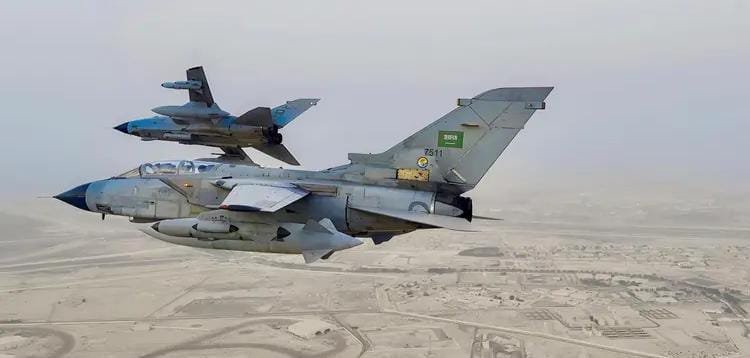
The Royal Saudi Air Force (RSAF) and the Royal Saudi Air Defense Forces have reaffirmed their operational excellence and regional cooperation by continuing their active participation in the *Air and Missile Warfare Centre Exercise (ATLC-35), currently taking place in the **United Arab Emirates (UAE). The large-scale multinational drill has gathered *air and missile defense units from several allied and friendly nations, all aiming to enhance their collective ability to manage complex modern warfare environments.
This advanced exercise is considered one of the *most significant and technically sophisticated aerial drills in the Middle East, reflecting the growing emphasis on *joint military coordination and interoperability among participating nations. The ATLC-35 is designed to simulate real-world aerial and missile warfare conditions, focusing on airspace control, rapid response, integrated air defense, and tactical precision in high-pressure scenarios.
Saudi Arabia’s participation, led by the *Royal Saudi Air Force, underscores the Kingdom’s commitment to maintaining *regional security stability and building its *defense capabilities through international partnerships. The RSAF has deployed a fleet of **Tornado fighter aircraft, known for their multi-role performance and long-range strike capacity, along with **elite pilots, technical support teams, and maintenance experts. These units are carrying out a wide range of **advanced aerial missions, which include both **defensive and offensive operations, **combat search and rescue (CSAR), **aerial refueling, **nighttime tactical flights, and *precision strike simulations.
In addition to flight operations, Saudi technical and engineering crews are ensuring uninterrupted mission readiness. Their responsibilities include round-the-clock aircraft inspections, maintenance of critical systems, and rapid-response repair procedures — all of which are essential for sustaining high operational tempo and minimizing downtime during such large-scale exercises.
Beyond the tactical training, the ATLC-35 serves a *strategic purpose. It offers a platform for *exchange of knowledge, real-time data analysis, and the integration of new-generation technologies in air combat. The exercise enhances interoperability between different command structures, communication systems, and operational doctrines — ensuring that partner nations can operate seamlessly together in joint missions.
Experts note that the ATLC series of exercises has evolved over the years to meet the demands of *modern air and missile warfare, incorporating **AI-assisted threat detection, electronic warfare tactics, and drone interception operations. By simulating near-realistic war conditions, the participating countries are strengthening their **decision-making speed, **coordination efficiency, and *precision-strike capability in complex aerial environments.
The participation of the Saudi Air and Air Defense Forces also aligns with the Kingdom’s broader *Vision 2030 defense transformation strategy, which emphasizes modernization, self-reliance, and strengthening of partnerships with allied countries to ensure peace and security in the Gulf region and beyond. Through such engagements, Saudi Arabia continues to demonstrate its *leadership role in promoting regional stability, countering emerging aerial threats, and developing strong defense ties with strategic partners like the UAE.
Furthermore, the ATLC-35 is seen as part of a continuous training cycle that contributes to *long-term defense readiness and military professionalism. Exercises like these not only test aircrew endurance and readiness but also evaluate **command-and-control networks, **logistical coordination, and *crisis-response mechanisms — elements that are vital for real-time battlefield performance.
Observers have highlighted that Saudi participation reflects *a balanced approach between advanced technology and human skill development. The drills allow Saudi pilots and engineers to work side-by-side with experienced personnel from partner countries, gaining exposure to new combat doctrines, operational planning systems, and data-driven decision-making models. This exchange contributes to the *mutual growth of military knowledge and regional defense resilience.
In an era where aerial threats are rapidly evolving — from drone warfare to hypersonic missile systems — the continuation of such cooperative exercises sends a powerful message: that Saudi Arabia and its allies are united, prepared, and technologically equipped to address any regional or global security challenge.
Ultimately, the ATLC-35 exercise stands as a symbol of *strategic unity, technological advancement, and international defense cooperation. It reinforces Saudi Arabia’s vision to remain a *pillar of strength and reliability in collective security, ensuring the protection of not just its airspace, but the stability and safety of the broader Middle East region.