

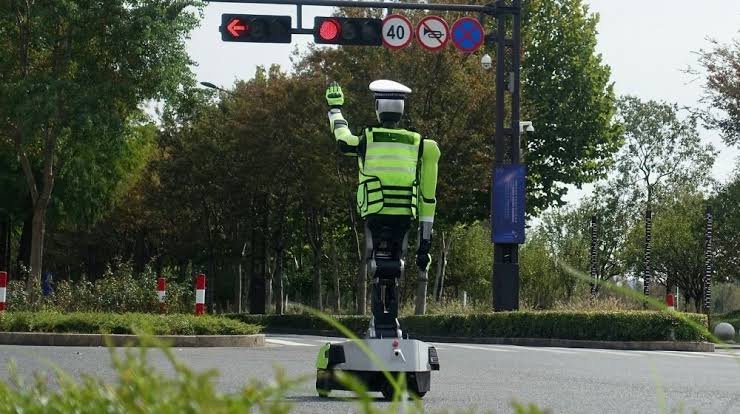
Karachi’s traffic management system is entering a new era with the introduction of “robot cars” designed to automatically detect and penalize illegal parking, a move that aims to tackle one of the city’s most persistent traffic issues. Following the earlier launch of e-challans, these specially equipped vehicles are set to revolutionize the way traffic violations are monitored and enforced in Karachi’s busiest commercial hubs. According to Traffic Administration Deputy Superintendent of Police (DSP) Kashif Nadeem, the department has completed all necessary preparations for this cutting-edge system, which will first be deployed in the congested markets of Saddar and Tariq Road, areas notorious for chronic parking violations.
The concept behind these “robot cars” is relatively simple yet technologically advanced. Each vehicle is fitted with automated cameras capable of scanning the surrounding streets continuously at a controlled speed of around 20 kilometers per hour. Any vehicle found double-parked or positioned in a designated no-parking zone is automatically flagged by the system. An e-ticket is then generated and sent to the registered owner of the vehicle, bypassing the need for manual intervention by on-ground traffic officers. DSP Nadeem explained that while Karachi Traffic Police have been issuing e-challans through Safe City cameras for some time, these mobile units represent a significant step forward in automation, allowing enforcement teams to cover busy streets more efficiently.
Currently, the penalty structure for no-parking violations in Karachi is set at Rs10,000 for cars and Rs2,000 for motorcycles, figures which reflect the severity of congestion and traffic disruption caused by illegal parking. However, with the deployment of these autonomous camera cars, authorities expect not only better enforcement but also a reduction in confrontations between police and citizens, as fines can now be issued without requiring direct interaction. In later phases, these vehicles will operate almost independently, with drivers merely overseeing the system while the e-ticketing process runs autonomously.
The broader framework under which these innovations are taking place is known as the *Traffic Regulation and Citation System (TRACS). Launched on *October 27, TRACS was envisioned as a replacement for the outdated manual ticketing system. Utilizing AI-integrated CCTV cameras, the platform can detect a range of traffic violations, including over-speeding, red-light violations, helmet non-compliance, and, most recently, illegal parking. Authorities have promoted TRACS as a transformative solution capable of modernizing Karachi’s traffic enforcement infrastructure, but it has not been without controversy. Critics argue that the city lacks the necessary infrastructure and resources to fully implement such a sophisticated system, pointing to recurring issues such as misidentified vehicles, technical errors, and systemic inefficiencies.
Several incidents have raised public concern over the system’s accuracy. Last month, for example, a motorcycle owner received an e-challan for a bike that had been stolen from the Tipu Sultan police premises four years prior. Despite the theft complaint being on record, the system still issued a Rs5,000 fine for failing to wear a helmet, highlighting flaws in the automated verification process. Similarly, another citizen reported receiving a no-parking e-challan even though the vehicle in question did not belong to him. He noted a discrepancy between the number plate shown in the camera’s photo and the number printed on the e-challan, pointing to a potential error in the system’s recognition algorithm.
Hotel owners and business managers in the affected areas have expressed mixed reactions. Some have voiced frustration, arguing that fines are being levied even when vehicles are stolen or otherwise unaccounted for. Others have shown willingness to comply, stating that they are ready to pay penalties if the authorities ensure proper verification and recovery of stolen property beforehand. These reactions underscore the delicate balance between enforcing traffic laws rigorously and maintaining public trust in automated enforcement mechanisms.
Experts in traffic management observe that while automation can significantly enhance compliance, it must be coupled with robust infrastructure, accurate data collection, and clear grievance redressal mechanisms. In cities like Karachi, where street congestion is severe and parking spaces are limited, intelligent systems like robot camera cars have the potential to improve traffic flow dramatically. Still, successful implementation will require ongoing calibration of AI algorithms, real-time monitoring of technical faults, and coordination with law enforcement and civic authorities.
Beyond parking, the TRACS system and its mobile robotic extensions are seen as part of a broader effort to modernize urban traffic management in Pakistan. Cities around the world have adopted similar AI-driven enforcement tools, combining cameras, sensors, and automated ticketing to reduce congestion, improve compliance, and increase revenue collection for municipal authorities. Karachi’s experiment, if successful, could serve as a model for other major Pakistani cities grappling with traffic chaos and limited enforcement capacity.
Karachi’s introduction of robot camera cars represents a bold attempt to bring technology into traffic regulation. By automating the identification of no-parking violations and other infractions, authorities hope to reduce congestion, improve law enforcement efficiency, and ensure fairer penalties for violators. Yet, the system’s rollout also highlights the challenges of integrating advanced technology in a complex urban environment, from technical glitches and misidentification to public perception and trust. As these robot cars begin patrolling Saddar and Tariq Road, both officials and citizens will be closely watching to see whether this innovative approach can truly transform the way Karachi manages its streets.