

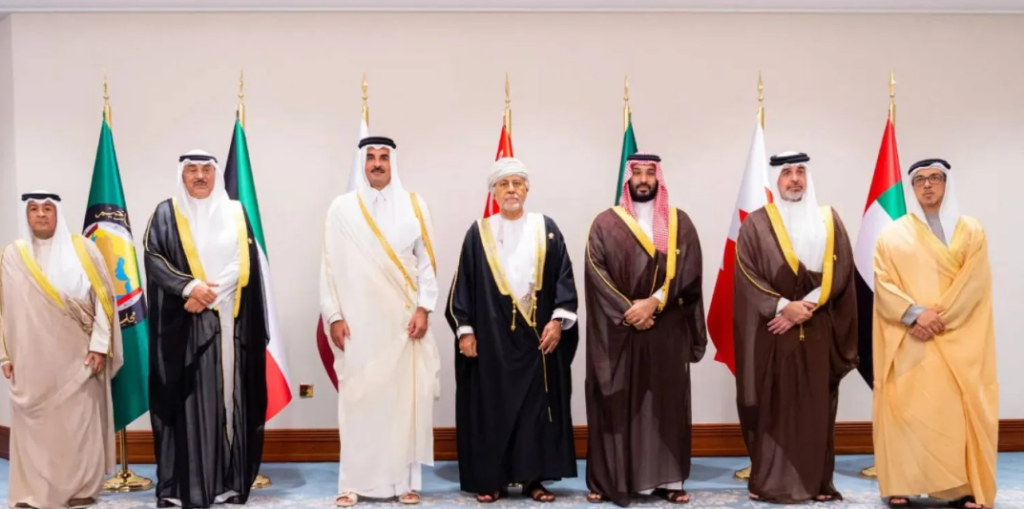
At the 46th summit of the Gulf Cooperation Council (GCC), regional leaders underscored that respect for the sovereignty of all member states remains a fundamental principle, warning that interference in the internal affairs of any state is not only unacceptable but poses a direct threat to the collective peace and stability of the Gulf region. The leaders stressed that the security, stability and sovereignty of GCC states are shared and indivisible, and any harm to one member inevitably impacts the entire bloc.
The summit emphasized expanding international cooperation and strengthening political, security and economic partnerships with friendly nations and global institutions. Reaffirming their unified stance against extremism, terrorism, hate speech and cross-border crime, the leaders vowed to deepen collaborative efforts to counter these threats. They also reiterated full support for the Bahrain-based joint maritime forces tasked with safeguarding energy supplies, securing sea lanes and ensuring the uninterrupted flow of global trade. The communiqué renewed the long-standing GCC call for making the Middle East a region free of nuclear and other weapons of mass destruction.
Turning to developments in Gaza, the leaders welcomed the outcomes of the Sharm El-Sheikh summit and expressed full support for the implementation of the ceasefire agreement. They highlighted the urgent need for humanitarian relief, reconstruction assistance and sustained support for the Palestinian people. The GCC reiterated that the establishment of an independent Palestinian state on the 4 June 1967 borders, with East Jerusalem as its capital, remains essential for lasting regional peace.
The summit expressed confidence in Bahrain’s upcoming two-year tenure as the representative of the Arab Group in the UN Security Council, describing the kingdom as an influential partner in promoting global peace and dialogue. Reviewing recent progress in joint cooperation, the leaders noted with satisfaction that the GCC has made significant advances in defence, security, diplomacy and economic integration.
Reaffirming their commitment to deeper regional cohesion, the leaders resolved to accelerate efforts to enhance political, economic and social coordination among member states, aiming to further consolidate peace, stability and prosperity across the region. The final communiqué called for strengthening institutional cooperation, reinforcing strategic unity and adopting a shared vision for a sustainable and resilient future for the Gulf.
At the 46th summit of the Gulf Cooperation Council (GCC), regional leaders underscored that respect for the sovereignty of all member states remains a fundamental principle, warning that interference in the internal affairs of any state is not only unacceptable but poses a direct threat to the collective peace and stability of the Gulf region. The leaders stressed that the security, stability and sovereignty of GCC states are shared and indivisible, and any harm to one member inevitably impacts the entire bloc.
The summit emphasized expanding international cooperation and strengthening political, security and economic partnerships with friendly nations and global institutions. Reaffirming their unified stance against extremism, terrorism, hate speech and cross-border crime, the leaders vowed to deepen collaborative efforts to counter these threats. They also reiterated full support for the Bahrain-based joint maritime forces tasked with safeguarding energy supplies, securing sea lanes and ensuring the uninterrupted flow of global trade. The communiqué renewed the long-standing GCC call for making the Middle East a region free of nuclear and other weapons of mass destruction.
Turning to developments in Gaza, the leaders welcomed the outcomes of the Sharm El-Sheikh summit and expressed full support for the implementation of the ceasefire agreement. They highlighted the urgent need for humanitarian relief, reconstruction assistance and sustained support for the Palestinian people. The GCC reiterated that the establishment of an independent Palestinian state on the 4 June 1967 borders, with East Jerusalem as its capital, remains essential for lasting regional peace.
The summit expressed confidence in Bahrain’s upcoming two-year tenure as the representative of the Arab Group in the UN Security Council, describing the kingdom as an influential partner in promoting global peace and dialogue. Reviewing recent progress in joint cooperation, the leaders noted with satisfaction that the GCC has made significant advances in defence, security, diplomacy and economic integration.
Reaffirming their commitment to deeper regional cohesion, the leaders resolved to accelerate efforts to enhance political, economic and social coordination among member states, aiming to further consolidate peace, stability and prosperity across the region. The final communiqué called for strengthening institutional cooperation, reinforcing strategic unity and adopting a shared vision for a sustainable and resilient future for the Gulf.