

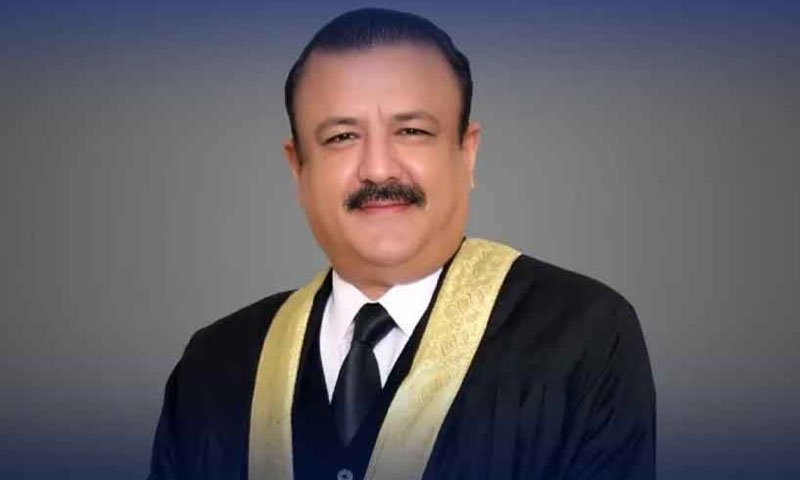
Islamabad: The Islamabad High Court (IHC) on Thursday ordered the removal of Justice Tariq Mehmood Jahangiri from his position as a judge, ruling that his law degree was invalid at the time of his appointment. A division bench led by Chief Justice Sardar Muhammad Sarfraz Dogar and Justice Muhammad Azam Khan announced the judgement, which had been reserved earlier, after reviewing a plea challenging the legitimacy of Justice Jahangiri’s LLB degree and his appointment as a high court judge.
The court directed Justice Jahangiri to cease holding office immediately and instructed the Ministry of Law to denotify him as a judge. The bench’s decision comes amid a series of legal controversies, including Justice Jahangiri’s recent claims against Chief Justice Dogar of alleged bias, and his filing of a complaint with the Supreme Judicial Council (SJC) alleging misconduct by the IHC chief justice.
The controversy surrounding Justice Jahangiri’s credentials originated with the University of Karachi (KU) Registrar, who presented the original degree record to the court. According to the Registrar, the KU syndicate had cancelled the degree for being obtained through unfair means. The record showed that Justice Jahangiri was found cheating and causing a disturbance in an examination hall in 1988, which led to his debarment until 1992. Despite this, he appeared for an exam in 1989 under a changed name. The KU Registrar also submitted logs of marksheets and results to substantiate the decision.
During the proceedings, Justice Jahangiri’s legal representatives argued that the bench should not hear the petition, citing prior intra-court appeals and a stay order from the Sindh High Court (SHC). However, the court dismissed all preliminary objections, including his claims of bias against Chief Justice Dogar, and reserved judgement.
The case has a long legal trajectory. Initially, in September, the IHC division bench had issued an interim order restraining Justice Jahangiri from performing judicial functions. This order sparked debate over the authority of a high court to suspend a sitting judge. The Supreme Court intervened, clarifying that the interim suspension was legal only in the context of procedural review and did not address the merits of the allegations.
The Higher Education Commission (HEC) later submitted a detailed report confirming KU’s findings, stating that Justice Jahangiri’s degree had never been verified through proper channels. After reviewing all records and legal arguments, the IHC finally ruled that Justice Jahangiri had no valid law degree at the time of his appointment and was therefore not legally qualified to serve as a judge or as a practicing lawyer.
The verdict marks a landmark moment in Pakistan’s judicial history, highlighting the importance of academic credentials, legal compliance, and accountability in the judiciary. Legal analysts suggest that the case sets a significant precedent for the verification of judicial qualifications and maintaining public confidence in the judiciary.