

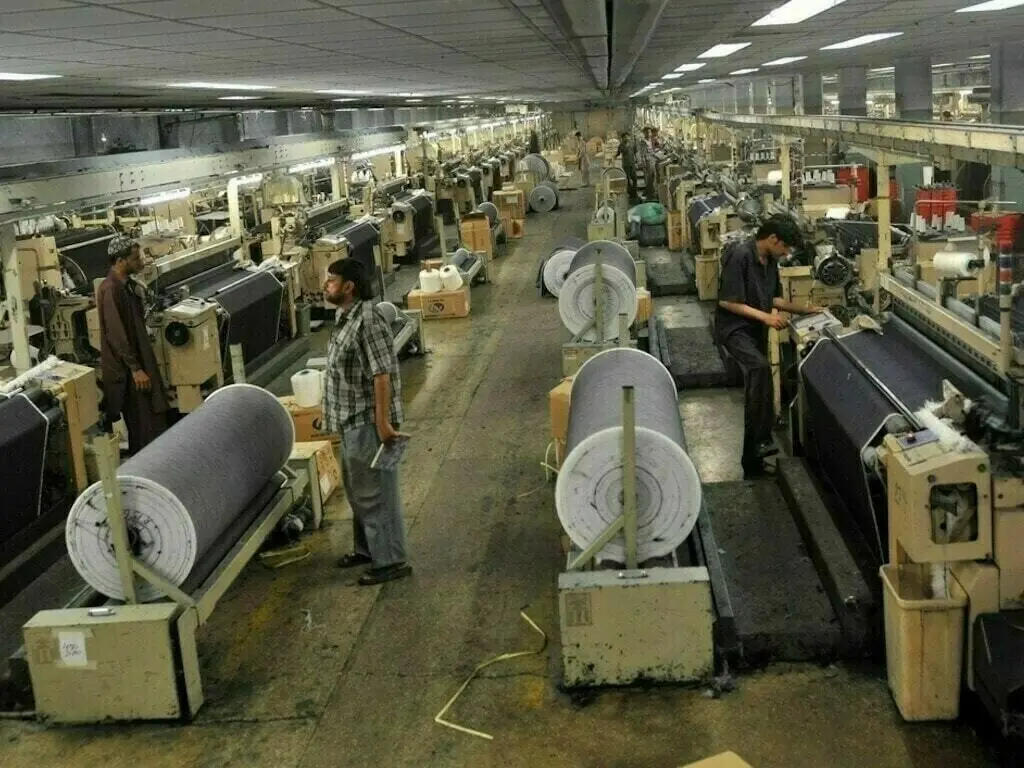
ISLAMABAD: Major manufacturing and export-oriented sectors have challenged the government’s assertions of a recovery in large-scale manufacturing (LSM) output, cautioning that industrial activities continue to contract amid soaring costs, weak demand, and heavy taxation.
Industry leaders say over 150 industrial units have shut down in the past 18 months, while surviving factories are operating at barely 50 percent of installed capacity. The textile sector, Pakistan’s largest export earner, is facing a deepening crisis. Kamran Arshad, Chairman of the All Pakistan Textile Mills Association (APTMA), told Daar News that around 150 textile units have closed due to record-high gas and electricity tariffs, elevated interest rates, heavy taxation, and delayed refunds. These closures have reduced production, weakened exports, and left hundreds of workers jobless.
Official data shows textile exports fell to USD1.43 billion in November 2025, down 2.05 percent year-on-year, while overall exports plunged 15.35 percent. Imports rose 5.42 percent, widening the trade deficit to USD2.86 billion, nearly 33 percent higher than the previous year. Although exports from July–November 2025-26 increased marginally by 3.15 percent to USD7.85 billion, industry insiders argue that the growth is misleading, as factory utilisation remains weak and profit margins are thin.
Ijaz Khokhar, former Chairman of the Pakistan Readymade Garments Manufacturers and Exporters Association (PRGMEA), said most large-scale textile units that previously operated two shifts have now reduced to a single shift. He noted that over 100 spinning units have closed, causing shortages of yarn and fabric key inputs for value-added exports. Khokhar warned that 2026 would be even more challenging for small and medium enterprises (SMEs), citing stringent European Union compliance costs of up to €200,000 annually, which exceed the turnover of many SMEs.
The steel sector is facing an equally severe crisis. Javed Iqbal Malik, Chairman of the Pakistan Association of Large Steel Producers (PALSP), said Pakistan’s steel industry supporting 45 downstream sectors is operating at just 30–50 percent of capacity, producing 3.8 million tons annually against an installed capacity of 9 million tons, despite investments of Rs600 billion in modern, low-emission technology.
Malik highlighted crushing taxation, high energy costs, and collapsing demand as key challenges. Minimum sales tax on steel surged from Rs10,350 per ton in 2018-19 to Rs42,000 per ton in 2024-25, nearly a fourfold increase, resulting in lower consumption and a nearly 50 percent drop in government revenues. The decline has also hit scrap imports a major revenue source which fell by almost half between 2023 and 2025.
Comparing Pakistan with Bangladesh, Malik noted that Bangladesh, with similar installed capacity, produces 6.5 million tons of steel thanks to pro-demand policies, lower VAT, 90 percent import protection on rebars, competitive power tariffs, and lower corporate taxes. Malik stressed that Pakistan could revive the steel sector by aligning tax and energy policies with industrial growth, warning that failure to act could jeopardize jobs, revenue, and industrial self-reliance.
Industry leaders also criticised the government’s move to reduce tariff protection without addressing cost competitiveness, smuggling, tax evasion, and misuse of exemptions in erstwhile FATA/PATA, cautioning that such policies could collapse the local steel industry, turning manufacturers into importers.
Indicators from agriculture and construction sectors also reflect weakness. The Federal Committee on Agriculture estimates cotton output at 6.85 million bales, down 3.3 percent, while rice and maize production fell 3.2 percent and 6.7 percent, respectively. Cement dispatches in November 2025 decreased 3.47 percent year-on-year to 4.14 million tons, though cumulative dispatches during the first five months of FY2025-26 rose 11.54 percent to 21.45 million tons.
The contraction in multiple key sectors, experts say, highlights structural challenges in Pakistan’s industrial and export base, underscoring the urgent need for targeted policy interventions to revive production, enhance competitiveness, and restore investor confidence.