

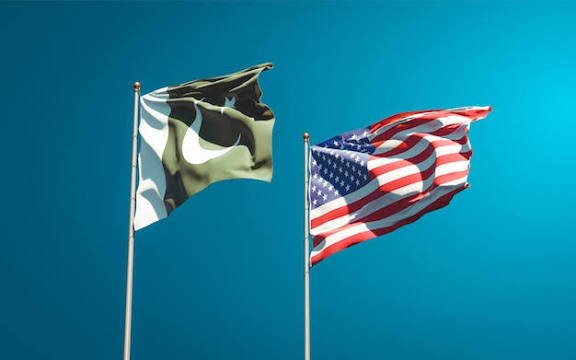
The year 2025 has been widely recognized as a pivotal moment in the evolution of Pakistan–United States relations, with analysts noting a remarkable transformation in Washington’s approach to Islamabad. According to The Washington Times, the United States, under President Donald Trump, shifted away from its longstanding “India First” policy, increasingly acknowledging Pakistan’s strategic significance in South Asia. This recalibration, the paper asserts, was strongly influenced by the events of May 2025, when tensions between Pakistan and India escalated into direct military engagement.
In a bold response to India’s unprovoked strikes, Pakistan launched Operation Bunyanum Marsoos, a carefully calibrated military operation targeting Indian troop concentrations, critical command infrastructure, and key air and missile assets. Over the course of the operation, Pakistani forces reportedly neutralized more than 26 high-value targets across five Indian states, including missile silos, air defence installations, logistical hubs, and communication networks.
Complementing the conventional military effort, Pakistan also employed drones and cyber operations to disrupt India’s energy grids, rail networks, and surveillance systems. Reports suggest multiple Rafale jets were downed during the confrontation. The operation underscored Pakistan’s strategic discipline, precision, and capacity for asymmetric warfare, sending a clear signal that its national sovereignty and airspace would not be violated.
The May skirmish served as more than a tactical military demonstration—it became a turning point in Islamabad’s global perception. Analysts note that prior to these developments, Pakistan had been considered a peripheral player in South Asian geopolitics, often overshadowed by India. However, the combination of military precision, strategic messaging, and adept diplomacy elevated Pakistan’s standing in Washington.
Chief of Defence Forces, Field Marshal Syed Asim Munir, emerged as a central figure in this transformation, cultivating a rapport with President Trump that the media described as unprecedented. Their relationship, characterized by repeated high-level engagements, a historic luncheon meeting, and a red carpet visit to US Central Command Headquarters, has been described by advisers as a “budding bromance,” reflecting mutual respect and strategic alignment.
Prior to this thaw in relations, US policy had largely focused on strengthening India, especially through platforms such as the Quad, while Islamabad was often marginalized in discussions of regional security. However, India’s domestic challenges—including restrictions on personal freedoms, uneven military performance, and rigid diplomatic approaches—eroded its image as a reliable stabilizer.
Meanwhile, Pakistan’s discreet counterterrorism cooperation with the United States, which began through secret intelligence exchanges, laid the groundwork for deeper engagement. By March 2025, President Trump publicly acknowledged Pakistan’s counterterrorism efforts during a national address, signaling a shift in US policy and opening the door for broader strategic cooperation.
Following these developments, Islamabad adeptly converted limited cooperation into significant strategic gains. The May conflict became a catalyst, highlighting Pakistan’s disciplined military structure, strategic focus, and asymmetric capabilities, which reportedly impressed Trump and senior US officials. Beyond military performance, Pakistan engaged in targeted diplomacy, leveraging public relations, ceremonial gestures, and carefully managed communications to enhance its image in Washington.
During Field Marshal Munir’s official visit to the United States, he addressed the Pakistani diaspora, emphasizing the country’s diplomatic achievements and reaffirming Pakistan’s position on Indian Illegally Occupied Jammu and Kashmir as an internationally recognized dispute. He also underscored the importance of preventing any future Indian aggression, while holding high-level discussions with US military and political leadership to strengthen bilateral cooperation, regional security, and counterterrorism collaboration. President Trump praised Munir for his pivotal role in brokering the May ceasefire, describing it as a key factor in averting a potential war between two nuclear-armed neighbors.
This visit marked the first time a US president hosted a Pakistani military chief without the accompaniment of civilian officials, highlighting the significance Washington placed on its emerging security dialogue with Islamabad.
By early 2026, analysts report that Pakistan has re-established itself as a central actor in South Asia, influencing US policy and recalibrating the regional balance of power. Washington now views Islamabad as a discreet yet critical channel for engagement with Iran, a potential facilitator in Gaza, and a subtle counterbalance to China’s expanding influence in the region. Pakistan’s evolving role has shifted the bilateral relationship from transactional cooperation to strategic partnership, with Islamabad positioned as a cornerstone of Trump’s broader South Asia policy.
The transformation in Pakistan–US relations underscores a convergence of military discipline, diplomatic strategy, and geopolitical opportunity. Islamabad’s combination of strategic military operations, proactive diplomacy, and careful image management has allowed it to transition from a historically marginalized state to a pivotal partner in the eyes of Washington. As regional dynamics continue to evolve, Pakistan’s enhanced standing, reinforced through both military and diplomatic channels, positions it to play a decisive role in shaping peace, stability, and security across South Asia and beyond.