

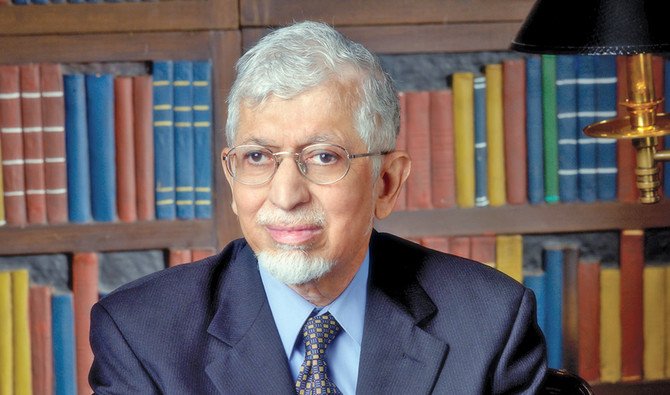
Dr. Muhammad Umer Chapra is widely recognized as a leading architect of modern Islamic economics. Through his pioneering scholarship and decades of senior institutional service in Saudi Arabia, he has played a central role in shaping contemporary Islamic economic thought and the evolution of the Kingdom’s financial governance.
Born in 1933 in Bombay (British India), Dr. Chapra later moved with his family to Karachi, where he completed his early education. Dr. Chapra earned his Bachelor of Commerce (1954) and Master of Commerce (1956) degrees from the University of Karachi before completing his Ph.D. in Economics at the University of Minnesota in 1961. He went on to hold academic appointments at the University of Wisconsin and the University of Kentucky, and later contributed to the Pakistan Institute of Development Economics (PIDE) and the Central Institute of Islamic Research.
The defining phase of his professional life began in 1965 when he joined the Saudi Arabian Monetary Agency (SAMA), at a moment when the Kingdom was laying the foundations of a modern financial and monetary system.
Dr. Muhammad Umer Chapra and the Foundations of Modern Islamic Economics
Over nearly thirty-five years at SAMA, Dr. Chapra played an indispensable role in institutional development, monetary policy design, and financial system stabilization amid a period of rapid economic transformation. He helped shape financial stability frameworks and liquidity-management mechanisms that strengthened the resilience of Saudi Arabia’s banking sector. His analysis informed policy responses to regional and global economic shocks, ensuring continuity and equilibrium in volatile periods. He also contributed to early economic diversification initiatives, laying conceptual foundations for strategies that would mature in subsequent decades.
In recognition of his long-standing service and significant contributions, he was granted Saudi citizenship.
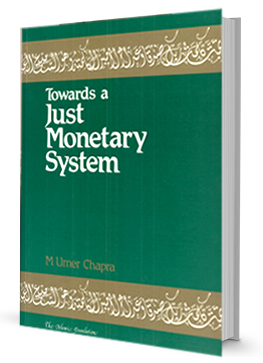
Parallel to his institutional work, Dr. Chapra emerged as one of the most influential scholarly voices in Islamic economics. He authored several landmark books, including Towards a Just Monetary System, Islam and the Economic Challenge, and The Islamic Vision of Development in the Light of Maqāṣid al-Sharīʿah, which collectively provided a comprehensive and value-driven alternative to conventional economic models.
Central to his intellectual contributions is the integration of economic efficiency with moral purpose, emphasizing justice, equity, risk-sharing, and social welfare as foundational principles of a sound economic system. He revitalized institutions such as zakāt and waqf as effective instruments for poverty alleviation and sustainable development, and he consistently advocated value-based frameworks for governance and financial regulation.
You may also like to read: Minhaj Platform Set to Transform Access to Authentic Islamic Scholarship Worldwide
Following his retirement from SAMA in 1999, Dr. Chapra joined the Islamic Research and Training Institute (IRTI) of the Islamic Development Bank, where he continued to advise on Islamic finance, economic reform, and institutional development. His expertise influenced policymaking circles, regulatory bodies, and academic institutions around the world.
Scholarly Contributions of Dr. Muhammad Umer Chapra
Dr. Chapra’s work has been recognized with several prestigious international awards, including the Islamic Development Bank Award for Islamic Economics (1989), the King Faisal International Prize in Islamic Studies (1990), the Institute of Overseas Pakistanis Gold Medal (1995), and the COMCEC 30th Anniversary Academic Award (2014).
His enduring legacy is reflected in the scholarship he produced, the institutions he strengthened, and the generations of policymakers and researchers shaped by his work.
Dr. Muhammad Umer Chapra continues to influence economic governance and Islamic financial thought across the Muslim world and beyond.