

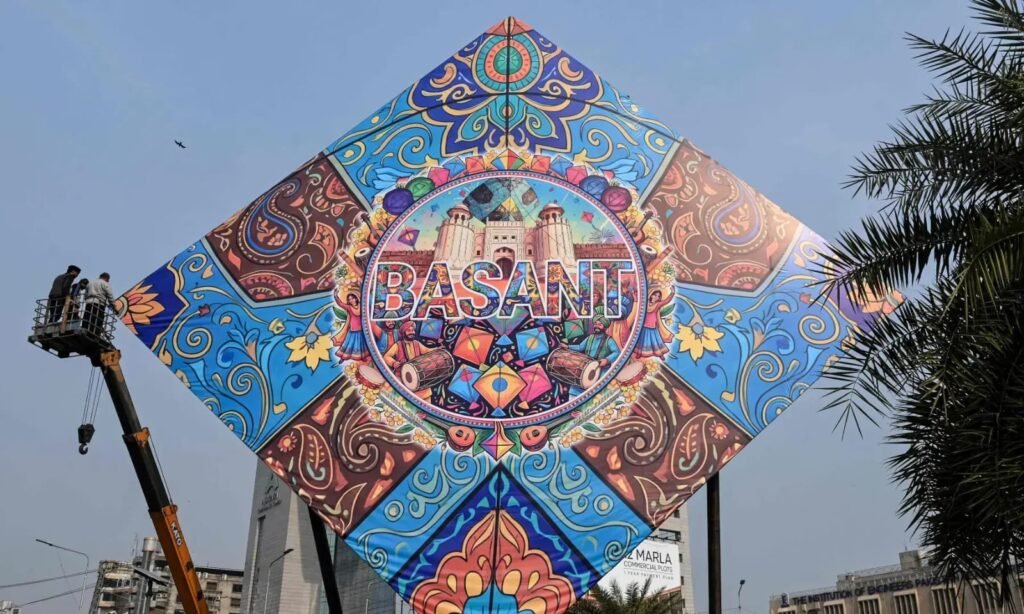
After more than two decades, the city of Lahore witnessed the return of the much-loved Basant festival, bringing with it a three-day celebration brimming with colour, music, food, and the cheerful spirit of kite flying. The festival, which began on February 6 and continued until the early hours of Monday, marked a historic revival after the Punjab government lifted a ban that had been imposed for over twenty years due to safety concerns. Roads, rooftops, and public spaces came alive as citizens of all ages, from children to the elderly, took part in the festivities with enthusiasm.
Throughout the three days, Lahore’s skyline was a spectacular sight. Enthusiasts thronged rooftops with kites in hand, participating in friendly competitions while chanting the traditional “bo-kata” as brightly coloured kites dotted the sky. The city buzzed with energy as families, friends, and communities gathered, sharing in the excitement of an event deeply rooted in local culture. Children ran across terraces, youngsters tested their skills in kite battles, and adults joined in to relive memories of past celebrations, creating an atmosphere of joy and unity across Lahore.
The revival of Basant came with strict oversight and carefully planned safety measures. According to Senior Provincial Minister Marriyum Aurangzeb, the administration ensured that kite and string manufacturers were officially registered, and safety rods were installed on 1.4 million motorcycles to protect participants and bystanders. Additionally, 512 buses were provided for free transport, facilitating the movement of festival-goers across the city. Over the course of the three days, approximately two million people used the bus service, while one million vehicles entered Punjab, demonstrating the massive scale of public participation.
The provincial government’s meticulous planning extended to medical and emergency facilities as well. On the last day of Basant, 200 mobile clinics and 21 field hospitals were set up across Lahore, ensuring rapid response to any incidents. These measures reflected the vision of the Chief Minister, who emphasized discipline, adherence to standard operating procedures, and public safety while allowing the festival to be celebrated in its full spirit.
The excitement of Basant was also reflected in the festive decorations and night-time gatherings. Streets and rooftops were illuminated with colourful lights, creating a vibrant backdrop as citizens continued celebrations late into the night. Candles were released into the air on the final day, symbolizing peace and hope, a gesture highlighted by Provincial Minister Azma Bukhari. She remarked that the candles represented the aspirations of the people and would carry the joy of Basant into the coming year.
Chief Minister Maryam Nawaz personally lauded the people of Lahore for maintaining discipline and following safety SOPs. In a post on X (formerly Twitter), she praised residents for embracing a vision of a happy yet safe Basant, noting that apart from the prescribed kite sizes, there were no reports of prohibited strings being used. She expressed satisfaction that citizens upheld the trust placed in them and highlighted that the model of disciplined celebrations would serve as an example for other cities in Pakistan.
Despite extensive planning and precautionary measures, there were some unfortunate incidents during the festivities. At least three children sustained injuries from kite strings, while two individuals were hurt after falling from rooftops in different areas of Lahore. All five injured were immediately shifted to hospitals. Over the course of the three-day festival, five people lost their lives in various accidents, underscoring the continued need for vigilance during such large-scale events.
Senior officials described the festival as a triumph for both Lahore and Pakistan, emphasizing that the successful execution of the event demonstrated the city’s ability to balance tradition with modern safety standards. Minister Marriyum Aurangzeb stated that while calls to disrupt the event on February 8 were made, they ultimately failed due to the cooperation and responsibility shown by the youth and the general public. This collective effort ensured that Basant returned not only as a celebration but as a testament to civic engagement and respect for cultural heritage.
In addition to safety and regulation, the administration encouraged community participation in creative and symbolic aspects of the festival. Streets and terraces became spaces for artistic expression, with colourful kites designed in various patterns reflecting Lahore’s rich cultural heritage. Food stalls, music performances, and family gatherings added to the festive ambiance, ensuring that Basant was experienced as a comprehensive cultural event rather than just a kite-flying spectacle.
The festival also highlighted the economic and social dimensions of Basant. Local kite and string manufacturers saw a revival in business, generating employment opportunities and contributing to the city’s economy. The careful monitoring of commercial activities ensured compliance with safety regulations while allowing entrepreneurs to benefit from the revived demand. Moreover, the large turnout of residents, tourists, and visitors brought a sense of community cohesion, showcasing Lahore as a city capable of hosting large-scale cultural celebrations in a structured and safe manner.
The third day of Basant was particularly memorable, with citizens participating in large kite-flying competitions and releasing symbolic candles into the sky. The event emphasized harmony and civic responsibility, illustrating that cultural traditions could be revived responsibly with proper planning and community engagement. Officials stressed that the experiences of this year would serve as a blueprint for future celebrations, with the expectation that next year’s Basant would be even more vibrant and safe.
Chief Minister Maryam Nawaz announced an extension of the celebrations until 5 a.m. on Monday, framing it as a reward for disciplined participation. She highlighted that the public’s adherence to SOPs, combined with the administration’s careful planning, created a successful model for large-scale public festivals. The festival’s conclusion, marked by collective celebration, candle-lighting, and community gatherings, showcased Lahore’s resilience, cultural pride, and ability to merge tradition with modern safety practices.
The three-day Basant festival represented a harmonious blend of tradition, celebration, and civic responsibility. From the skies filled with vibrant kites to the streets and rooftops alive with music, food, and community gatherings, Lahore demonstrated that age-old cultural events could be safely revived with foresight, planning, and collective participation.
While some unfortunate incidents reminded authorities of ongoing risks, the overall success of the festival underscored the potential for future celebrations to be even safer, more inclusive, and culturally enriching. Basant 2026 will be remembered not only as a joyous return of a beloved festival but also as a model of disciplined, community-oriented celebration that honors heritage while safeguarding public welfare.