

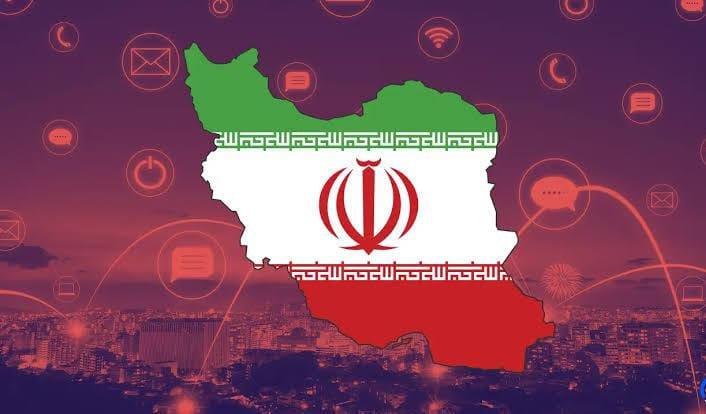
Amid rapidly escalating security tensions in the region, significant restrictions have reportedly been imposed on digital communications inside Iran. The global internet monitoring organization NetBlocks has revealed that online access across the country has been reduced to near-total shutdown levels. This development emerged shortly after the start of military strikes by Israel and the United States against the Islamic Republic, raising concerns that the impact of the conflict is extending beyond conventional battlefields into the digital sphere.
According to NetBlocks, real-time network data indicates a dramatic and widespread decline in internet connectivity throughout Iran. In a statement shared on social media, the organization explained that live traffic metrics show a sharp and sudden drop in national connectivity, to the extent that access to the global internet has become almost entirely unavailable for ordinary users. The scale and speed of the disruption suggest a coordinated and deliberate restriction rather than a routine technical failure.
Observers believe that such a comprehensive blackout is unlikely to be accidental. Instead, it appears to be a structured response aimed at controlling the flow of information during a period of heightened military tension. NetBlocks also noted that the current pattern of disruption closely resembles measures implemented during last year’s hostilities between Iran and Israel. This comparison has fueled speculation that internet restrictions form part of a broader emergency protocol activated during times of conflict.
Digital policy experts point out that when internet traffic collapses so abruptly, the consequences extend far beyond social media access. Online banking systems, e-commerce platforms, academic services, and government digital portals all depend on stable connectivity. In a country where millions rely on online services for daily transactions and communication, a near-total shutdown can disrupt economic activity, social interaction, and access to essential information.
Globally, internet shutdowns are often justified by governments as necessary tools to maintain order, prevent the spread of misinformation, or protect national security during crises. However, human rights organizations frequently criticize such measures, arguing that they infringe upon fundamental freedoms, including access to information and freedom of expression. The latest developments in Iran have once again brought this debate to the forefront, highlighting the delicate balance between security concerns and civil liberties.
Organizations like NetBlocks play a critical role in tracking and documenting digital disruptions worldwide. Their network measurements are widely cited by international media outlets, research institutions, and policymakers. In the case of Iran, the latest data suggests that the consequences of escalating military operations are not confined to physical targets but are also affecting communication infrastructure and cyberspace governance.
Reports indicate that the disruption has been felt nationwide rather than being limited to isolated provinces. Users across different regions have experienced severe connectivity problems, with many unable to access international websites or communication platforms. While some individuals attempted to use virtual private networks (VPNs) or alternative methods to bypass restrictions, overall connectivity remained heavily constrained. This has also made it difficult for members of the Iranian diaspora to contact family members inside the country.
Security analysts emphasize that in modern conflicts, information control is a strategic component. Governments facing external military pressure may restrict digital channels to prevent panic, manage public narratives, or limit the real-time dissemination of sensitive developments. In this context, the timing of Iran’s internet disruption—occurring shortly after the launch of foreign military strikes—has intensified speculation that the move was directly linked to national security calculations.
NetBlocks stated that its monitoring systems detected a near-complete collapse in connectivity metrics, describing the scale of the disruption as highly unusual. The organization reiterated that similar network interference had been recorded during previous regional confrontations, reinforcing the perception that digital shutdowns are embedded within Iran’s emergency response framework.
From an economic perspective, extended internet outages can carry substantial costs. Digital payment systems, international trade coordination, and cross-border financial communications rely heavily on uninterrupted online access. If restrictions persist, analysts warn that both domestic commerce and international business operations could face significant setbacks. In an interconnected global economy, even temporary digital isolation can have ripple effects.
Human rights advocates have expressed concern about the broader implications of restricting internet access during times of crisis. They argue that transparency and open communication are essential, particularly when citizens seek accurate information about security developments. At the same time, governments often defend such actions as necessary precautions aimed at protecting public safety and preventing destabilization.
The current situation in Iran illustrates how contemporary conflicts increasingly encompass both physical and digital dimensions. As military operations intensify, communication networks themselves can become strategic assets or targets. The rapid decline in internet traffic suggests that digital infrastructure has become deeply intertwined with national defense strategies and crisis management mechanisms.
It remains to be seen whether the disruption will prove temporary or evolve into a prolonged restriction. International monitoring bodies continue to track real-time connectivity data, providing updates as the situation develops. For now, the near-total reduction in internet access within Iran underscores a broader reality of the modern era: in times of geopolitical confrontation, control over digital space can be as consequential as control over physical territory.