

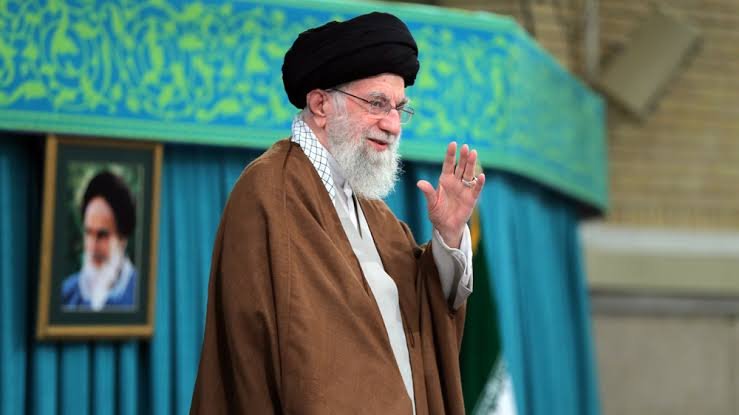
The rapidly shifting dynamics of the Middle East have taken a dramatic turn following reports emerging from Iran about the death of its Supreme Leader, Ali Khamenei. According to Iranian state media, the country’s highest religious and political authority was killed during a series of coordinated military strikes reportedly carried out by Israel and the United States. The announcement has sent shockwaves across the region and triggered widespread reactions at both domestic and international levels.
Official Iranian sources stated that the strikes occurred on Saturday and involved both naval and aerial operations targeting multiple strategic locations across the country. It was reported that Khamenei was present inside his official compound at the time of the attack and was killed there. Authorities described the incident as a direct assault on Iran’s sovereignty and characterized his death as a national tragedy.
In the immediate aftermath of the announcement, the Iranian government declared seven days of nationwide public holidays and a 40-day mourning period. State institutions were closed, flags were lowered to half-mast, and black banners were raised across major cities. Large crowds gathered in Tehran and other urban centers to participate in vigils and memorial gatherings. Security forces were placed on high alert amid concerns over possible unrest or further escalation.
Israeli media outlets also circulated claims that evidence confirming Khamenei’s death had been obtained. Some reports alleged that images of his body had been presented to senior American officials. However, these claims have not been independently verified. British media organizations cited Israeli officials as saying that Khamenei’s body had been recovered from the site of the strike, further intensifying regional tensions.
In a video statement, Israeli Prime Minister Benjamin Netanyahu suggested that senior Iranian leadership figures had suffered significant losses. He indicated that the operation had targeted not only the Supreme Leader’s compound but also high-ranking officials connected to Iran’s military and nuclear programs. Netanyahu asserted that operations against Iran would continue as long as deemed necessary for Israel’s security objectives.
Iranian officials, meanwhile, confirmed that other prominent figures were also killed during the attacks. Reports indicated that senior members of the country’s defense establishment and commanders of the Islamic Revolutionary Guard Corps were among those who lost their lives. Iranian health authorities released preliminary figures stating that at least 201 civilians were killed and 747 others injured in the strikes. Hospitals in major cities were reportedly overwhelmed as emergency services responded to the casualties.
The coordinated strikes allegedly targeted a range of strategic sites, including military installations, missile facilities, and locations associated with Iran’s nuclear infrastructure. Iranian defense systems were activated in response, and military deployments were reinforced along key borders and coastal areas. The government described the attacks as an act of aggression and vowed that a response would be delivered at a time and place of its choosing.
Within Iran, political uncertainty has begun to surface regarding the constitutional process for appointing a new Supreme Leader. According to the country’s legal framework, the Assembly of Experts is responsible for selecting a successor. Analysts suggest that this transition period could become a defining moment in Iran’s modern political history, potentially reshaping its domestic and foreign policy direction. Various political factions are expected to position themselves as discussions over leadership succession unfold.
International reactions have been swift. Several governments have called for restraint and urged all parties to avoid further escalation. Diplomats at the United Nations have reportedly pushed for emergency consultations to address the rapidly deteriorating security situation. Observers warn that without immediate diplomatic engagement, the confrontation could expand into a broader regional conflict involving additional actors.
Energy markets have also reacted sharply to the developments. Oil prices experienced volatility amid fears that further escalation could disrupt supply routes in the Persian Gulf. Gulf states have reportedly heightened their own security measures in anticipation of possible spillover effects. Regional airlines adjusted flight paths, and shipping routes were closely monitored due to concerns over maritime security.
Domestically, Iranian leaders have emphasized national unity during what they describe as a critical moment in the country’s history. Senior clerics and political figures issued statements honoring Khamenei’s leadership and pledging to continue his ideological path. State broadcasts repeatedly referred to him as a symbol of resistance and independence. Public demonstrations in support of the government were organized in multiple provinces.
At the same time, global analysts caution that the long-term consequences of this development remain uncertain. The loss of such a central figure in Iran’s political structure could have profound implications for regional power balances. The strategic calculations of Israel, the United States, and Iran will likely determine whether the current crisis escalates further or transitions toward diplomatic negotiations.
The reported death of Iran’s Supreme Leader marks a pivotal and potentially transformative moment in Middle Eastern geopolitics. The combination of high civilian casualties, the loss of senior military officials, and the prospect of leadership transition has created a highly volatile environment. As mourning continues inside Iran and international leaders deliberate on possible responses, the coming days will be crucial in shaping the trajectory of regional stability and global security.