

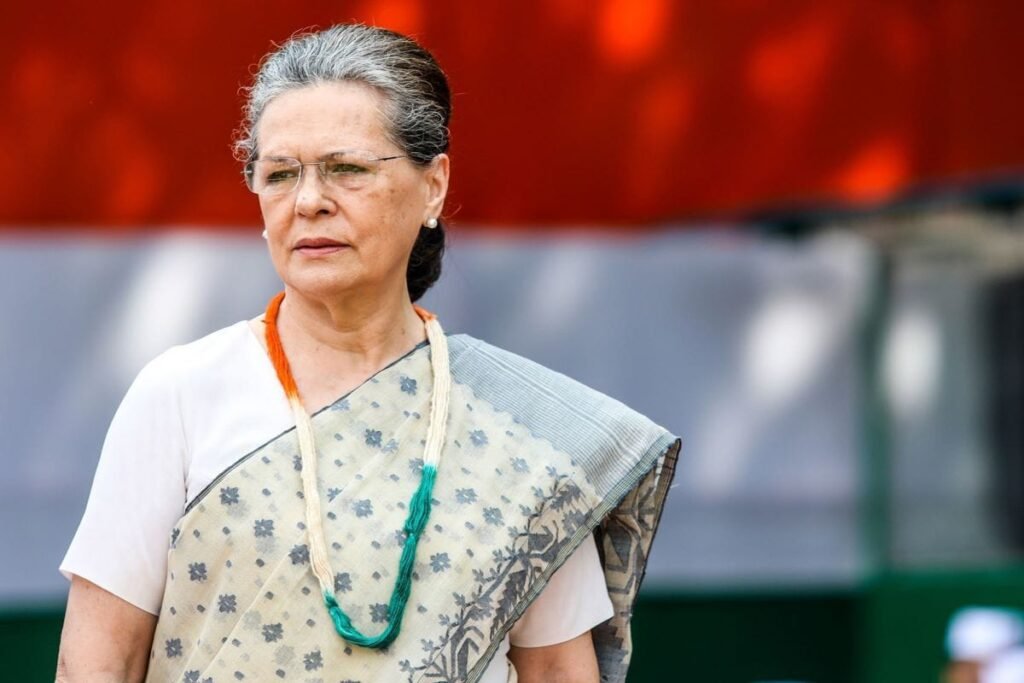
India’s external policy approach has come under sharp criticism from senior Congress leader Sonia Gandhi, who has accused the current administration of compromising the country’s long-standing diplomatic independence. In a detailed opinion piece published in an Indian journal, she argued that New Delhi’s recent positioning in the Middle East reflects a departure from the strategic balance India historically maintained between competing regional powers.
According to her assessment, India once prided itself on pursuing an autonomous foreign policy rooted in non-alignment, strategic caution, and carefully calibrated relationships. For decades, successive governments attempted to maintain equilibrium in ties with both Israel and Iran, recognizing the importance of each relationship for India’s energy security, regional outreach, and broader geopolitical interests. However, she contended that this delicate balance has now been unsettled.
In her article, Gandhi suggested that the present government has tilted too openly in favor of Israel while sidelining Iran, a country she described as a longstanding and significant partner for India. She maintained that such a shift does not merely represent a tactical adjustment but signals a deeper transformation in India’s diplomatic posture. By appearing to prioritize one regional actor over another, she argued, India risks undermining the credibility of its independent decision-making on the global stage.
A central theme of her critique revolves around what she views as the erosion of India’s diplomatic sovereignty. Gandhi asserted that supporting Israel in a manner perceived as uncritical, while simultaneously neglecting relations with Tehran, gives the impression that India’s foreign policy choices are increasingly influenced by external alignments rather than national interest calculations. In her view, this pattern weakens India’s traditional image as a country capable of engaging diverse partners without becoming entangled in bloc politics.
She further contended that the Modi administration has transformed what was once a nuanced diplomatic strategy into what she described as a form of political spectacle. Historically, India’s engagement with both Israel and Iran required careful signaling, quiet negotiations, and an understanding of the sensitivities involved. Gandhi argued that this subtlety has been replaced by overt gestures that may appeal domestically but carry international consequences.
Another significant concern she raised relates to India’s global reputation. Gandhi suggested that the government’s approach has prompted serious questions internationally about the consistency and reliability of India’s foreign policy commitments. She implied that by appearing closely aligned with pro-Israel interests, New Delhi risks being perceived as less neutral in regional disputes, thereby narrowing its diplomatic maneuvering space in multilateral forums.
In particularly strong language, she characterized the government’s conduct during moments of crisis as a retreat from responsibility rather than effective diplomacy. What the administration portrays as strategic engagement, she claimed, amounts instead to avoiding difficult moral and political choices when they matter most. Such behavior, she argued, diminishes India’s standing as a principled voice in global affairs.
Gandhi also addressed the response from New Delhi following reports related to Iran’s Supreme Leader, Ali Khamenei. She described India’s muted reaction as emblematic of a broader shift away from an independent foreign policy tradition. In her view, the lack of a strong and clearly articulated position indicated hesitancy that contrasts sharply with India’s historical readiness to speak assertively on international developments.
For Gandhi, the issue is not limited to a single event or bilateral relationship. Rather, she framed it as part of a larger pattern in which India’s external engagement is becoming less autonomous and more closely tethered to specific geopolitical alignments. She warned that such a trajectory could have long-term implications for India’s strategic flexibility, particularly in a region as volatile and complex as the Middle East.
She further argued that foreign policy must be guided by enduring national interests and ethical consistency rather than short-term political messaging. India’s longstanding doctrine of strategic autonomy, she noted, allowed it to cultivate diverse partnerships while preserving decision-making independence. Diluting that doctrine, she cautioned, may leave the country vulnerable to external pressures and reduce its leverage in negotiations.
Throughout her commentary, Gandhi sought to emphasize that India’s relationships with countries like Iran have historically been multidimensional—spanning energy cooperation, infrastructure projects, and regional connectivity initiatives. Ignoring or downplaying these ties, she suggested, risks undermining years of diplomatic investment and mutual trust. At the same time, she did not argue against engagement with Israel; instead, her focus remained on the perceived imbalance and its broader symbolism.
She concluded by urging a reassessment of India’s diplomatic direction. Restoring equilibrium in relations with key regional actors, she implied, would not only strengthen India’s global standing but also reaffirm its commitment to an independent and principled foreign policy framework. In her perspective, maintaining credibility abroad requires consistency, moral clarity, and the courage to act responsibly during turbulent periods.
Ultimately, Gandhi’s critique presents a broader debate about the nature of India’s evolving global role. Whether one agrees with her assessment or not, her remarks underscore an ongoing domestic conversation about how New Delhi should navigate complex international rivalries while safeguarding its strategic autonomy and long-term national interests.