

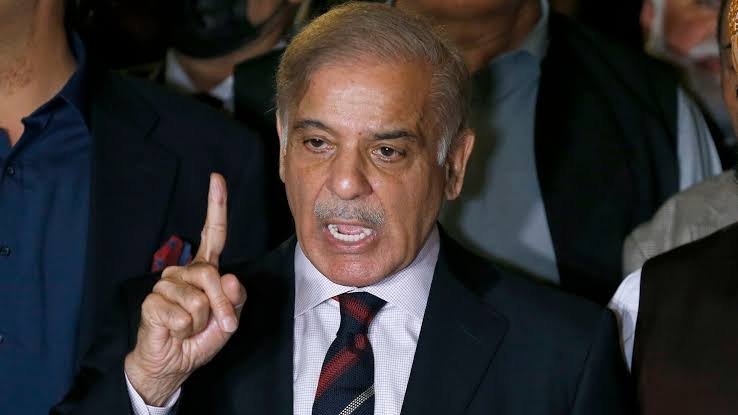
In view of the rising economic challenges and inflation in the country, the government has initiated several measures aimed at reducing expenditures and promoting fiscal discipline. In this context, a key meeting was held under the chairmanship of Prime Minister Shehbaz Sharif, during which detailed discussions took place regarding government savings measures, the impact of petroleum product prices, and strategies to provide relief to the public. The meeting also reviewed the implementation and expected outcomes of the austerity policies adopted by the government.
Several senior federal ministers and high-ranking officials attended the meeting. Participants included Minister of Information *Attaullah Tarar, Minister of Finance **Muhammad Aurangzeb, Minister of Petroleum **Ali Pervaiz Malik, Minister of State *Bilal Azhar Kayani, Chairman of the Federal Revenue Board, and other senior officials from relevant departments. They presented detailed briefings on the current economic situation and discussed the roadmap for implementing austerity and savings measures.
During the meeting, officials informed the Prime Minister that the government had already undertaken several practical steps to reduce administrative and operational expenditures. The main objective of these steps is to ease the financial burden on the national treasury and ensure that the funds saved are directly allocated for public welfare initiatives. It was emphasized that any savings generated through these austerity measures would be exclusively used to provide relief to citizens, particularly in the current economic climate.
Prime Minister Shehbaz Sharif addressed the meeting and stressed that the government’s top priority is to provide maximum relief and convenience to the people. He highlighted that in the present economic circumstances, it is essential for the government to cut its own expenditures so that the resources saved can be effectively utilized for addressing public needs. He reiterated that all austerity measures adopted by the government are primarily intended to deliver tangible benefits to the general public.
An important decision made during the meeting was to implement a phased reduction in the salaries of employees working in government institutions and semi-autonomous organizations under government supervision. Under this plan, employees across different grades will face a salary cut ranging from five to thirty percent. Officials explained that this reduction would be carried out gradually to ensure that the administrative functioning of institutions is not disrupted while still achieving significant savings for the treasury.
It was further decided that the funds saved from these salary reductions would be exclusively used for public relief programs. Government officials stated that when the state reduces its own expenditures, it can create greater capacity to provide direct assistance and benefits to citizens.
Additionally, it was decided that government representatives attending board meetings of public corporations and other institutions will not receive any attendance fees. These funds will also be included in the government’s overall savings to further reduce expenditures.
The meeting clarified that certain critical state institutions would be exempt from some aspects of the austerity measures. According to the official communiqué, law enforcement agencies and the Federal Revenue Board will continue their regular operations according to existing protocols and will not be subject to the four-day workweek policy. This exemption aims to ensure that essential agencies continue to function efficiently without disruption.
The Prime Minister also issued instructions to all Pakistani embassies worldwide to observe the upcoming 23rd March national day celebrations with utmost simplicity, avoiding unnecessary expenditures and ensuring that the celebrations reflect a spirit of austerity.
Regarding foreign visits by government officials, the Prime Minister issued strict directives. Federal ministers, ministers of state, special assistants, and senior officials are to refrain from unnecessary international travel. Such trips will only be undertaken if deemed absolutely essential and in the national interest.
He further instructed that all directives regarding austerity must be strictly implemented. Secretaries of the respective ministries are tasked with monitoring adherence to these measures within their departments and providing regular reports on progress.
It was also decided that the secretaries will submit daily progress reports to a review committee to ensure continuous oversight of austerity measures. This system is intended to provide timely information to the government and allow for immediate corrective actions whenever necessary.
The decisions taken in the meeting are aimed at significantly reducing government expenditures and ensuring that the funds saved are used directly for public welfare. The Prime Minister emphasized the government’s commitment to take every possible step to alleviate economic hardships for citizens and to utilize state resources in a more effective and responsible manner.