

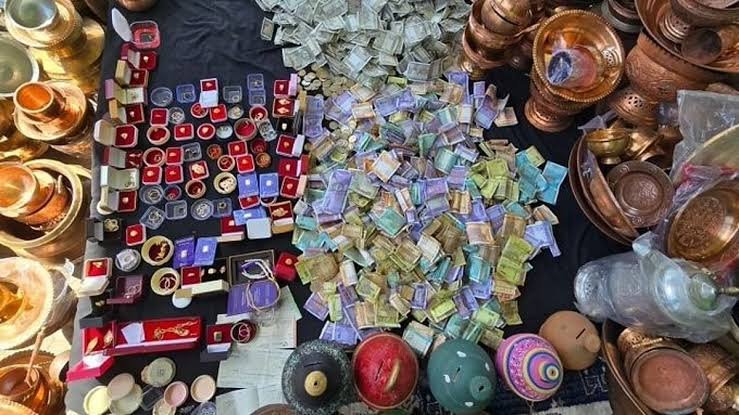
Amid the ongoing conflict in Iran, residents of Indian-administered Kashmir, located over a thousand kilometers away, have launched a remarkable humanitarian initiative to support the Iranian people. The local Muslim community has been actively collecting donations in various forms, ranging from cash and gold to household items, utensils, and even livestock, reflecting a deep sense of empathy and solidarity.
Community leaders and elders have set up collection stalls in neighborhoods with a predominantly Muslim population to facilitate the donation process. Young volunteers have taken it upon themselves to visit homes door-to-door, ensuring that as many people as possible have the opportunity to contribute to the cause. These efforts illustrate a community-wide commitment to humanitarian aid, transcending geographical and political boundaries.
Women in the region have been particularly active, donating gold jewelry, bangles, and earrings. Many families have offered their livestock or traditional copper and brass utensils, while children are also contributing by giving their personal savings or portions of the grains they have collected. This broad participation demonstrates that people of all ages and social backgrounds are joining the effort to assist those affected by the crisis in Iran.
Members of the wealthier community have contributed by transferring cash to a dedicated aid account established at the Iranian Embassy in New Delhi at the beginning of the month. This account was created to securely and efficiently channel local donations to support the Iranian population impacted by the conflict.
A young girl, Shazia Batool, shared her thoughts, saying, “My sympathies are with Iran, and I am offering my only pair of golden earrings. We can contribute only what we have.” Her statement highlights the deep sense of personal responsibility and religious motivation among the youth, even when resources are limited.
The scale of donations increased noticeably on the occasion of Eid al-Fitr, with residents using the holiday to transform it into an act of charity. Volunteer Masood Ali remarked that many people chose to dedicate their time to humanitarian work instead of focusing solely on family gatherings or festive meals. The community turned the occasion into a day of collective compassion, extending their support to those in urgent need.
Videos circulating on social media show Kashmiri residents describing their contributions as both a religious and humanitarian duty. The Iranian Embassy expressed gratitude on social media for the solidarity and cooperation of the Kashmiri people, acknowledging the positive impact of their efforts on the lives of the Iranian population.
Following the recent attacks by the United States and Israel on Iran, there have also been protests in this part of Kashmir. These demonstrations were particularly significant in areas with minority Shiite communities and among people with longstanding cultural and religious ties to Iran. While the protests expressed anger over the aggression, they also highlighted the region’s deep connection with Iran, reinforcing the humanitarian and emotional motivation behind the donation drive.
This initiative demonstrates that human empathy and religious bonds can transcend distance, political boundaries, and conflicts. Despite being thousands of kilometers away from the crisis, the Kashmiri people have shown their willingness to open their hearts and resources to support those in need.
The involvement of all sections of society—youth, elders, women, and children—reflects a shared commitment to humanitarian values. Local leaders note that the volunteer efforts not only provide immediate aid to Iran’s affected population but also strengthen the sense of community responsibility and compassion among Kashmiris themselves.
Such efforts also signify that the people of Kashmir are not isolated from global events. They are attentive to international crises and are prepared to contribute in meaningful ways. While the donations of utensils, livestock, jewelry, and cash may be modest in scale, the act itself carries profound symbolic significance, illustrating the community’s dedication to religious and cultural solidarity.
Ultimately, the initiative shows that compassion, religious devotion, and collective community action cannot be confined by geography. Thousands of kilometers away, Kashmiris have demonstrated a remarkable commitment to humanitarian aid, willingly offering their resources to alleviate suffering and stand in solidarity with the Iranian people during these challenging times.