

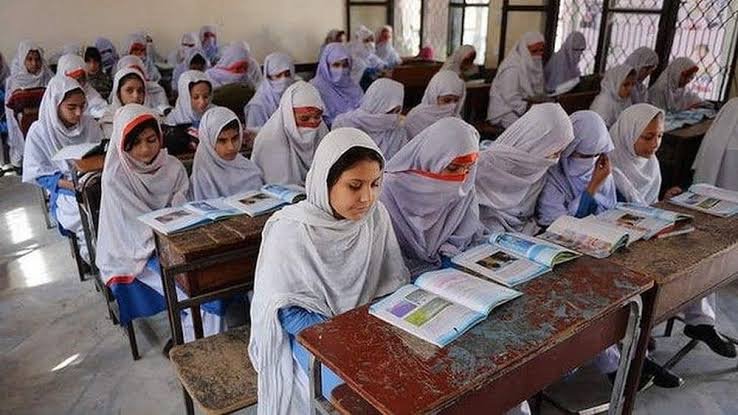
In a move aimed at addressing economic constraints and reducing energy consumption, authorities in Pakistan have introduced significant changes to the weekly academic schedule of schools, affecting both the federal capital and the province of Punjab. These adjustments reflect broader governmental efforts to implement austerity measures and manage fuel usage more efficiently, while still maintaining continuity in the education system.
To begin with, the Punjab School Education Department took a decisive step by revising the operational days for schools across the province. According to an official announcement released earlier in the week, all public as well as privately managed educational institutions in Punjab will now function on a four-day schedule. As per the revised arrangement, schools will remain closed on Fridays in addition to the already observed weekend holidays of Saturday and Sunday. This effectively reduces the in-person academic week to Monday through Thursday.
The notification clarified that this directive has been approved by the relevant competent authority and will remain in force until further instructions are issued. By introducing an additional weekly تعطیل (holiday), the provincial administration aims to contribute to nationwide efforts focused on conserving fuel and cutting down operational costs associated with transportation and school utilities. The step is also seen as part of a coordinated response to ongoing economic challenges, where reducing non-essential expenditures has become a priority.
Closely following this development, a similar policy has now been implemented in the Islamabad Capital Territory (ICT), bringing private educational institutions in line with the broader national agenda. The Private Educational Institutions Regulatory Authority (PEIRA), which oversees private schools in Islamabad, has formally directed all such institutions to adopt a four-day on-campus academic schedule. This decision was communicated through an official notification issued by PEIRA Secretary Muhammad Javed Iqbal.
Under the new arrangement in Islamabad, private schools will conduct physical classes from Monday to Thursday only, with the revised schedule taking effect immediately. The directive explicitly states that the policy will remain applicable until further notice, indicating that it is not a temporary or short-term adjustment but rather an open-ended measure dependent on future governmental decisions.
PEIRA has also emphasized the importance of strict adherence to this directive. All private educational institutions operating within the jurisdiction of Islamabad have been instructed to comply fully with the new schedule. The regulatory body has made it clear that implementation is mandatory, and institutions are expected to reorganize their academic calendars, teaching plans, and administrative operations accordingly.
The rationale behind these changes is rooted in the government’s broader austerity campaign. With rising fuel costs and economic pressures, reducing the number of operational days for schools is expected to significantly cut down on transportation-related fuel consumption. This includes not only school buses but also private commuting by students, teachers, and staff. Additionally, fewer operational days can help lower electricity usage and other overhead expenses within school premises.
Another dimension of this policy is its potential impact on daily routines for students, parents, and educators. While the reduction in school days may initially require adjustments in lesson planning and curriculum delivery, it could also provide extended rest periods for students and more flexibility for families. However, educational institutions may need to adapt by ensuring that academic standards are maintained despite the reduced number of physical school days. This might involve longer school hours during the four working days or an increased reliance on homework and independent study.
Furthermore, the synchronization of policies between Punjab and Islamabad indicates a coordinated approach at different levels of government. By implementing similar measures across regions, authorities aim to create a unified response to the challenges posed by economic constraints and energy shortages. It also reduces confusion among stakeholders, particularly for families and educators who may be connected to institutions in multiple regions.
While these changes are currently limited to on-campus academic activities, it remains to be seen whether institutions will explore alternative methods such as online learning or hybrid models to compensate for the reduced physical attendance. Given the experience gained during previous disruptions, particularly during the pandemic, schools may be better equipped to adapt to flexible modes of instruction if needed.
The introduction of a four-day academic week for schools in both Punjab and Islamabad represents a significant policy shift driven by economic and energy-related considerations. With Fridays now added to the list of weekly holidays, alongside Saturday and Sunday, educational institutions are entering a new phase of operational adjustment.
As the situation evolves, further refinements to this policy may be introduced, depending on the effectiveness of these measures and the broader economic landscape. For now, all stakeholders—including school administrations, teachers, students, and parents—are expected to adapt to this new routine while ensuring that the quality of education remains uncompromised.