

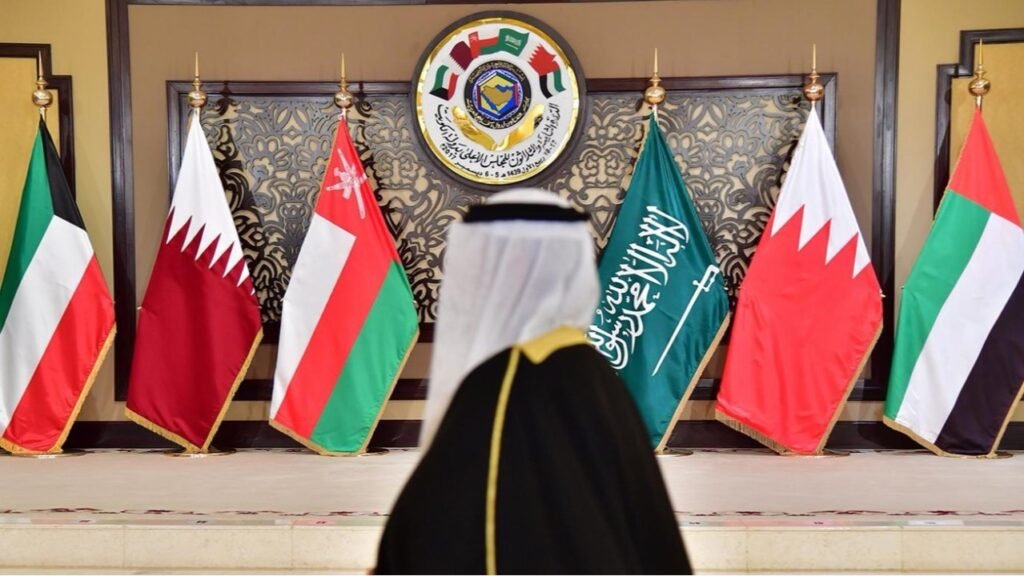
There is a growing narrative in some circles that attempts to rationalise missile and drone attacks on Gulf Arab states by pointing to the presence of foreign military partnerships in the region. This argument is not only misleading—it is fundamentally flawed. It disregards one of the most basic principles of international relations: sovereignty. No state forfeits its right to security, stability and self-defence simply because it maintains strategic partnerships. To suggest otherwise is to undermine the very foundations of sovereignty and regional stability.
Saudi Arabia and its Gulf partners have been unequivocal. They are not parties to the ongoing conflict between Iran, the United States and Israel. They have neither declared war nor sought escalation. On the contrary, they have consistently worked to ensure that their territories and airspace are not used as platforms for aggression. This position reflects restraint, responsibility and a clear commitment to preventing the conflict from expanding. Any attempt to portray Gulf states as legitimate targets ignores this reality.
The weakness of the justification becomes even clearer when one considers the nature of the attacks themselves. Missile and drone strikes do not operate within the narrow confines suggested by such narratives. They place energy infrastructure, residential areas and essential services at risk. The consequences extend far beyond national borders, affecting global markets, supply chains and economic stability. In this sense, targeting the Gulf is not merely a regional issue—it is a matter of international concern.
Saudi Arabia’s response has been measured yet firm. The Kingdom has emphasised de-escalation while maintaining its full right to defend its territory and protect its people. This approach—deterrence without provocation—requires discipline and strategic clarity. It reflects an understanding that sustainable security is not achieved through reactive escalation, but through controlled and responsible statecraft.
There is also a deeper strategic miscalculation in the assumption that widening the conflict would improve Iran’s position. In reality, the opposite is more likely. Expanding the theatre of conflict to include Gulf states would not weaken regional alignment; it would reinforce it. The more Gulf capitals, ports and energy corridors are placed under threat, the stronger the incentive becomes for coordinated security responses. Such developments would reduce the space for diplomacy and increase the likelihood of broader confrontation.
It is equally important to consider the wider context. Gulf security arrangements did not emerge arbitrarily. They evolved over time in response to persistent regional instability, missile threats and the proliferation of proxy activities. When states face sustained uncertainty and unconventional risks, they seek partnerships that enhance their security. This is not an act of aggression, but a rational and defensive response to an evolving environment. Attempts to shift responsibility onto Gulf states for these arrangements overlook the conditions that made them necessary.
The economic dimension further underscores the risks of escalation. The Gulf is not only a regional centre—it is a cornerstone of global energy supply and maritime trade. Any sustained disruption to its infrastructure or shipping routes would have far-reaching consequences. The Strait of Hormuz remains a critical artery for international energy flows. Turning the Gulf into an active battlefield would therefore introduce volatility into the global economy at a time when stability is already under pressure.
Against this backdrop, Saudi Arabia’s position stands out as both principled and pragmatic. The Kingdom has consistently rejected the normalisation of proxy tactics, missile coercion and attacks on civilian-linked infrastructure. It has advocated for respect for sovereignty, protection of navigation routes and the preservation of economic stability. This is not merely a national interest—it reflects a broader responsibility as a stabilising force in the region.
Ultimately, the choice facing Iran is not a complicated one. It can continue along a path that risks widening the conflict and increasing its isolation, or it can recalibrate its approach and focus on direct and constructive engagement. Treating Gulf states as arenas for indirect pressure will not produce strategic advantage. It will instead create long-term consequences that are far more difficult to manage.
In times of heightened tension, clarity is essential. The Gulf did not create this crisis, and it should not be forced to bear its costs. The path forward lies in containment, restraint and renewed diplomatic effort. Saudi Arabia has recognised this from the outset. Its approach—grounded in deterrence, stability and dialogue—offers the most credible path to preventing a wider regional escalation.
About the Author:
Dr. Sameera Aziz is a senior Saudi journalist, businesswoman, author, poet, and cross-cultural commentator based in Jeddah. Holding a PhD in Mass Media, she is one of the pioneers of female journalism in Saudi Arabia and a strong advocate for Vision 2030. She can be reached at: Consultant.sameera.aziz@gmail.com