

Rising tensions between the United States and Iran have once again sparked serious global concern, as a series of warnings, military movements, and strong political statements continue to push the situation toward uncertainty. The atmosphere has grown increasingly fragile, with each passing moment adding to fears that the crisis could escalate into a broader conflict.
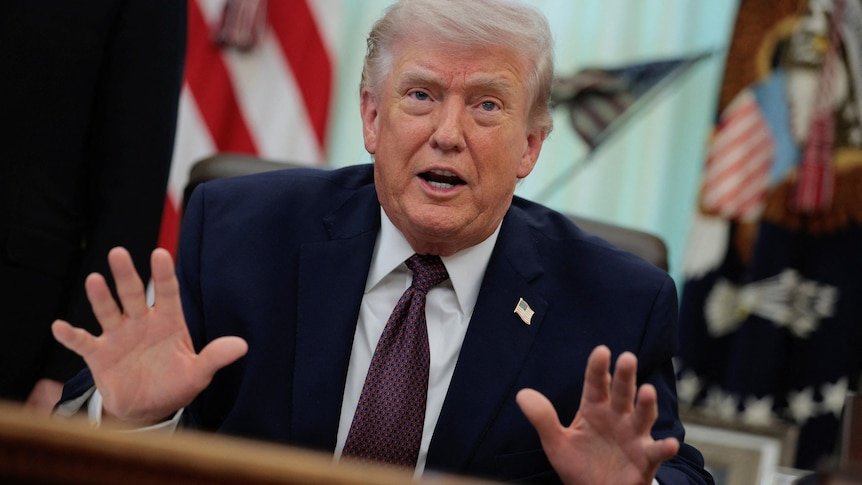
At the center of the latest developments is Donald Trump, whose recent remarks have drawn widespread attention. He issued a stern warning suggesting that if the situation does not change, the consequences for Iran could be catastrophic. His statement, which hinted at the possible destruction of an entire civilization, has alarmed political analysts and human rights observers alike.
From Iran’s side, officials have made it clear that they are not interested in a temporary pause in hostilities. Instead, they insist that any resolution must involve a complete and lasting end to the conflict. According to Iranian authorities, short-term ceasefires only delay confrontation rather than resolve underlying issues, potentially leading to renewed violence in the future.
Meanwhile, the United States has adopted a firm stance. Donald Trump has reportedly set a strict deadline for Iran, warning that failure to comply with U.S. demands could trigger severe consequences. Among the potential actions mentioned were strikes targeting key infrastructure, including bridges, power facilities, and other critical installations that support daily life and economic activity.
One of the central points of contention is the Strait of Hormuz, a narrow but crucial maritime route through which a significant portion of the world’s oil supply passes. The United States has demanded that Iran cease its effective control or obstruction of this passage, viewing it as a threat to global trade and energy stability. Any disruption in this corridor could have far-reaching effects on international markets.
Military activity in the region has also intensified. Reports indicate that U.S. and allied aircraft have been conducting ongoing operations targeting various locations within Iran. These strikes, which began earlier, have raised fears that the situation may spiral into a full-scale war if not contained through diplomatic efforts.
Iran, in response, has stated that its vital oil export hub on Kharg Island has come under attack. This facility plays a critical role in the country’s economy, and any damage to it could have both domestic and international repercussions, particularly in global energy markets.
In his remarks, Donald Trump also alluded to the possibility of political change within Iran. He suggested that a shift in leadership toward what he described as more rational and less extreme governance could potentially open the door to a better future. Despite his strong rhetoric, he hinted that a last-minute agreement might still be possible, leaving room for diplomacy even at a late stage.
However, many experts warn that deliberately targeting civilian infrastructure—such as electricity networks and transportation systems—would violate international law and could be classified as a war crime. Such actions would likely provoke widespread condemnation and further destabilize the region.
As the deadline approaches, global attention remains fixed on how events will unfold. The stakes are extraordinarily high, with the potential for consequences that extend far beyond the immediate region. A miscalculation or escalation at this stage could impact not just the countries directly involved, but the entire international community.
Iran, for its part, has reiterated that it will not bow to external pressure and is prepared to defend its interests under any circumstances. Officials have emphasized readiness to respond to any form of aggression, signaling that the country is bracing for all possible outcomes.