

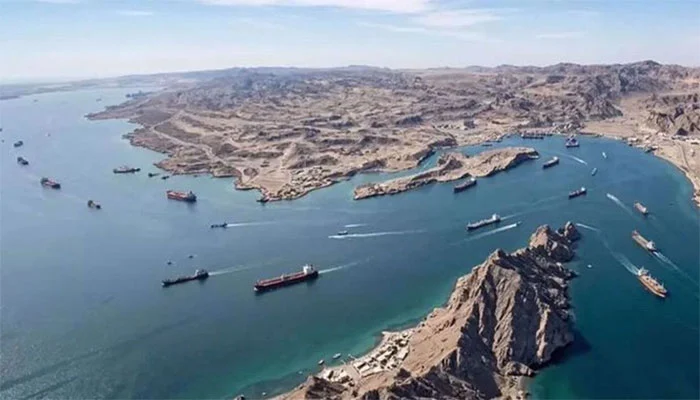
WASHINGTON/TEHRAN: The strategic Strait of Hormuz briefly reopened on Saturday before Iran’s military announced it was again under “strict control,” deepening uncertainty over one of the world’s most critical energy corridors amid escalating tensions with the United States.
According to Iranian state media, military central command confirmed that “control of the Strait of Hormuz has returned to its previous status” after a short-lived reopening that had allowed more than a dozen commercial vessels to pass through the narrow waterway.
The reversal came just hours after Iran had declared the strait open following a temporary ceasefire arrangement linked to broader regional hostilities involving Israel, Hezbollah, and US military actions. The reopening initially triggered relief in global markets, with oil prices falling sharply on expectations of improved supply stability.
However, the situation shifted rapidly after Washington maintained what it described as a naval blockade of Iranian ports. Iranian officials warned that continued restrictions would force Tehran to reconsider maritime access through the strait, through which nearly one-fifth of global oil and liquefied natural gas flows.
Parliament Speaker Mohammad Bagher Ghalibaf said passage through the waterway would require Iranian authorisation, while Foreign Ministry spokesman Esmaeil Baqaei called the blockade “a violation” of the fragile ceasefire understanding.
Shortly after, state media reported the strait was again under “strict management and control of the armed forces,” describing the move as a response to continued US pressure.
Maritime tracking data showed several tankers attempting to transit the strait during the brief reopening, with ships reportedly hugging Iranian waters and, in some cases, broadcasting neutral national identifiers in an apparent effort to avoid escalation risks. Some vessels reportedly turned back mid-route as uncertainty returned.
Meanwhile, US President Donald Trump maintained that the naval blockade on Iranian ports would remain in place until a long-term agreement is reached. Speaking to reporters aboard Air Force One, he suggested military action could resume if diplomacy fails.
“So you have a blockade, and unfortunately, we have to start dropping bombs again,” Trump said, while also expressing optimism that a deal could still be reached by the end of the ceasefire period.
Trump further indicated that talks involving Iran and international mediators, including Pakistan, were progressing, and hinted at a possible breakthrough, though key differences remain unresolved—particularly over uranium stockpiles and maritime tolls in the Strait of Hormuz.
Iran has rejected US proposals to transfer enriched uranium abroad, while Washington has ruled out Iranian-imposed shipping fees in the strategic waterway.
The latest developments come amid heightened global concern over energy security, with analysts warning that repeated closures or threats to the Strait of Hormuz could destabilise oil markets and international trade routes.
As diplomatic and military pressure mounts, uncertainty continues to loom over whether the fragile ceasefire can hold or whether the region is heading toward renewed confrontation.