

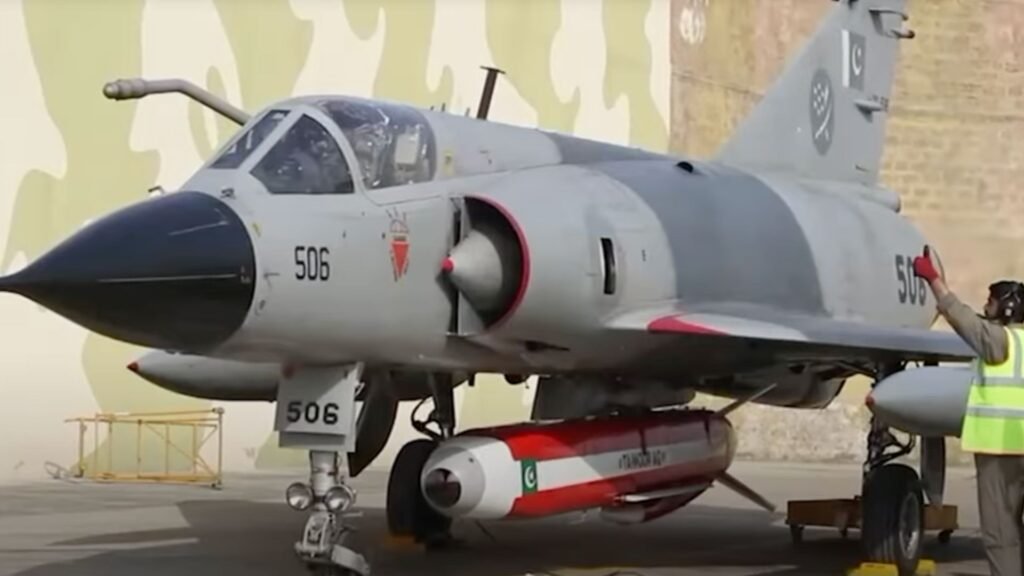
Pakistan’s maritime defence capability has received a significant boost following a successful live-fire exercise conducted by the naval forces, showcasing an advanced indigenously developed missile system designed for precision engagement of enemy naval assets. The demonstration highlighted growing self-reliance in defence technology and reinforced the country’s evolving multi-domain strike potential.
According to a statement released by the military’s media affairs wing, the Inter-Services Public Relations (ISPR), the Pakistan Navy carried out a successful operational firing of the Taimoor Air-Launched Cruise Missile. This system, developed domestically, is specifically designed for anti-ship warfare and represents a major advancement in the country’s long-range strike capabilities.
During the exercise, the missile system performed its mission with a high degree of accuracy, successfully engaging its designated target. Officials confirmed that the test validated the Navy’s ability to detect, track, and neutralize hostile maritime threats at extended distances, demonstrating both technological sophistication and operational readiness in real-world combat scenarios.
This latest achievement is part of a broader series of successful weapons tests conducted by Pakistan’s armed forces in recent months. It follows another notable development earlier in April, when a ship-launched anti-ship missile system, also developed locally, was successfully tested. Together, these exercises reflect a consistent effort to enhance indigenous defence production and improve strategic deterrence capabilities.
The ISPR emphasized that this demonstration marks a significant step forward in strengthening the country’s maritime defence architecture. It further noted that the successful integration of advanced missile systems into naval operations enhances the overall effectiveness of Pakistan’s conventional military posture, particularly in terms of coordinated strike capability across multiple domains.
In its statement, the military media wing highlighted that the Pakistan Navy remains fully committed to protecting the country’s maritime borders and safeguarding its sovereign waters. The successful test is seen as a reaffirmation of this commitment, underlining the force’s readiness to respond to any potential threats in the maritime domain.
The development has been widely viewed as a reflection of Pakistan’s ongoing efforts to modernize its defence infrastructure through indigenous innovation. By focusing on locally developed systems, the country aims to reduce reliance on foreign suppliers while simultaneously improving technological self-sufficiency in critical military sectors.
Following the successful trial, senior state leadership extended their appreciation to the scientists, engineers, and technical teams involved in the development and execution of the missile system. According to official communications, congratulations were conveyed by President Asif Ali Zardari, Prime Minister Shehbaz Sharif, and Chief of Defence Forces along with Chief of Army Staff Asim Munir, as well as other senior military leadership. They acknowledged the achievement as an important milestone in strengthening national defence capability.
Defence analysts have noted that the integration of such advanced missile systems into naval operations reflects a shift toward more modern, flexible, and technology-driven warfare strategies. The ability to strike targets at extended ranges with precision significantly enhances deterrence and reduces the operational advantage of potential adversaries in maritime environments.
This successful test also builds upon a series of related developments across Pakistan’s armed forces earlier in the year. In January, the naval forces conducted another successful exercise in the North Arabian Sea, where a surface-to-air missile was launched during operational drills. That exercise demonstrated the Navy’s ability to operate effectively in complex threat environments, including scenarios involving unmanned systems and modern aerial threats.
In parallel, the Pakistan Air Force has also made notable progress in the development of advanced weapon systems. Earlier this year, it successfully carried out a flight test of the Taimoor Weapon System, a precision-guided platform capable of engaging both land and sea-based targets at ranges extending up to approximately 600 kilometers. This system further strengthens Pakistan’s long-range strike capabilities and complements the naval missile technologies being developed and deployed.
Taken together, these developments indicate a coordinated and multi-layered approach to defence modernization. Rather than focusing on a single branch, Pakistan’s military structure appears to be advancing integrated capabilities across air, land, and maritime domains. This approach enhances interoperability between services and ensures a more cohesive response to potential security challenges.
The recent naval missile firing also underscores the growing emphasis on precision strike technology. Modern naval warfare increasingly depends on the ability to engage threats at long distances with accuracy and speed, minimizing exposure and maximizing strategic impact. By successfully demonstrating these capabilities, Pakistan’s naval forces have reinforced their operational preparedness in a rapidly evolving security environment.
Strategically, such advancements are also intended to strengthen deterrence in regional waters, particularly in the Arabian Sea and surrounding maritime corridors. The ability to project power and defend sea lanes is considered essential for protecting national trade routes and ensuring uninterrupted maritime commerce.
Officials have reiterated that the country’s defence modernization efforts are not only focused on strengthening combat readiness but also on developing indigenous expertise. The involvement of national scientists and engineers in designing and producing advanced missile systems is seen as a critical component of long-term strategic autonomy.
As Pakistan continues to invest in defence research and development, such successful trials are likely to play an increasingly important role in shaping its military posture. The latest missile demonstration reflects both technological progress and strategic intent, signaling a steady move toward enhanced self-reliance and improved defence capabilities across all branches of the armed forces.