

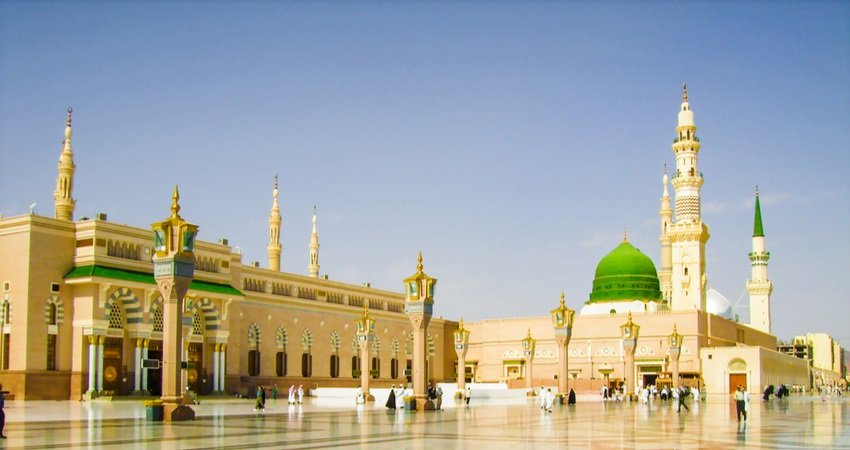
Upon arriving in the spiritually uplifting city of Madinah, Pakistani pilgrims have begun their journey with deep devotion and reverence, immersing themselves in acts of worship that hold immense emotional and religious significance.
For many of them, the experience of visiting the Prophet’s Mosque and offering salutations at the resting place of the Prophet Muhammad (peace be upon him) represents one of the most cherished moments of their lives. The first groups of pilgrims, who departed as part of the initial Hajj flights that commenced on April 18, have already reached Madinah and are now benefiting from these sacred opportunities.
The decision to send these early groups to Madinah before the main Hajj rituals is intentional, allowing pilgrims to spiritually prepare themselves before proceeding to Makkah. This initial stay is not merely logistical but deeply meaningful, offering pilgrims a chance to engage in prayer, reflection, and remembrance in one of the holiest cities in Islam.
The atmosphere of Madinah, filled with peace and tranquility, provides an ideal setting for worship and personal connection with faith.
One of the most significant highlights of their visit is access to the revered area known as Riyaz-ul-Jannah, located within Masjid an-Nabawi. This blessed space is widely regarded as a garden from Paradise, making it a focal point for pilgrims eager to perform voluntary prayers there.
Pakistani pilgrims, like others from around the world, are given specific time slots to enter this area, where they offer nawafil prayers with utmost concentration and humility. Even a brief moment spent in Riyaz-ul-Jannah becomes a deeply memorable spiritual experience for them.
Equally important is the visit to the Prophet’s resting place, where pilgrims present their salutations with profound respect and emotion. Standing in this sacred space, many are overwhelmed with feelings of love, gratitude, and reverence. It is a moment where faith feels intensely personal, and prayers are offered not only for oneself but also for family members, the homeland, and the entire Muslim community.
During their stay in Madinah, pilgrims make every effort to perform their daily prayers in Masjid an-Nabawi, as the reward for there is believed to be significantly greater than in other mosques. This encourages them to spend most of their time within the mosque, engaging in , recitation, and supplication. The routine of attending prayers in such a sacred environment reinforces their spiritual focus and dedication.
To ensure smooth management and avoid overcrowding, authorities have implemented a structured schedule for pilgrim groups. Each group is assigned designated times for visiting key areas, including Riyaz-ul-Jannah, so that everyone can in an organized and peaceful manner. Given the large number of pilgrims arriving from across the globe, such arrangements are essential to maintain order and facilitate a meaningful experience for all.
According to the Ministry of Religious Affairs, a substantial number of Pakistani citizens will perform Hajj this year. The total figure stands at 179,210 pilgrims. Among them, approximately 119,000 individuals are traveling under the government scheme, while the remaining pilgrims are making their journey through private Hajj operators. Both pathways provide different arrangements and facilities, enabling pilgrims to choose according to their preferences and resources.
For those traveling under the government scheme, comprehensive arrangements are made to ensure a comfortable and organized journey. These include accommodation, meals, transportation, and guidance throughout the pilgrimage. On the other hand, private Hajj companies also offer a range of packages tailored to different needs, providing pilgrims with flexibility in planning their trip . In both cases, the goal is to facilitate a smooth and spiritually fulfilling experience.
The stay in Madinah is not limited to performing rituals; it also serves as a period of spiritual growth and learning. Pilgrims find themselves in an environment that encourages reflection on the life and teachings of the Prophet Muhammad (peace be upon him). The city’s serene atmosphere inspires qualities such as patience, humility, and gratitude—values that pilgrims carry with them long after the journey ends.
This journey is, at its core, a transformative experience. It allows individuals to step away from the distractions of daily life and focus entirely on their relationship with Allah. Pakistani pilgrims, like others, embrace this opportunity wholeheartedly, striving to make the most of every moment in عبادت and remembrance. The experience strengthens their faith and leaves a lasting impact on their personal and spiritual lives.
Maintaining discipline and mutual respect is essential throughout this process, as millions of pilgrims from different countries gather in the same sacred spaces. Each individual plays a role in ensuring a harmonious environment by following guidelines and showing consideration for others. Pakistani pilgrims also aim to represent their country positively by adhering to these principles and contributing to a peaceful and cooperative atmosphere.