

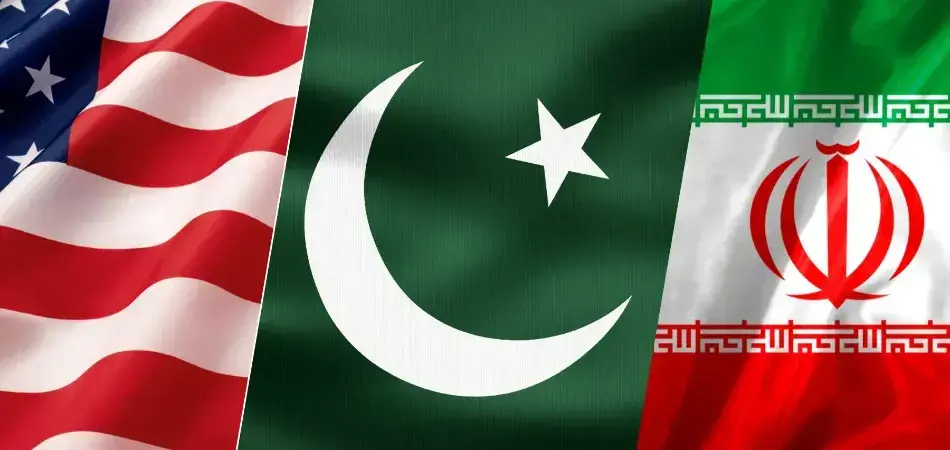
In a fresh wave of diplomatic movement, Pakistan’s capital has emerged as a focal point for renewed engagement between the United States and Iran. The arrival of senior representatives from both sides in Islamabad has fueled speculation that stalled negotiations could be revived. However, conflicting statements issued by officials from Washington and Tehran have introduced uncertainty, making the situation more complex rather than clearer.
From the American perspective, there appears to be a strong inclination toward direct engagement. Officials in Washington have indicated that face-to-face discussions are not only possible but actively being arranged. According to remarks shared with a major media outlet, a high-level U.S. delegation is expected to arrive in Islamabad with the intention of meeting Iranian Foreign Minister Abbas Araghchi in person.
The U.S. side has even suggested that this anticipated interaction is taking place at Iran’s request, implying a degree of willingness from Tehran to move forward diplomatically.
In addition, there are indications that the process could escalate to an even higher level of engagement. U.S. authorities have signaled that the Vice President may also travel to Pakistan if meaningful progress is achieved. This possibility highlights how seriously Washington is treating the situation, suggesting readiness to commit senior leadership in pursuit of a breakthrough.
In contrast, Iran’s official stance presents a markedly different narrative. A spokesperson for Iran’s Foreign Ministry publicly clarified that no schedule exists for direct talks with the United States. According to Tehran, the meetings taking place in Islamabad are not intended for face-to-face negotiations. Instead, Pakistan is expected to act as an intermediary, conveying messages and positions between the two sides without bringing them into direct contact.
The Iranian side has emphasized that its delegation will use the visit to communicate concerns and reservations through Pakistani officials. These concerns are closely tied to the broader tensions that have defined the relationship in recent weeks. Tehran appears intent on ensuring that its perspective is clearly delivered, while maintaining its preference for indirect communication at this stage.
Meanwhile, the U.S. President has added another layer to the unfolding situation by stating that Iran may be preparing to present a new proposal aimed at addressing American demands. However, he also acknowledged that details of this proposal remain unclear. When pressed about whom exactly the United States is negotiating with on the Iranian side, he avoided giving a direct answer, stating only that discussions are being held with those currently in positions of responsibility.
These developments come at a particularly sensitive moment. Tensions between the two countries had escalated significantly in recent weeks, raising concerns that the entire negotiation process might collapse. In response, Pakistan intensified its diplomatic efforts, working behind the scenes to create conditions conducive to dialogue.
Preparations for facilitating discussions reportedly began earlier in the week, reflecting Islamabad’s proactive approach in bringing both sides back toward engagement.
A major point of contention continues to be the blockade imposed on Iranian ports. Tehran has strongly criticized this measure, arguing that it violates the ceasefire agreement that came into effect earlier in the month. Iranian officials maintain that the blockade, which began on April 13, undermines the spirit of the agreement and contributes to instability in the region.
On the other hand, the United States has taken a firm position, insisting that the blockade will remain in place until a satisfactory agreement is reached. From Washington’s viewpoint, maintaining pressure is a necessary strategy to ensure that Iran remains committed to meaningful negotiations. As part of this approach, the U.S. has also reinforced its military presence in the region by deploying an additional aircraft carrier, a move widely interpreted as a signal of both deterrence and resolve.
The diplomatic activity unfolding in Islamabad reflects a broader effort by the international community to prevent further escalation. While both sides appear open to some form of engagement, the lack of alignment in their public statements highlights an underlying mistrust that continues to hinder progress. Pakistan’s role as a mediator has therefore become increasingly significant, as it seeks to bridge the communication gap and facilitate a path toward de-escalation.
At this stage, it remains uncertain whether these efforts will lead to a tangible breakthrough. What is clear, however, is that diplomacy is still being actively pursued, even amid rising tensions. Islamabad’s position at the center of these developments underscores its importance as a neutral ground where competing narratives, strategies, and expectations are being carefully navigated.