

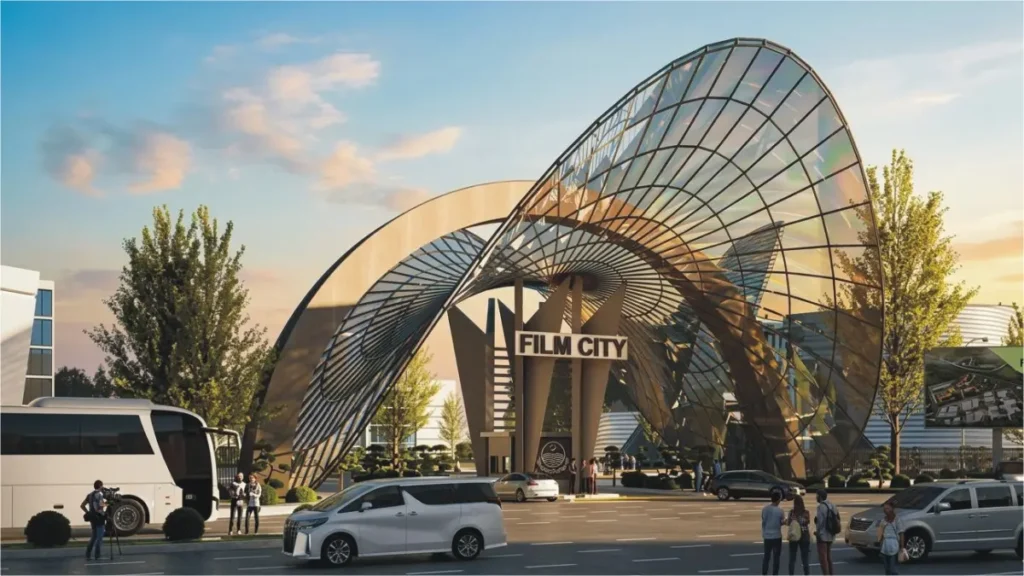
The Punjab government has announced an ambitious plan to revive and modernize the film industry by establishing a dedicated film city in Lahore, aiming to position the province alongside leading global film hubs such as those in the United States and India. The initiative is part of a broader cultural and economic vision led by Chief Minister Maryam Nawaz, who believes the project will transform Punjab into a major center for creativity, entertainment, and digital production.
Under this development plan, a 50-acre site in Lahore will be developed into a fully equipped film city featuring state-of-the-art studios, advanced production facilities, and modern post-production laboratories. Officials say the project is designed not only to rebuild the declining local film industry but also to attract international attention and investment in Pakistan’s creative sector.
Historically, Lahore has undergone several identity transformations. In its early years after Pakistan’s independence, it was widely known as the “City of Gardens” due to its lush green spaces. Later, with the expansion of educational institutions, it became recognized as a “city of colleges.” Now, the government aims to redefine its identity once again by turning it into a recognized hub of filmmaking and digital entertainment.
The decision comes at a time when Pakistan’s traditional cinema and theater industries have faced significant challenges. Rising inflation, energy shortages, and shifting audience preferences have contributed to declining attendance in cinemas and theaters. The rapid growth of social media platforms and digital streaming services has further changed entertainment consumption habits, making traditional formats less commercially viable.
According to government officials, the film city project is intended as a strategic response to these challenges. The new facility will include world-class production studios, a large convention hall for hosting international film awards and events, and an artificial lake to enhance the aesthetic appeal of the complex. Additionally, a music school will be established within the film city to train young talent in singing, music production, and performing arts, helping to develop a strong foundation for the entertainment industry.
Chief Minister Maryam Nawaz has emphasized that the project is being developed in consultation with key stakeholders from the film and television industry, including directors, producers, and actors. She stated that their input has been essential in shaping a self-sustaining and independent creative ecosystem where artists can work freely without unnecessary interference.
She further highlighted that the initiative will generate thousands of employment opportunities for young men and women across Punjab. By providing structured training, production facilities, and professional platforms, the project aims to nurture local talent and offer them meaningful careers within the entertainment sector.
The chief minister also expressed confidence that the film city will help elevate Pakistan’s international cultural profile. By producing high-quality films, television content, and digital media, the province is expected to gain recognition as a creative hub in the global entertainment industry. This, in turn, could open doors for international collaborations and investments.
Officials believe that beyond economic benefits, the project will play a significant role in cultural revival. It is expected to encourage artistic expression, promote local storytelling, and provide a platform where young creatives can transform their ideas into professional productions.
In addition to production infrastructure, the film city is also envisioned as a cultural and tourism destination. With features such as scenic landscapes, modern architecture, and dedicated entertainment spaces, it aims to attract visitors, filmmakers, and international delegations alike.
Overall, the initiative reflects a broader attempt by the Punjab government to diversify the province’s economy by investing in creative industries. By combining technology, training, and infrastructure, the project seeks to rebuild Pakistan’s film sector and position it competitively on the global stage.