

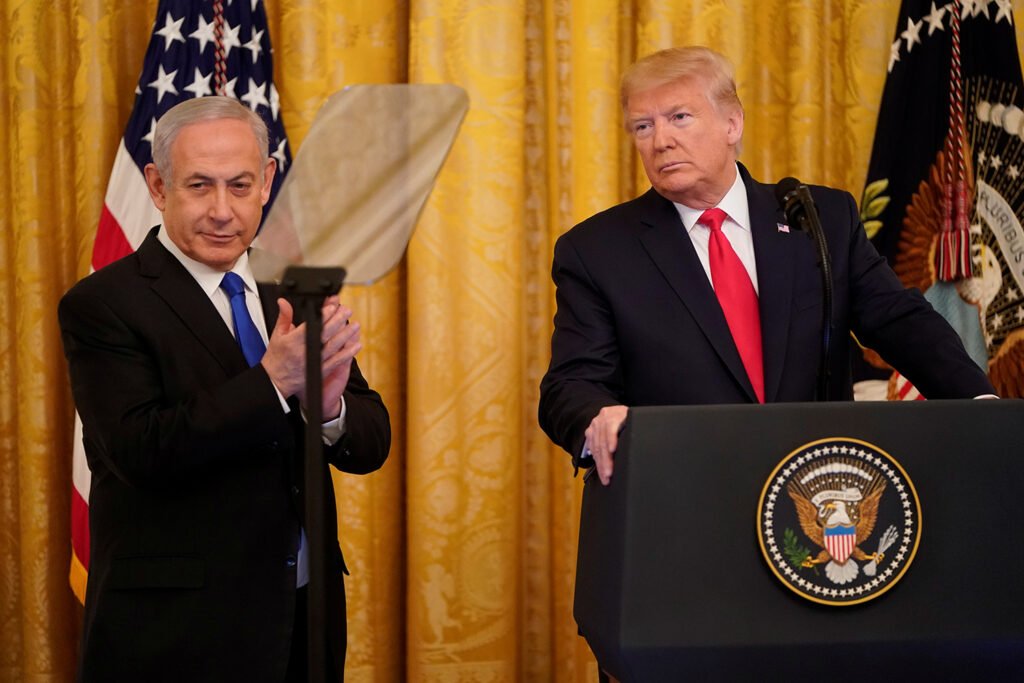
WASHINGTON/GAZA: U.S. president Donald Trump on Monday unveiled an elaborate 20-point framework for Gaza that he claimed could serve as the key to peace in the Middle East. The announcement comes against the backdrop of unprecedented destruction, mass displacement, and a worsening humanitarian crisis in the besieged enclave. Israeli Prime Minister Benjamin Netanyahu has publicly endorsed the proposal, while several Arab states have also signaled cautious support.
At its core, the plan seeks an immediate ceasefire and the transformation of Gaza into a fully demilitarized zone. All militant tunnels, weapons caches, and manufacturing facilities would be dismantled. Administrative control would not rest with Hamas or the Palestinian Authority but instead be handed to a non-political technocrat committee of Palestinians, supported by international experts. Oversight would fall to a newly constituted global body, the Peace Board of Directors, chaired by Mr. Trump with former British prime minister Tony Blair serving as a senior member.
The plan outlines significant concessions from Israel. Within 72 hours of its ratification, Tel Aviv would release all Palestinian detainees held since October 7, 2023, in addition to 250 prisoners serving life sentences. In total, 1,700 Gazans including all women and children are to be freed. A controversial provision further stipulates that for each Israeli prisoner’s body, 15 Palestinian remains would be repatriated.
A major thrust of the initiative is reconstruction. Immediate large-scale humanitarian assistance is promised for Gaza’s devastated civilian infrastructure hospitals, bakeries, and utilities. Aid distribution would be coordinated directly by the United Nations, the Red Crescent, and neutral international agencies, with explicit restrictions preventing either Hamas or Israel from interfering.
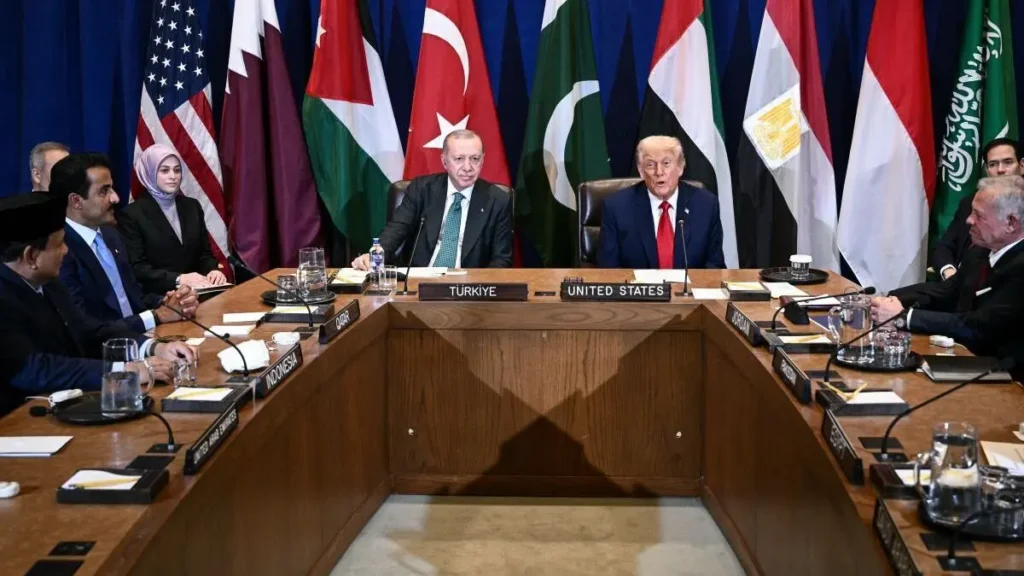
Provisions also address the future of Hamas fighters. Those who surrender and commit to peaceful coexistence would be granted amnesty and reintegration, while those unwilling to comply could opt for safe passage abroad. To guarantee stability, the United States and its partners propose the deployment of an interim international peacekeeping force, which would assume security duties as the Israeli Defense Forces withdraw in phases.
Looking further ahead, the plan advocates interfaith dialogue, greater tolerance between Israelis and Palestinians, and reforms within Palestinian institutions. It positions Gaza’s recovery as a stepping stone towards eventual Palestinian self-determination and the establishment of a sovereign state a long-held demand of the Palestinian people.
Despite its ambition, the proposal has ignited considerable debate. Observers warn that excluding Hamas entirely from any governing role may undermine enforceability. Others have questioned the practicality and credibility of Mr. Trump chairing an international peace body, noting the political overtones of his direct involvement.
Still, the announcement has jolted the diplomatic discourse. For some, it signals a rare opportunity to break the cycle of conflict; for others, it risks joining a long list of unfulfilled peace initiatives. Whether this blueprint proves to be a genuine path to stability or yet another fleeting promise remains to be seen.