

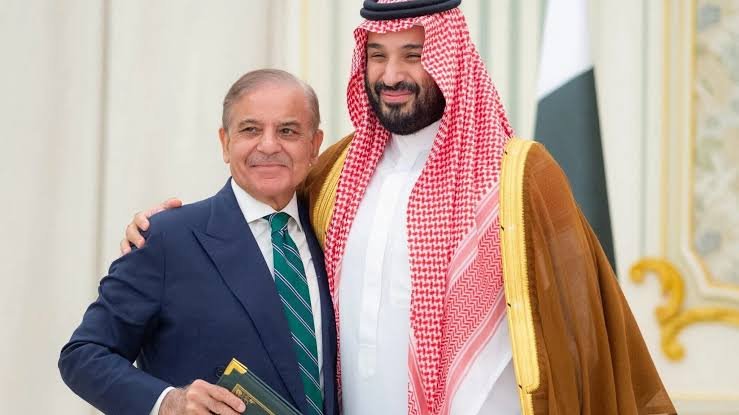
In a decisive move reflecting the maturing bond between Islamabad and Riyadh, the Government of Pakistan has announced the establishment of an 18-member high-powered economic committee aimed at reshaping bilateral cooperation between the two countries. The initiative is designed to elevate economic engagement to the same strategic level as their long-standing defense partnership, marking what officials describe as a “transformative step” in Pakistan–Saudi relations.
The new body has been created under the Pakistan–Saudi Arabia Economic Partnership Framework, which seeks to institutionalize long-term, structured, and results-oriented dialogue between the two nations. The decision followed a special session chaired by Prime Minister Shehbaz Sharif on October 3, where participants reviewed Pakistan’s economic priorities, Saudi investment opportunities, and the rapidly evolving financial dynamics across the region.
During the meeting, Prime Minister Sharif reportedly emphasized that Pakistan must now move “beyond traditional defense collaboration” and adopt a comprehensive and practical economic strategy to strengthen multi-dimensional cooperation with Saudi Arabia. He directed all relevant ministries to synchronize their policies in line with this new framework, ensuring that Pakistan could emerge as a reliable and attractive partner for Saudi investment under the Kingdom’s Vision 2030.
The newly constituted committee comprises senior representatives from several key ministries and state institutions, including the Ministry of Finance, Ministry of Economy, Ministry of Commerce, Ministry of Energy, Ministry of Information Technology, Ministry of Food Security, Ministry of Communications, the Federal Board of Revenue (FBR), the State Bank of Pakistan (SBP), and the Securities and Exchange Commission of Pakistan (SECP). Additionally, Pakistan’s Economic Counselor and Trade Attaché in Riyadh have been given a direct role to ensure that on-ground realities and policy execution remain aligned.
The committee will be jointly co-chaired by Senator Musadik Malik Federal Minister for Climate Change, and Lieutenant General (Retd.) Sarfraz Ahmad, the National Coordinator of the Special Investment Facilitation Council (SIFC). This pairing is viewed by political observers as an example of “technical diplomacy,” intended to bridge the gap between policy formulation and operational implementation — combining bureaucratic expertise with defense-oriented strategic management.
The government has instructed all committee members to be fully available from October 6 so that the first phase of negotiations can begin without delay. The Prime Minister’s Office has reportedly issued a special directive mandating that all travel and procedural approvals related to Saudi negotiations must be processed within one hour, eliminating bureaucratic obstacles and ensuring the momentum of talks remains uninterrupted.
Sources familiar with the matter revealed that the committee has been directed to submit fortnightly progress reports directly to the Prime Minister. It has also been authorized to induct technical and economic experts on an ad-hoc basis whenever specialized input is required to strengthen Pakistan’s negotiating position.
According to insiders, Pakistan intends to propose a “buy-back investment model” during the upcoming negotiations, particularly focusing on sectors like oil, energy, agriculture, food security, and climate resilience. Under this model, Saudi investors would be offered long-term equity stakes or revenue-sharing arrangements in return for investing in large-scale industrial and agricultural projects within Pakistan.
One of the central agenda items is expected to be the long-delayed Saudi oil refinery project, planned near Gwadar or Hub, which has remained on hold for nearly a decade. Islamabad now aims to revive this multi-billion-dollar project under the new economic package, viewing it as a potential catalyst not only for ending Pakistan’s recurring energy crises but also for establishing the country as a regional hub for oil refining and processing.
Additionally, reports indicate that Prime Minister Shehbaz Sharif will embark on an official visit to Saudi Arabia later this month, during which he is expected to hold a direct meeting with Crown Prince Mohammed bin Salman. The two leaders are anticipated to sign several landmark agreements covering investment, industrial cooperation, technology transfer, and labor protection — initiatives that could redefine the future scope of Pakistan–Saudi relations.
Observers have linked these developments to the Strategic Mutual Defence Agreement signed between Pakistan and Saudi Arabia in Riyadh on September 17, 2025. That pact declared that any aggression against one of the two nations would be considered an attack on both — a move many international analysts described as the emergence of an “Arab–Asian mini-NATO.” The current wave of economic engagement is therefore viewed as an extension of that strategic alliance, broadening its foundation from defense to economy, energy, and technology.
Experts argue that this evolving partnership represents a new chapter in Pakistan–Saudi ties, extending well beyond military and investment dimensions. It lays the groundwork for cooperation in areas such as renewable energy, digital economy, climate adaptation, and regional financial stability. For Riyadh, the move aligns perfectly with its Vision 2030 goals to diversify the Kingdom’s economy, while for Islamabad, it opens a potential pathway toward economic recovery and self-reliance.
Analysts believe that this initiative could redefine Pakistan’s regional role, positioning it as a strategic industrial partner within the broader Gulf framework. With enhanced institutional coordination, rapid decision-making, and the political will to execute reforms, Pakistan hopes to transform this partnership into a sustainable model of shared growth and regional integration.
In essence, this newly announced economic framework not only cements Pakistan’s commitment to long-term engagement with Saudi Arabia but also signals a broader shift in Islamabad’s foreign policy— one that blends strategic defense alignment with deep economic interdependence, making it a cornerstone of Pakistan’s vision for a stable and prosperous future.