

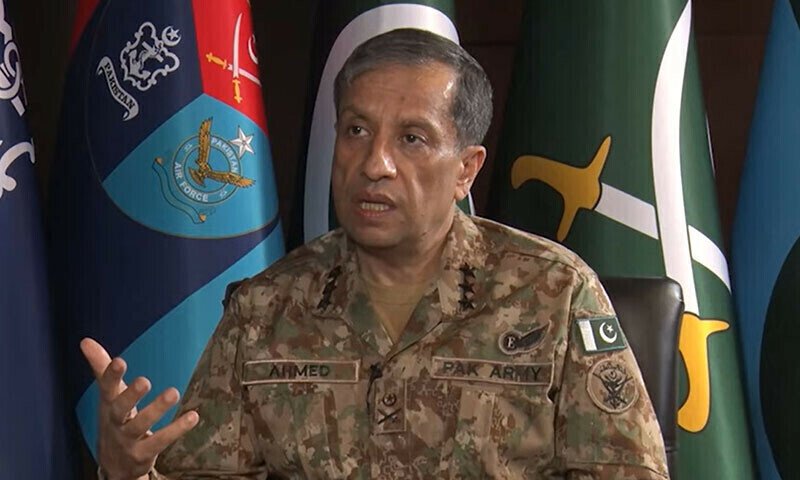
In a detailed interview following Pakistan’s recent military confrontation with India, Inter-Services Public Relations (ISPR) Director General Lieutenant General Ahmed Sharif Chaudhry revealed that Chinese-made defense platforms and missile systems performed remarkably well during the May conflict. He described the outcome as a testament to the growing strategic and technological depth of the Pakistan-China defense relationship, calling the performance of Chinese weaponry “exceptional and highly reliable under combat conditions.”
According to military officials, the brief but intense four-day conflict that unfolded in early May was one of the most significant modern confrontations between the two nuclear-armed neighbors in recent years. The skirmishes were sparked after an attack on Hindu pilgrims in the disputed region of Jammu and Kashmir, which India immediately blamed on Pakistan without presenting any conclusive evidence. Islamabad rejected the allegations outright, demanding an impartial international investigation.
As tensions escalated, Indian fighter aircraft reportedly crossed into Pakistani airspace on May 7. In response, the Pakistan Air Force launched a rapid counteroffensive using its Chinese-origin J-10C fighter jets — marking the first-ever use of these aircraft and their advanced PL-15 long-range air-to-air missiles in live combat anywhere in the world.
During the exchanges, Pakistan claimed to have shot down six Indian fighter jets, including French-made Rafales, while Indian authorities denied the scale of their losses, acknowledging only “limited damage.” However, the ISPR later revised its own assessment, confirming that the total number of Indian aircraft destroyed stood at seven — a figure that was later echoed by U.S. President Donald Trump during his comments on the conflict.
In an interview with Bloomberg published last week, Lt Gen Ahmed Sharif stated that the J-10Cs and accompanying Chinese platforms “demonstrated exceptionally well” and reinforced the Pakistan Air Force’s operational advantage during the engagements. He further remarked that Pakistan remains open to incorporating any advanced technology that enhances its defense capabilities but emphasized that Chinese systems had proven their worth in live operations.
Observers noted that the conflict also marked the largest deployment of Chinese weapon systems in active combat in recent memory. The J-10C’s combat debut, paired with the PL-15 missile, symbolized China’s growing footprint in global defense technology and Pakistan’s increasing reliance on Beijing as its principal defense partner. The PL-15 missile’s ability to engage targets at extended ranges reportedly allowed Pakistani pilots to maintain air superiority throughout the engagements.
Initially, China had maintained distance from the reports of its equipment being used in the conflict, stating it was “not familiar with the matter.” However, in July, China’s air chief publicly praised the Pakistan Air Force for its professionalism and the “effective integration” of Chinese platforms into Pakistan’s defense network, calling the cooperation between the two countries “an evolving and strategic partnership built on mutual trust and technological collaboration.”
During the conflict, the international community closely monitored the rapidly developing situation, fearing that the escalation could spiral into a broader regional confrontation. American diplomatic channels reportedly became active by May 9, and after multiple rounds of back-channel communication, both Islamabad and New Delhi agreed to a ceasefire on May 10. The brief yet ferocious exchange left visible impacts on regional geopolitics, deepening military and strategic realignments across South Asia.
According to Lt Gen Chaudhry, Pakistan did not lose any aircraft during the confrontation, directly refuting Indian claims.
“Pakistan has always presented facts as they are,” he said. “We have never manipulated numbers or exaggerated outcomes.” His statement came in response to Indian media reports that attempted to downplay the effectiveness of Pakistan’s retaliatory strikes.
Pakistan’s defense minister Khawaja Asif, speaking days after the ceasefire, declared that India had suffered a “decisive defeat with a scoreline of six to zero” and warned that any future aggression would result in “an even clearer and more humiliating outcome.”
Experts argue that the May conflict underscored not just Pakistan’s enhanced military preparedness but also its technological transformation. Defense analysts point out that the J-10C and PL-15 missile combination represents one of the most sophisticated air combat systems currently in service in Asia, capable of rivaling Western fighters in range, speed, and radar capability.
The confrontation also had economic implications. Shares of major Chinese defense manufacturers reportedly surged during and immediately after the clashes, as the live combat performance of their equipment bolstered investor confidence in China’s growing arms export industry.
Military commentators in Beijing and Islamabad alike have emphasized that the conflict symbolized the real-world validation of years of joint training, exercises, and technology sharing between the two countries. For Pakistan, the use of Chinese fighter jets and missile systems signified not only operational readiness but also the successful adaptation of imported technologies into its domestic defense structure.
The DG ISPR further elaborated that Pakistan continues to enhance its strategic deterrence through a mix of indigenous development and foreign collaboration. He said, “We are open to innovation, partnership, and the adoption of all forms of advanced defense technology that align with our national security interests. The recent engagements have shown that modern warfare is not just about numbers, but about precision, integration, and adaptability.”
The conflict also reignited discussions in India about its own defense readiness. Despite investing heavily in Western defense systems, including Rafale jets and advanced surveillance drones, New Delhi’s ability to withstand Pakistan’s technologically integrated counterattacks was called into question by several military experts. Some Indian analysts admitted that Pakistan’s swift and calculated response, coupled with superior electronic warfare support, had caught India by surprise.
On the diplomatic front, Pakistan’s response to Indian provocations was praised domestically for being measured yet firm. The government maintained consistent communication with international partners to prevent escalation, emphasizing its desire for peace but asserting its right to defend national sovereignty.
In the aftermath of the conflict, the ISPR noted that the episode served as a reminder that regional peace cannot be maintained through unilateral aggression or disinformation campaigns. The military’s statement reiterated Pakistan’s commitment to regional stability but warned that any future conflict “could result in catastrophic consequences for the entire subcontinent.”
Meanwhile, defense experts believe that the May episode will be studied for years as a case of modern hybrid warfare, where advanced technology, media influence, and diplomatic maneuvering all played parallel roles. It demonstrated how China’s defense exports, once considered limited to developing countries, are now shaping the balance of power in volatile regions.
For Pakistan, the successful use of Chinese platforms reinforced a growing strategic reality — that its defense doctrine is increasingly aligned with cutting-edge technological integration and multilateral cooperation. For China, it was a demonstration that its defense products can perform reliably under the pressures of real combat. And for India, it was a sobering moment to reassess its assumptions about aerial supremacy.
The four-day confrontation may have ended without a prolonged war, but its lessons will likely echo across South Asia for years to come. It has reaffirmed Pakistan’s evolving defense capabilities, China’s ascent as a global military supplier, and the fragile nature of peace between two historic rivals.