

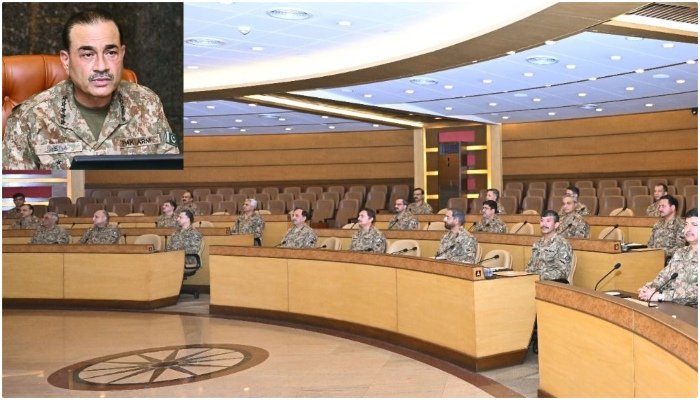
RAWALPINDI / ISLAMABAD: In a stern and unambiguous message to the region, Pakistan’s military leadership on Wednesday warned that any act of aggression by India would be met with an immediate and decisive response. The warning came at the conclusion of the 272nd Corps Commanders Conference held at General Headquarters, Rawalpindi, which reviewed the security environment, counter-terrorism operations and the Army’s preparedness across multiple domains.
Presided over by Chief of Army Staff Field Marshal Syed Asim Munir, the high-level forum opened with prayers for the martyrs of recent India-sponsored militant attacks and paid tribute to the courage and sacrifices of the Pakistan Army’s officers and soldiers. The Army chief also commended the force’s relief and rehabilitation efforts in flood-affected areas, acknowledging the dual role the military continues to play in national security and disaster response.
According to an Inter-Services Public Relations statement, commanders conducted a comprehensive assessment of internal terrorism trends, emerging threats and operational readiness. The forum resolved that outfits operating under foreign patronage and the nexus of terrorism and organized crime will no longer be tolerated, and that robust counter-terrorism operations will continue until these networks are dismantled.
Participants expressed deep concern over recent inflammatory statements from Indian political and military leaders, describing them as reckless provocations that risk inflaming tensions and undermining regional stability. The conference warned that such rhetoric often driven by narrow domestic political considerations could have serious consequences for peace and diplomatic relations in South Asia.
The military made clear that any aggression would be answered “immediately and decisively,” rejecting notions of adversarial geographic advantage. The concept of a new status quo, the statement said, would be met with “a new, swift and effective reciprocal normal” engineered to neutralize any strategic or tactical edge claimed by an opponent.
The forum directed intensified action against militant networks it identified as operating with external support, including groups referred to in official briefings as “Fitna al-Khawarij” and “Fitna al-Hindustan,” pledging sustained and comprehensive counter-terrorism campaigns to eliminate their infrastructure and leadership. Commanders also welcomed recent diplomatic gains and underscored Pakistan’s commitment to a constructive role in regional peace and stability.
In a further development, the conference endorsed the Pakistan-Saudi Arabia strategic defense agreement as a milestone for bilateral cooperation, describing the pact as reflective of shared interests in regional security. Delegates reiterated Pakistan’s steadfast support for the Kashmiri right to self-determination under relevant UN resolutions and voiced solidarity with the Palestinian people, calling for an immediate ceasefire in Gaza and unhindered humanitarian relief.
Concluding the session, Field Marshal Munir affirmed the Army’s readiness to meet conventional, unconventional, hybrid or asymmetric threats. He instructed all commanders to maintain the highest standards of operational preparedness, discipline and physical fitness, emphasizing that a vigilant, capable military remains central to national defense and public confidence.