

Iran on Tuesday dismissed criticism that it missed a major diplomatic opportunity by refusing to attend the Gaza summit in Sharm El-Sheikh, where U.S. President Donald Trump took center stage alongside leaders of Egypt, Qatar, and Turkey. Iranian officials defended the move as a principled stance amid ongoing tensions with Washington and Tel Aviv.
Reformist newspaper Shargh said Iran’s absence reflected “passivity and a loss of initiative in foreign policy,” while Ham Mihan quoted former diplomat Fereidoun Majlesi urging participation, saying the “future of Gaza is directly linked to Iran.” Critics argued Tehran should have seized the platform to assert its influence in the region’s most pressing conflict.
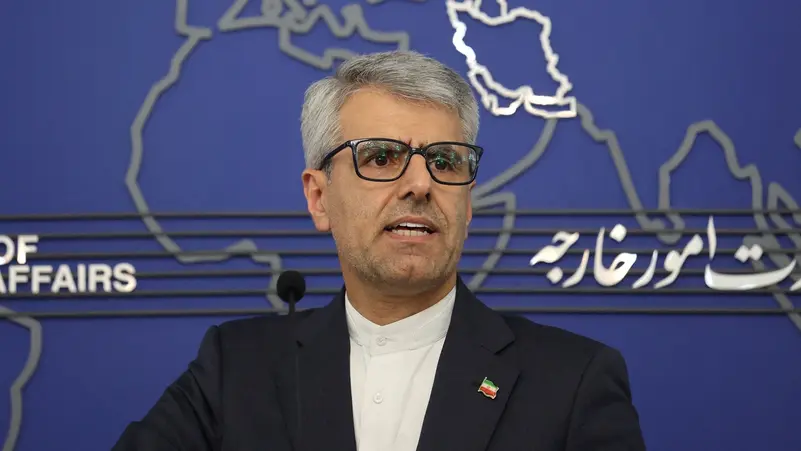
Iran’s foreign ministry spokesman Esmaeil Baqaei firmly rejected the criticism, saying Tehran could not “engage with counterparts who have attacked the Iranian people and continue to threaten and sanction us.” He warned that attending such summits “without precise calculations could harm the country’s position.”
Baqaei referred to the June 2025 U.S.-Israel joint strikes that targeted Iran’s nuclear facilities and military sites, killing over 1,000 people, as per Iranian authorities. He said, “It is natural that we cannot participate in a meeting chaired by a party that boasts of such a criminal act.” The conflict a 12-day war ended with a fragile ceasefire on June 24 after both sides exchanged missile and drone attacks.
The Sharm El-Sheikh summit, hosted by Egypt, concluded with a ceasefire declaration for Gaza signed by Trump and regional leaders. However, the agreement offered few concrete details on the long-term roadmap for peace between Israel, the Palestinians, and neighboring states. Iran’s absence underscored deep divisions over the future of Gaza and regional diplomacy.
As the Middle East recalibrates after months of warfare, Iran’s boycott of the Sharm El-Sheikh summit signals a widening diplomatic rift with Washington and its allies. While critics call it a missed chance, Tehran insists its refusal was a matter of sovereignty and principle unwilling to share a stage with those it accuses of criminal aggression.