

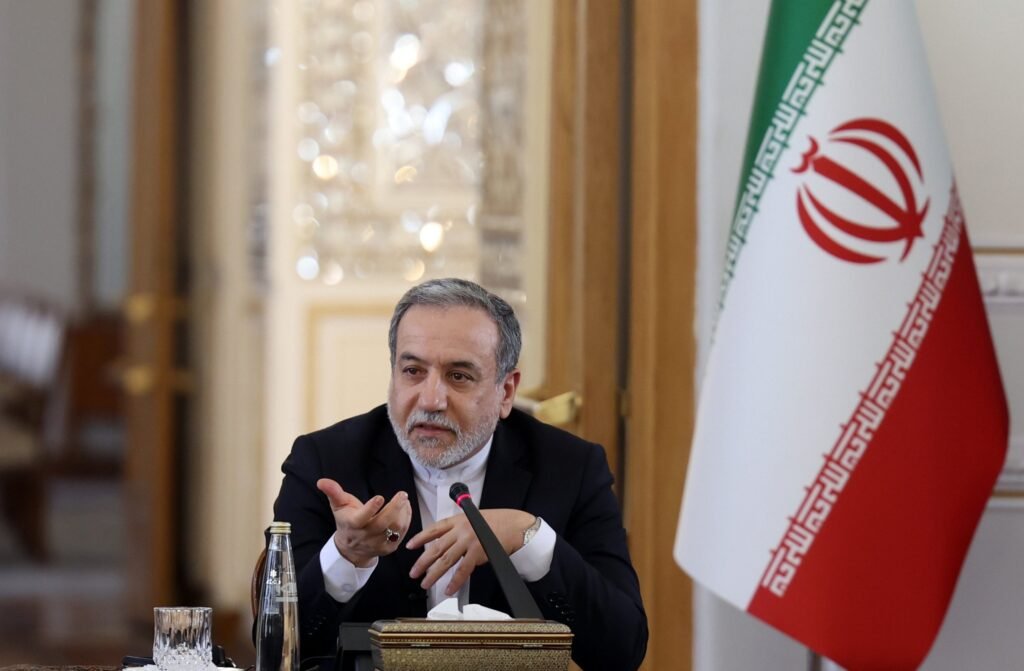
Tehran: Iran announced on Saturday that it is no longer bound by any restrictions under the landmark 2015 nuclear agreement, marking the official expiration of the decade-long deal with world powers even as Tehran reiterated its commitment to diplomacy.
The 2015 accord, formally known as the Joint Comprehensive Plan of Action (JCPOA), was signed in Vienna by Iran, China, Russia, the United States, Britain, France, and Germany. It lifted crippling international sanctions on Iran in exchange for strict limits on its nuclear program and comprehensive inspections by the UN’s nuclear watchdog, the International Atomic Energy Agency (IAEA).
However, the deal had been largely defunct since 2018, when then–U.S. President Donald Trump withdrew Washington from the accord and re-imposed sweeping sanctions. In response, Tehran gradually scaled back its commitments, ramping up uranium enrichment to levels far beyond the deal’s 3.67 percent cap.
With the deal’s official Termination Day falling on October 18, 2025, the Iranian foreign ministry declared in a statement that all provisions, including restrictions on the Iranian nuclear program and the related mechanisms, are considered terminated.
Iran firmly expresses its commitment to diplomacy, the ministry added, emphasizing that Tehran still favors dialogue despite mounting international pressure.
In recent months, tensions have deepened following renewed UN sanctions on Iran, re-imposed in September at the request of Britain, France, and Germany three of the JCPOA’s original signatories. Tehran has rejected those sanctions as “illegal and politically motivated.”
Western powers continue to accuse Iran of pursuing a covert nuclear weapons program allegations Tehran denies, insisting its nuclear activities are purely for civilian energy production.
The IAEA recently reported that Iran is enriching uranium up to 60 percent a level unmatched by any non-nuclear-armed state and perilously close to the 90 percent threshold required for a nuclear weapon.
Diplomatic efforts to restore the deal have repeatedly faltered. In July, Iran suspended cooperation with the IAEA after Israeli airstrikes reportedly targeted several of its nuclear facilities, triggering a brief but intense 12-day conflict between Tehran and Tel Aviv.
Iran blamed the IAEA for “failing to condemn Israeli and U.S. aggression, while accusing France, Britain, and Germany of “sabotaging” ongoing diplomatic initiatives, including a proposed framework for renewed talks in Cairo.
Iranian Foreign Minister Abbas Araghchi, in a letter to the United Nations, declared that with the JCPOA’s expiration, all sanctions and related measures are now null and void.
Despite the growing rift, Tehran maintains that diplomacy remains the only viable path forward signaling that while the nuclear deal may be dead on paper, the political chess game over Iran’s atomic ambitions is far from over.