

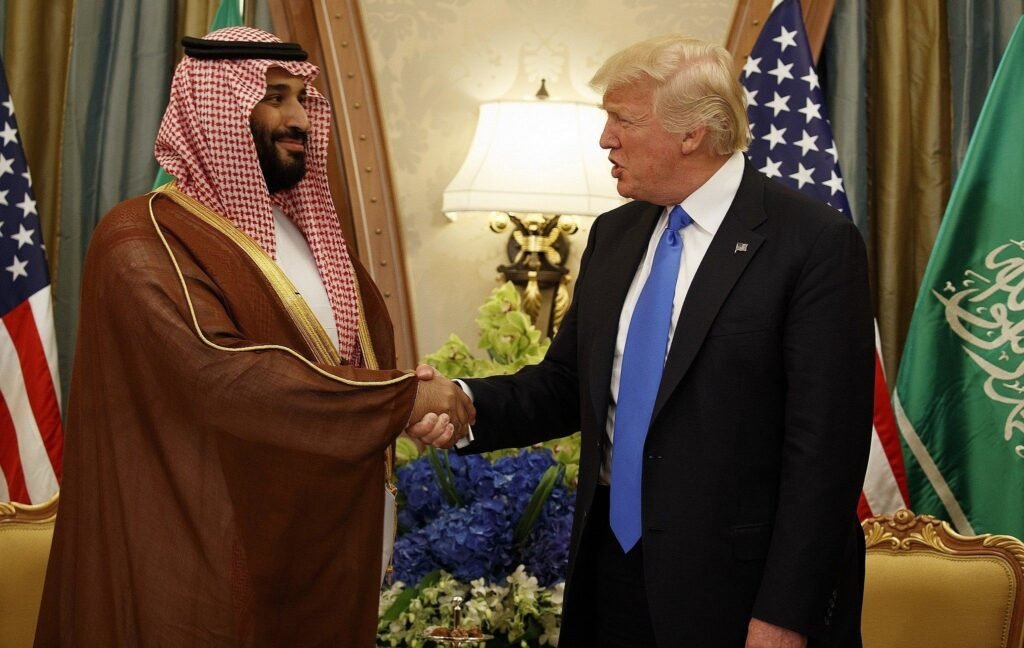
Saudi Crown Prince Mohammed bin Salman is set to travel to Washington, D.C., on November 18 for an official working visit to the White House, where he will meet U.S. President Donald Trump. The upcoming meeting is expected to focus on a wide range of critical issues, including defense cooperation, advanced technology transfers, and the growing economic ties between the two long-standing allies.
This visit carries significant symbolic and strategic weight for both nations. For the United States, Saudi Arabia remains one of the most vital partners in the Middle East — a region that continues to undergo rapid geopolitical change. For the Kingdom, this engagement presents an opportunity to reinforce its position as a rising economic and technological power while securing continued U.S. support for its ambitious modernization vision.
The visit comes at a time when the two countries have demonstrated renewed warmth in their bilateral relations. During President Trump’s previous visit to Riyadh earlier this year, Washington and Riyadh signed a series of Memoranda of Intent worth over $140 billion. The agreements covered defense cooperation, energy investments, and technology collaboration, signaling a broad commitment to strengthen economic and security ties.
Observers believe that the White House meeting will expand on these earlier understandings, translating them into concrete contracts and policy frameworks. Among the key topics expected to dominate discussions are the sale of advanced defense systems, cybersecurity cooperation, and joint initiatives in artificial intelligence and semiconductor technology.
Saudi Arabia has made remarkable progress in its drive to become a hub for innovation under its Vision 2030 program. The leadership in Riyadh aims to position the Kingdom as a major global player in high-tech industries, diversifying the economy away from oil dependency. In recent months, the Kingdom has moved swiftly to secure strategic partnerships with leading American tech firms to advance its digital transformation agenda.
One of the most significant developments in this regard has been the announcement of a strategic partnership between Saudi technology company HUMAIN and U.S.-based Qualcomm Technologies. The collaboration seeks to establish the world’s first edge-to-cloud hybrid artificial intelligence platform, capable of providing AI inferencing services globally. The project is viewed as a cornerstone of Saudi Arabia’s ambition to lead the AI revolution in the Middle East and beyond.
In addition to technology cooperation, defense and security are expected to feature prominently during the Crown Prince’s discussions with President Trump. Both sides are reportedly working on an advanced defense partnership that would see greater military collaboration and access to new-generation U.S. defense systems. The agreement is also believed to include provisions for intelligence sharing and joint counterterrorism measures aimed at ensuring regional stability.
The two countries are also expected to explore new energy partnerships. With the global energy landscape undergoing transformation, Saudi Arabia is looking to strengthen cooperation with the United States in fields such as clean hydrogen, carbon capture, and renewable energy. The Kingdom has already launched several major green energy initiatives and views U.S. technological expertise as essential to achieving its environmental and economic diversification goals.
The November meeting is also expected to address broader geopolitical concerns in the Middle East. Washington has been seeking to encourage greater normalization between Saudi Arabia and Israel under the framework of regional peace efforts. While Riyadh has expressed its support for peace and stability in the region, it has maintained that any formal normalization would depend on credible progress toward a two-state solution for the Palestinians.
Analysts note that President Trump’s renewed engagement with Riyadh marks an important step in his administration’s Middle East strategy. The White House sees closer cooperation with Saudi Arabia as vital to counterbalancing growing Chinese and Russian influence in the region, particularly in the fields of energy, defense, and technology.
For Saudi Arabia, strengthening ties with Washington also aligns with its long-term strategic interests. The United States remains its most important defense partner and a key source of advanced technology and foreign investment. The Crown Prince’s visit is expected to reaffirm this relationship and signal Riyadh’s readiness to engage in deeper economic and security integration.
In recent years, Saudi Arabia has been actively pursuing a balanced foreign policy — maintaining strong ties with traditional Western allies while also building partnerships with emerging powers in Asia. However, the upcoming White House meeting underscores the continued importance of the U.S.–Saudi alliance as the cornerstone of the Kingdom’s international relations.
The timing of the visit is also notable. It comes as Saudi Arabia accelerates the implementation of its Vision 2030 reforms, focusing on industrial diversification, infrastructure development, and social modernization. The Crown Prince has emphasized that building strong global partnerships, particularly in advanced industries, is essential for realizing these objectives.
Within the United States, there is growing recognition of Saudi Arabia’s role as an economic powerhouse and a driver of regional stability. The Kingdom’s continued investments in the American economy, including energy, infrastructure, and technology sectors, have created tens of thousands of jobs and strengthened economic interdependence between the two nations.
The upcoming discussions are expected to also touch upon the semiconductor supply chain — an area of global competition and strategic importance. Saudi Arabia has expressed interest in establishing domestic chip manufacturing capabilities, and a forthcoming agreement could pave the way for American firms to export advanced semiconductor technology to the Kingdom. Such a move would mark a major milestone in bilateral cooperation, helping Riyadh become a regional center for digital innovation.
Beyond economics and defense, the visit is also viewed as a gesture of renewed political alignment. The Crown Prince’s upcoming appearance in Washington will mark his first high-profile visit to the United States in several years, symbolizing a new phase in U.S.–Saudi relations characterized by mutual interest, pragmatic diplomacy, and long-term strategic planning.
Officials from both countries have expressed optimism that the meeting will result in tangible outcomes. Preparatory talks have reportedly been underway for weeks, with senior ministers and advisors from both governments coordinating details of agreements that could be announced following the talks.
As November 18 approaches, global attention will turn to Washington, where one of the most influential figures in the Middle East will meet with one of the most powerful leaders in the world. The outcome of their discussions will likely shape not only the future of U.S.–Saudi relations but also the broader geopolitical balance of power in the Gulf and beyond.
For both nations, the visit represents more than a diplomatic formality — it is an opportunity to redefine a partnership that has been central to international politics for decades. Whether the talks yield new defense pacts, technology transfers, or expanded investments, one thing is clear: the Washington meeting will stand as a key milestone in the evolving story of Saudi–American cooperation in the 21st century.